
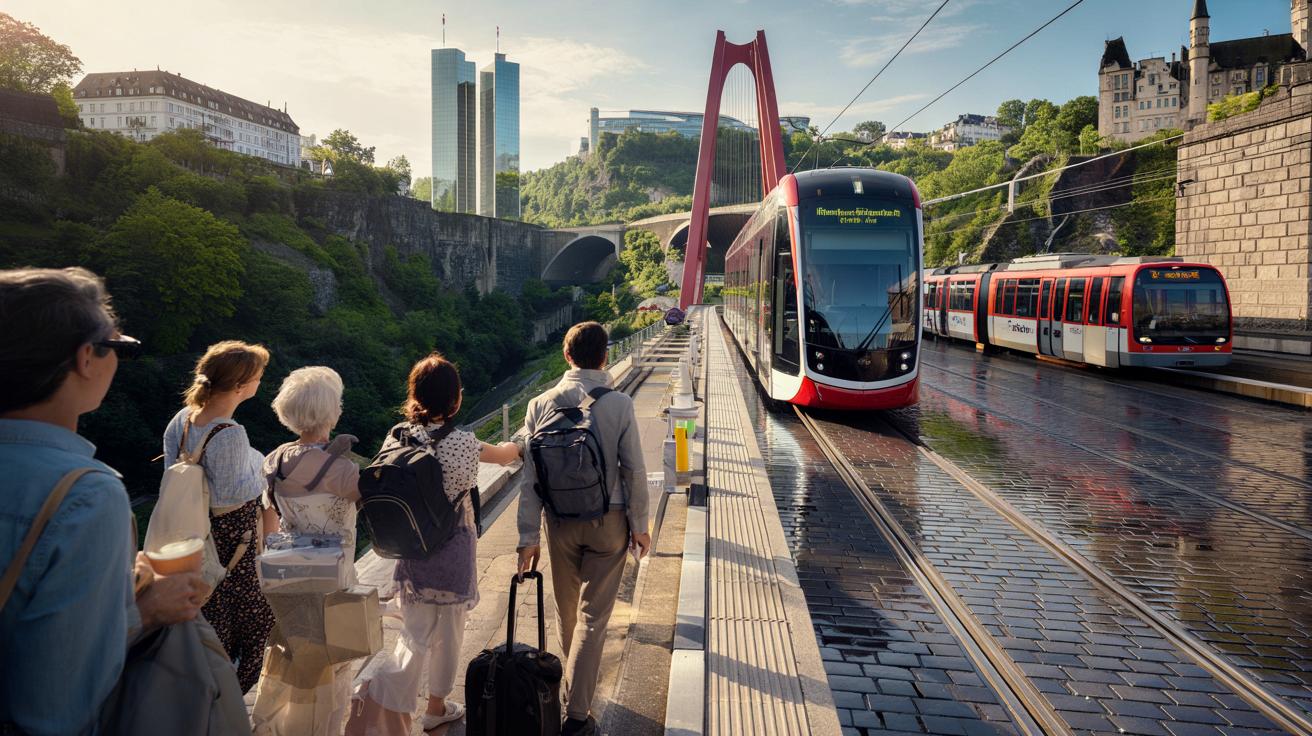
Visitors in 2026 won’t just find good deals — they’ll save money the minute they step off the plane. The twist? It isn’t a coupon or a flash sale. It’s a national policy that makes moving around cost exactly nothing. Why would a wealthy state choose to “pay” for your holiday transport — and what does that do to the way you travel?
I stepped off the train in Luxembourg City on a grey morning when the old fortifications look like they’re still holding their breath. No ticket barriers. No validators. The platform emptied into the streets as if someone had quietly removed the rules and left behind only trust.
A bus rolled up near the Alzette, the driver nodding hello, nobody patting pockets for a card. The only time I reached for my wallet was for a coffee that tasted of roasted hazelnut and rain. The city slipped by — Kirchberg’s glass, Grund’s cobbles — on a ride that felt like a wink from the state.
It felt like a quiet bribe.
Luxembourg scrapped fares on its entire public transport network, meaning every bus, tram and second-class train ride inside the country is free. For visitors in 2026, that reads like the country is picking up a chunk of your holiday bill — a literal line item gone. Call it what you want: **free public transport**, zero fares, a gentle nudge to wander further than your hotel postcode.
The impact starts small and snowballs. A family weekender doesn’t think twice about the extra bus to the Mudam or a spur-of-the-moment detour to the Pfaffenthal panoramic lift. A student pair rides north to Clervaux to see the Family of Man photo exhibition, then hops a bus to Vianden for the castle before catching the evening train, all without feeding a ticket machine. Over a two-day break, that’s easily €30–€60 you don’t spend on getting from A to B. It feels like travel on easy mode.
Why would Luxembourg do this? It’s a cocktail of reasons: unclog the roads, cut emissions, and level the field between car owners and everyone else. Visitors are the happy collateral. Economists talk about removing “friction” — every small hassle that stops you from choosing the train. No fares equals no friction. For tourism, it means the whole country — from the sandstone gorges of Mullerthal to the steel heritage of Belval — becomes one connected playground instead of a central city with expensive edges. For a place often reduced to suits and banks, it’s also a rebrand: **green, easy, and oddly generous**.
Here’s how to use it like a local. Hop on any bus, tram, or second-class train within Luxembourg’s borders — no tapping in, no app, no fuss. If you want first class on trains, you’ll pay a supplement, but second class gets you everywhere. Cross-border trips only become free at the moment you enter Luxembourg; the bit in Belgium, France or Germany still costs. Download the Mobiliteit.lu app for routes and live times, and remember that station ticket machines are mostly for first-class upgrades or cross-border tickets.
Common slip-ups? People hunt for validators, miss the train while fiddling with their phone, or board first class by mistake. We’ve all had that moment when a simple system feels suspiciously simple. Let’s be honest: nobody really does that every day. Just read the carriage signs, keep an eye on the final destination on the platform screens, and leave buffer time for Sunday frequencies, which can be lighter outside the city.
Locals will tell you the freedom is the point.
“When a visitor realises they can follow their curiosity without paying for every little hop, the country feels bigger,” a conductor told me between Ettelbruck and Troisvierges. “That’s when they stay longer.”
*This isn’t a loophole; it’s policy.* And if you’re plotting your own zigzags, three simple routes deliver a perfect first taste:
- City loop: Tram from Luxexpo to Stäreplaz, funicular down to Pfaffenthal, bus into the Grund, then back up for sunset at the Adolphe Bridge.
- North arc: Train to Clervaux, bus to Vianden Castle, late train back with a snack stop in Ettelbruck.
- Nature fix: Train to Mersch, bus into Mullerthal for the Schiessentümpel waterfall, circle back via Echternach’s lakeside paths.
There’s a bigger story here than a free-to-ride novelty. In 2026, the countries that win hearts won’t just push glossy campaigns; they’ll reduce friction, lower guilt, and widen access. Luxembourg’s bet is simple: remove the paywall around movement and people will move, not merely commute to and from work, but wander into villages, galleries, and woodlands they wouldn’t otherwise see. It’s a soft power play that shows up on your bill as a blank space where a transport cost should be. It also invites a different kind of trip, one where you say yes to that extra museum because your budget can breathe. And when was the last time a country felt like it was giving you back time and money at the same time?
| Key point | Detail | Interest for the reader |
|---|---|---|
| Nationwide free transport | Buses, trams and second-class trains cost nothing inside Luxembourg | Cut your trip cost and roam further without planning anxiety |
| What’s not included | First class still paid; cross-border segments aren’t free | Avoid surprise charges and pick the right carriage or ticket |
| Easy wins for a short break | City loop, North arc to Vianden, Mullerthal waterfall hop | Plug-and-play itineraries that maximise the “free” factor |
FAQ :
- Which country is “paying” tourists in 2026?Luxembourg. It scrapped fares for public transport nationwide, so visitors ride free inside the country.
- Do I need a special card or app?No. You can just board. An app like Mobiliteit.lu helps with routes, but access itself is frictionless.
- Is everything free, everywhere?All buses, trams and second-class trains within Luxembourg’s borders are free. First-class train seats and any travel outside the country still cost money.
- Can I use it late at night or on weekends?Yes. Services run late on key routes and through weekends, with fewer departures on some lines. Check times before you set off.
- Will this still be true through 2026?Yes, the zero-fare policy has been in place since 2020 and continues. If anything changes, official transport sites will update first.





Brilliant idea, Luxembourg! Free buses and trams made my weekend feel bigger than my budget—definitley trying the Clervaux + Vianden combo next time. Thanks for the clear tips.
Genuine question: who foots the bill here? Are residents paying more in taxes, or do fuel/traffic savings actually balance this out over time?