
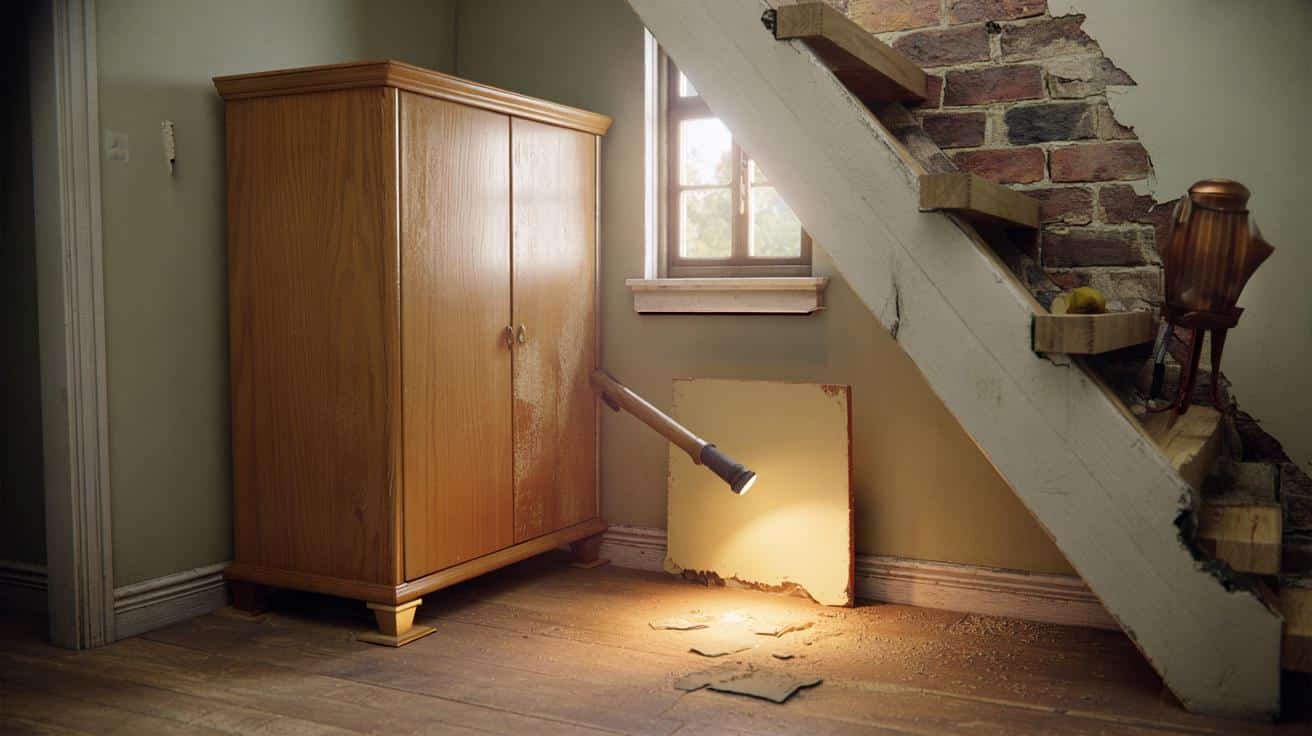
A heavy wardrobe scuffed from three house moves, nudged an inch to the left in a 1930s semi while the decorators are out for tea. Cold air slips out, the skirting doesn’t line up, and the wall sounds hollow when tapped with a knuckle. The moment creeps up in a heartbeat: there’s more space here than there should be. Not a cupboard. Something else.
The Saturday light fell flat across the box room, the kind of pale, forgiving light that makes old paint look romantic. A couple traded jokes about Narnia as they slid the wardrobe aside, its felt pads squeaking a low protest across the boards. A tiny nail head glinted at ankle height. Someone, decades ago, had added a thin plywood panel, then painted it the same dull cream.
I watched as a blunt chisel lifted the seam. The panel flexed, coughed dust, and gave. Behind it: void. Dry air. A faint waft of old soap. A space big enough to step into, half lost above the stairwell, long sealed and long forgotten. The wardrobe wasn’t a wardrobe.
The strange geometry of 1930s semis
Most 1930s semis wear their history on the walls. You see it in the generous bays, the stubby chimney breasts, the way rooms nibble into each other with doors that make no sense until you know the tricks of the era. Builders boxed out awkward corners to straighten lines, then hid the odd angles with furniture-grade solutions. A wardrobe, a tall linen press, a shallow “cupboard” that never quite rang true.
Ask around any street of red-brick semis and you’ll hear it. A neighbour prised off panelling and found a passage above the stairs, untouched since rationing. In Bromley, a reader showed me a 1.2m-deep alcove behind a fitted wardrobe; now it’s a reading nook with a lamp and a kilim rug. In Stockport, someone found a tiny tiled space with a pipe capped off in the corner — an old airing cupboard, redundant since the combi boiler.
The logic is simple once you see the bones. Over-stairs voids create triangles of dead space. Chimneys removed at loft level leave cubbyholes at first floor. Old hot-water tanks vanish, their cupboards patched with thin boards. Carpenters “squared” rooms for wardrobes so the bed could sit cleanly opposite. Over time the furniture gets replaced, the panels stay, and the geometry goes missing. That’s how you end up with a hidden room sitting quietly behind a piece of furniture.
From curiosity to safe discovery
If the wardrobe shuffle reveals a hollow knock, pause before you plunge. Start with a torch and a tape. Measure wall thickness where it feels wrong and compare it to a known solid wall. Tap along the skirting: crisp means brick, papery means panel. A cheap stud finder, a magnet, or even a small borescope through a 6mm pilot hole will tell you if there are timbers, wires or pipes. Wear a mask, gloves, and eye protection. Then peel back gently.
What trips people up isn’t courage. It’s haste. Old plaster crumbles if you rip; clean cuts along joints save hours later. Photograph every stage so you can put things back, or at least explain your logic to a future buyer. If you see vermiculite insulation, artex swirls, or brittle cloth-wrapped wiring, stop and call someone who knows the era. Let’s be honest: nobody actually does that every day.
There’s a romance in discovery, yet the practical beats matter. Ventilation keeps mustiness away. A smoke alarm nearby is a simple, wise extra. If you plan to keep and use the space, think about a proper door and rated plasterboard for fire safety. Your neighbour shares a party wall; sound can travel through voids. Keep the good surprise without creating a noisy one.
“Void spaces in ’30s semis are rarely sinister,” says surveyor Priya Malhotra. “They’re the legacy of tidy joiners and changing plumbing. Approach like an archaeologist, not a burglar.”
- Test first: a pilot hole, borescope, then a cautious cut.
- Look for clues: redundant pipes, patched joists, old cable runs.
- Make it safe: tidy edges, add a threshold, think ventilation.
- Keep evidence: photos, a note in the house file, dates of work.
What to do with a room you didn’t know you owned
The delicious part is deciding its new job. A desk fits where a tank once sat, with a slim shelf for notebooks. A child’s den under the slope is two cushions and a string of warm LEDs. A shoe cupboard becomes a calm, moth-free wardrobe with cedar blocks tucked into corners. Keep it light, keep it simple, keep it honest to the house.
We’ve all had that moment when a small change feels like a door opening in your own life. A previously impossible home office, found for the cost of a pry bar and a free afternoon. A place to store winter coats so the hallway finally breathes. One family tucked a folding guest bed into their rediscovered nook, then swore they’d never host again on an air mattress. *Small spaces can punch above their weight when they’re loved.*
There’s a market angle too. Estate agents won’t call it a bedroom, but they will call it “useful ancillary space” with a smile. Value follows function and finish more than raw square metres. A neat hatch, a tidy reveal, a bit of 1930s semi charm — it reads as care, not chaos. Soyons honnêtes : personne ne fait vraiment ça tous les jours. Yet the day you do, you change the way your home holds you.
The story homes tell when walls shift
That secret room behind a wardrobe isn’t just a quirk; it’s a time capsule of choices. Someone once hid untidy pipework. Someone else needed a straight wall for a double bed. Then life moved on and a thin board became a barrier, not by malice but by habit. Pulling it off feels like tidying the past as much as making space for a better present.
In a Britain of rising rents and working-from-kitchen-table, found space is a small rebellion. It says: the house can help. It says: this place has more to give. Share a photo with the neighbour who suspects the same trick in their box room. Ask your dad about the airing cupboards of his childhood. The best stories in old houses were rarely printed in the brochures; they were nailed into the corners.
| Key point | Detail | Interest for the reader |
|---|---|---|
| Where voids hide | Over-stairs corners, redundant airing cupboards, behind leveled-out chimney breasts | Shows where to look without tearing up the whole room |
| How to open safely | Pilot hole, borescope, PPE, gentle cuts, pause for suspect materials or old wiring | Reduces risk and cost, keeps the discovery fun rather than frantic |
| What to do next | Ventilate, add a tidy hatch or door, assign a clear function, document the change | Turns a curiosity into daily usefulness and potential value |
FAQ :
- Is it legal to use a hidden room as living space?Yes for storage or a nook, though sleeping or creating a formal room can trigger building regulations. Treat it as ancillary space unless upgraded to standards.
- Could there be asbestos or other hazards?Possibly in old insulation, artex, or bitumen. If you see suspect textures or loose fill, stop and get a specialist survey before disturbing more.
- Do I need permission to open it up?Usually not for minor internal alterations, but structural changes, party wall impacts, or new electrics may require professional input and compliance.
- How much does it cost to make it usable?Light-touch tidy-ups can be under £200. Adding a small door, lining, and lighting might run £500–£1,500 depending on finish and electrics.
- Will it add value when I sell?It rarely adds a “room” on paper, yet thoughtful, practical space often lifts buyer appeal. Neat beats large when it comes to storage and work nooks.







This read like a tiny architectural thriller. Loved the mix of romance (“forgiving light”) and practical caution. The tip to measure wall thickness and tap the skirting is gold, and the borescope suggestion is exactly the sort of low-cost sanity check DIYers skip. Also appreciate the nod to party-wall sound travel and adding a smoke alarm—small touches that make it livable, not just novel. Definitley inspired to have a careful listen behind our box-room wardrobe this weekend.
So it wasn’t Narnia after all—just Airing-Cupboardia. I’d still bring a lamp and a lion, just in case. 🙂