
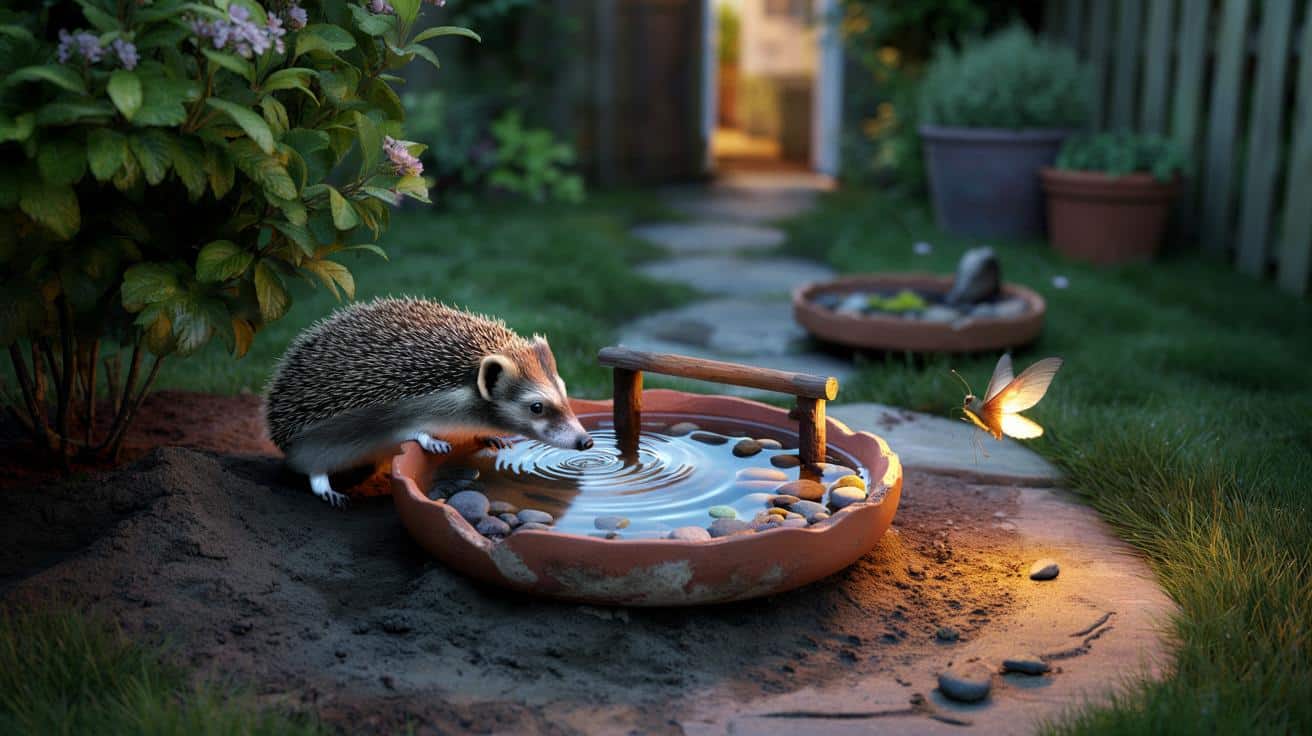
A bowl. Some water. One small, kind habit that quietly changes what happens in your garden after sunset.
A hedgehog rustled under the fence, sniffing for slugs and hope. The air felt tired, like the whole street had exhaled and forgot to breathe back in.
We’ve all had that moment when you look out and realise the life you love watching is running on empty. My neighbour, Mel, set down a chipped terracotta saucer under the viburnum, then stepped back as if she’d left out a gift. In the half-light, a moth floated down to sip at the edge. It felt like eavesdropping on a secret ritual.
By morning, the water was gone, and the soil around it was scribbled with tiny prints. Something had happened while we slept. The magic starts after dark.
The quiet lifesaver sitting on your patio
Leave a bowl of water out tonight and you’ll change the night-shift in your garden. Hedgehogs roam for miles, tongues flicking, searching for moisture between paving cracks. Frogs and toads patrol for slugs, but they still need a drink. Moths, beetles, even foxes pass through invisible corridors that criss-cross our fences and sheds.
I watched a hedgehog stop at a shallow dish by my back step. You could almost hear the relief. Its snout dipped, then again, until the surface stilled and the night carried on. **One small dish can be the difference between stress and survival.** Britain’s 24 million gardens aren’t just hobbies; they’re a national lifeline stitched together by simple acts like this.
Why at night? Cooler air slows evaporation, and nocturnal visitors feel safer away from daytime bustle. A shallow bowl gives insects a landing pad and amphibians a quick refuel before the next slug hunt. Birds wake to a clean sip at sunrise. The bowl becomes a tiny crossroads where different species take turns, and your patch hums with quiet traffic.
How to do it tonight, in five calm minutes
Pick a shallow, wide container — a plant saucer, a pie dish, even the lid of an old storage tub. Think low and easy, with 2–5 cm of water. Add a handful of pebbles so small creatures can stand and sip. Place one bowl at ground level near cover for hedgehogs, and a second dish on a stable brick or table for birds. **Think “saucer, not bucket”.**
Shade matters because water stays cooler and fresher tucked away beside a shrub or pot. Keep at least one dish within scurrying distance of a hedge or log pile so shy visitors feel brave. Rinse and refill daily in warm spells, every other day when it’s cooler. Let’s be honest: nobody really does this every day. Do it most days, and you’re winning. Skip chemicals, soaps, or shiny metal bowls that heat like a frying pan.
Use rainwater if you have a butt, tap water if you don’t. *It costs pennies and a minute of your time.* Avoid steep-sided, deep containers that trap tiny legs; pebbles and a stick “ramp” make safe exits if someone slips. Keep one drinking station away from seed trays so you don’t invite cats to a busy bird buffet.
“The shallow bowl outside my back door is a lifeline,” says Sarah, a volunteer wildlife carer who texts neighbours during heatwaves. “You won’t see every sip, but you’ll see the difference in footprints, visits, and that sudden evening hush when the garden feels… grateful.”
- Depth: 2–5 cm, with pebbles for grip
- Placement: shade or dappled shade, near cover
- Two stations: one ground-level, one raised
- Refresh: daily in heat, every other day otherwise
- No chemicals, no steep edges, no slick metal
What happens when you make it a habit
Start tonight and you’ll notice tiny storylines. A daytime sparrow bathes, then a dusk blackbird sips. A hedgehog arrives later, snuffles the edges, and moves on with purpose. Your bowl becomes a polite meeting place, a pause button for busy lives. **A single act of care travels — through the fence to your neighbour’s jasmine, across the alley to a courtyard fig, into the street trees that hold our overheated cities together.** You might wake to tell-tale muddy rings and a sense that you hosted something good. Maybe you’ll share the ease with a friend, or your child will claim the job of refilling, a tiny keeper of nightly promises. The habit sits lightly, almost invisible, and yet it changes the map of need in your postcode.
| Key point | Detail | Interest for the reader |
|---|---|---|
| Shallow beats deep | 2–5 cm with pebbles gives grip and safe exits | Prevents drownings and invites more species |
| Night-time matters | Cooler air, less evaporation, more nocturnal traffic | Maximises the impact of a simple bowl |
| Two stations, two heights | One ground-level for hedgehogs, one raised for birds | Reduces conflict and increases visits |
FAQ :
- How deep should the water be?Keep it shallow — around 2–5 cm. Add pebbles so bees, beetles, and hedgehogs can reach safely.
- Won’t it attract mosquitoes?Refresh frequently, tip and refill rather than topping up, and place bowls in shade. Moving water isn’t needed — just regular changes.
- Is tap water okay?Yes. Rainwater is great if you have it, but ordinary tap water is fine for birds and wildlife.
- What about winter?Break ice gently and refill with lukewarm (not hot) water. Leave a floating stick to keep a small patch ice-free.
- Can I add sugar or salt for energy?No. Plain water only. For bees, the pebbles are the help; for birds and mammals, clean fresh water is the goal.






Loved this—simple, kind, and actually doable. I put out a shallow plant saucer with pebbles tonight and within minutes a moth was sipping. The hedgehog detail got me. I’ll definately rinse and refill during hot spells. Thanks for the gentle nudge.