
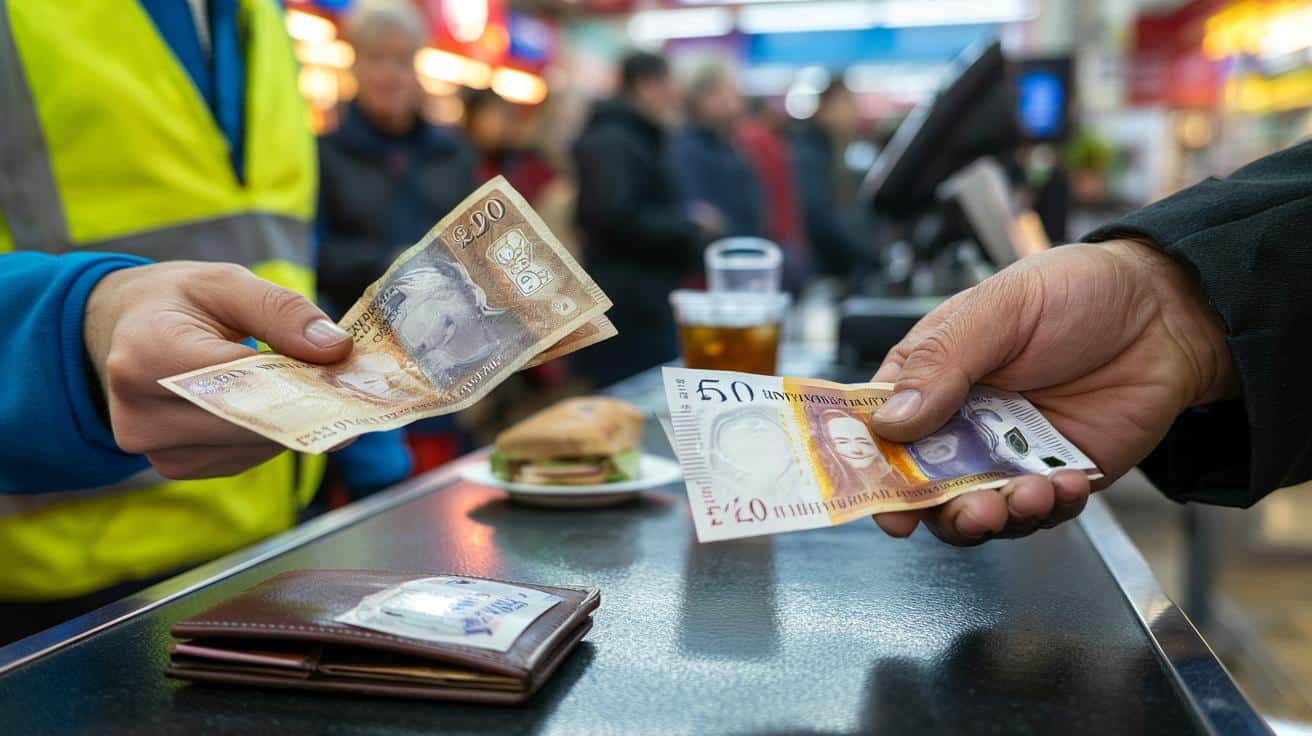
A quiet change in your wallet could trip you up at the till. If you’re still carrying a paper £5, £10 or £20, shops can turn you away. And some notes you think look “new enough” might be the ones causing trouble.
A man in a hi-vis jacket slid a paper £20 across the counter for a sandwich and a tea, and the cashier gave that tight smile that says, I’m about to be the messenger you don’t like. The note came back, politely but firmly. He fished for a card, the queue fidgeted, and his face went the colour of cold porridge.
On the street after, he rolled the note into a neat tube and tucked it away like a guilty secret. It wasn’t fake. It was just past its moment. And that’s the bit that catches people out.
Because the rules have shifted, quietly.
The quiet change that could cost you at the till
Paper £5 and £10 notes were withdrawn years ago, and paper £20 notes followed in late 2022, so a lot of cash that looks familiar no longer spends. Shops don’t have to take them, and many now won’t, which turns a simple lunch run into an awkward dance. The polymer notes replaced them, tougher and shinier, with see-through windows and holograms that flip between words.
What makes this messy is how notes linger in drawers and coat pockets, living on long after their sell-by date. Families find old envelopes of birthday money, small businesses open a float box and spot a paper £20 hiding at the back, and it becomes a little problem nobody planned for. The Bank of England has said plenty of old paper notes are still out there, which means the till-side standoff isn’t rare.
Here’s the twist that trips people up: “legal tender” doesn’t mean what most of us think. It’s about settling debts in court, not a rule that forces shops to take your cash at the counter, so a cashier can refuse a paper note without breaking any law. The polymer ones, featuring The Queen or the new King, are fine to spend, and both versions sit side by side in pockets without drama.
How to check and what to do in 30 seconds
Hold your £5, £10 or £20 to the light and find the clear window first; that’s your quickest tell that you’re dealing with polymer and not a retired paper note. Tilt the hologram and watch the word swap — “FIVE” to “POUNDS,” “TEN” to “POUNDS,” “TWENTY” to “POUNDS” — and run a thumb over “Bank of England,” which should feel slightly raised. For the £20, look for JMW Turner and a purple-blue shimmer patch; for the £10, Jane Austen; the £5 keeps Sir Winston Churchill front and centre.
Let’s be honest: nobody checks their wallet every day. Build a tiny habit when you draw cash or empty your pockets at night — glance for the window, do the tilt, and cull any paper notes before they become an embarrassment at the counter. If you find a paper £5, £10 or £20, don’t bin it; it still has value, just not across a shop’s till.
If a retailer won’t take a paper note, you’ve got routes. Many banks will accept withdrawn paper notes as a deposit into your account, and Post Office branches can often take them for deposit too if your bank is part of the scheme.
“If you’re holding withdrawn paper banknotes, you can exchange them with the Bank of England by post or in person, or deposit them with many banks,” says guidance on the Bank’s website.
- Exchange options: your bank branch, participating Post Office counters, the Bank of England counter on Threadneedle Street, or by secure post using the BoE form.
- Look for the window and the hologram: quick checks that beat most fakes and weed out old paper notes.
- Keep polymer flat and cool: high heat can warp them, but a heavy book can flatten minor waves.
What to watch, what to avoid, what to keep
One thing to clear up right away: the new King Charles III notes, which started appearing in 2024, do not cancel the existing Queen Elizabeth II notes. Both are fine to use, and there’s no need to swap if your note is polymer and sound. The only drama sits with paper notes, which are retired, and with a small number of clumsy counterfeits that don’t pass the window-and-hologram test.
We’ve all lived that moment where the cashier pauses, turns your note in the light, and your stomach sinks for no good reason. Take the sting out with a two-step routine: check the material (polymer is smooth, slightly plasticky, with a see-through window) and tilt the hologram word flip; those two moves catch nearly everything you need in a pinch. If you’re burned once, take five minutes at home and sift your wallet and the kitchen drawer where takeout menus go to die.
There’s also the chance your note is worth more than its face value, which is the only time a refusal at the till feels like a win. Early serial numbers like AA01 on new polymer runs, quirky sequences, or striking printing errors can sell to collectors, and it’s easy to peek at recent online auction results to gauge interest before you spend or swap. *Cash isn’t dead, it’s just changing hands.*
If you do end up with a stack of paper notes, the Bank of England exchange is simple and safe. Download the form from its site, pop the notes in a secure, tracked envelope, and choose a bank transfer or cheque for the return; for larger amounts you may be asked for ID copies for standard anti-fraud checks. In London, the Threadneedle Street counter will handle exchanges in person during opening hours, which can be faster if you’re local or passing through.
Don’t panic about timing once you’ve found them, and don’t be shy about asking your branch what it can accept. Some smaller banks limit what they’ll take from non-customers, some Post Office counters can only deposit to accounts partnered with the Post Office network, and a quick call saves you a wasted trip. If you’re in Scotland or Northern Ireland, remember the notes you see are issued by different banks, which set their own replacement timelines.
“Paper £5, £10 and £20 banknotes have been withdrawn from circulation; polymer banknotes featuring either Queen Elizabeth II or King Charles III remain current,” the Bank’s advice reads.
- Keep a photo of the security features on your phone for a fast glance.
- Don’t fold polymer along the same crease forever; rotate where you fold to avoid white stress lines.
- If a note goes through the wash, dry it flat at room temperature and press it under a book overnight.
- Found a bundle at home? Sort into “polymer to spend” and “paper to exchange,” and label the latter so it actually gets done.
A changing pound, and what it says about us
Cash is quieter than it used to be, but it still buys the school raffle ticket and the village hall coffee, and it still matters when the card machine sulks. The move from paper to polymer is about durability and security, and it’s also about how often we now spend with a tap rather than a fiver. A banknote that lasts longer makes sense when cash changes hands less, and the design tweaks reflect that shift.
This is also about trust, and about avoiding small, needless embarrassments. Keep what spends, swap what doesn’t, and glance for the window before you queue, and the rest takes care of itself without fuss. A pocket of polymer and a plan for the paper solves more than one awkward Tuesday.
| Key point | Detail | Interest for the reader |
|---|---|---|
| Paper £5, £10 and £20 are withdrawn | They’re no longer accepted by many shops; exchange or deposit instead | Prevents embarrassment and avoids being stuck at the till |
| Polymer checks in 30 seconds | Clear window, hologram word flip, raised “Bank of England” print | Fast, practical test that fits everyday life |
| Easy routes to swap old notes | Banks, Post Office deposits, Bank of England in person or by post | Turn dead cash into usable money without hassle |
FAQ :
- Are paper £5, £10 and £20 still legal tender?They’ve been withdrawn, which means shops don’t have to take them; they can be exchanged or deposited with many banks, the Post Office network for participating accounts, or via the Bank of England.
- Do I need to swap my Queen Elizabeth II polymer notes now King Charles III notes are out?No. Both polymer series circulate together, and you can spend either without worry.
- How do I exchange old paper notes by post?Download the Bank of England exchange form, send your notes using tracked post, and choose a transfer or cheque; larger sums may need ID copies under routine checks.
- Can a shop refuse my cash?Yes. “Legal tender” relates to paying debts in court, not everyday purchases, so retailers can choose what forms of payment they accept.
- Could my note be worth more than its face value?Possibly. Early serial numbers (like AA01), unusual sequences, or clear printing errors can fetch a premium with collectors; check recent auction results before spending.






Is this really news? Paper £20s were withdrawn in 2022—feels a bit late.
Great explainer—especially the legal tender bit, which everyone (me included) gets wrong. The window-and-hologram check is a handy habbit. Bookmarked, and I’ll sort the random notes in my kitchen drawer tonight.