
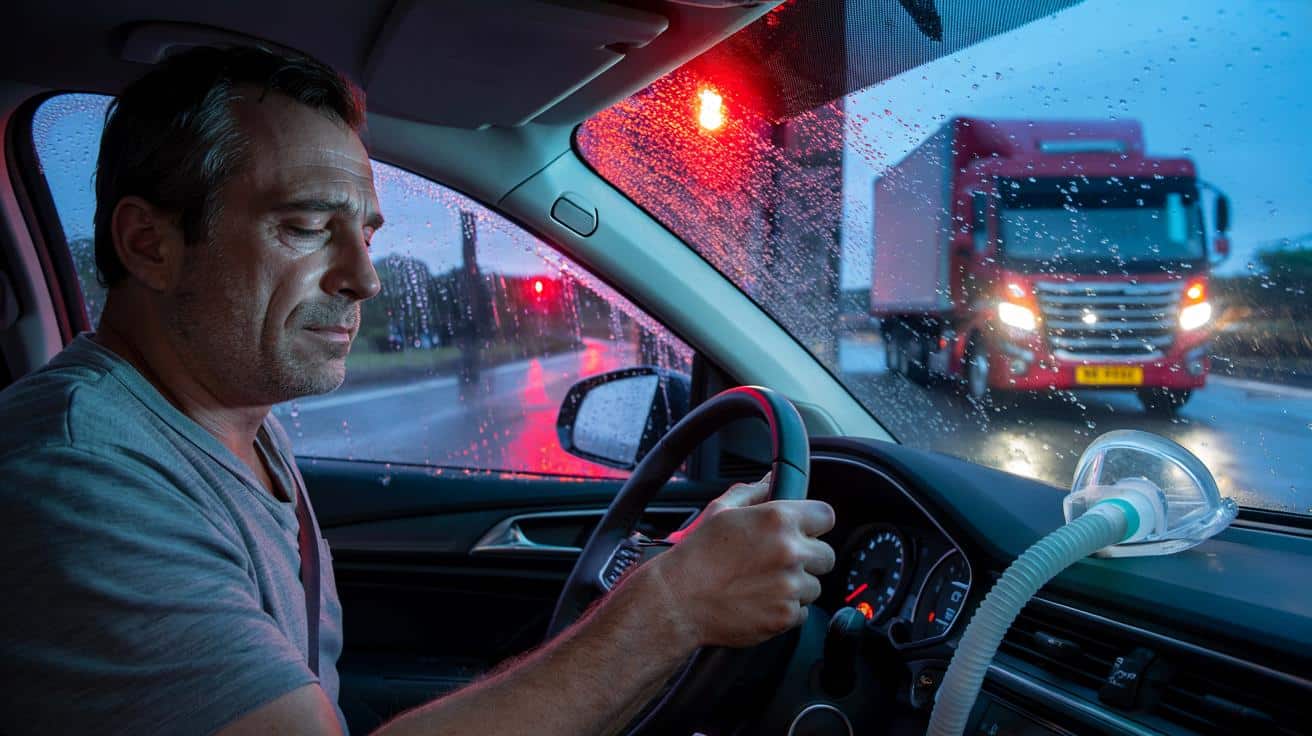
The rule is simple yet often ignored: if a medical condition affects your driving, you must tell the DVLA. One, in particular, hides in bedrooms across Britain and turns split seconds into danger — sleep apnoea.
Coffee in hand, eyes rimmed with tiredness, he yawns as the pump clicks off. He tells me he nodded off at a red light last week. Only a heartbeat, he says. The car behind honked and he jolted awake.
On the surface, it’s a small moment. But his wife nudges him to book a GP visit and mentions the thunderous snoring. He laughs it off, then admits he’s been waking with headaches. The truth he’s been avoiding has a name: sleep apnoea.
Sleepiness doesn’t announce itself; it just arrives. And that’s the twist here. The real hazard isn’t a sharp bend or a slick road. It’s the medical condition you must declare to the DVLA — before the road declares it for you.
The condition too many drivers underestimate
Sleep apnoea sounds like a bedtime issue, not a motoring one. But interrupted breathing fragments your sleep and leaves your brain under-fuelled. On the M6 at 70mph, that matters.
We’ve all had that moment when your eyelids suddenly feel heavy and the radio can’t keep you alert. For drivers with undiagnosed sleep apnoea, those dips can be deeper and more frequent. Studies show crash risk is several times higher when daytime sleepiness is untreated. That’s not bad luck. That’s biology.
Here is the line the law draws. If your condition affects your ability to drive safely — or could do — you must tell the DVLA. With sleep apnoea and excessive daytime sleepiness, that duty is crystal clear. Ignore it and you risk a fine of up to £1,000, your licence being withdrawn, and prosecution if a collision follows. For lorry and bus drivers, rules are stricter and checks are tighter. The stakes are heavier when you’re behind the wheel of a 12-tonne vehicle.
What DVLA expects — and how to do it without losing your mind
Start with your GP or a sleep clinic referral. Mention loud snoring, morning headaches, dry mouth, pauses in breathing, and daytime sleepiness. If obstructive sleep apnoea is suspected, diagnosis often comes via a home sleep study. Then you treat it — most commonly with CPAP, a small machine that keeps your airway open overnight.
Next comes the part many delay: telling the DVLA. Use the online service or the medical A–Z on GOV.UK to find the right form for sleep apnoea and daytime sleepiness. You’ll be asked about symptoms, treatment and whether you’re currently driving. Keep copies of clinic letters and a simple log of your symptoms and CPAP use. Let’s be honest: no one does that every day. But a few minutes a week saves you hours later.
Here’s what usually happens after you declare. DVLA may contact your doctor, request more details, or issue a short-term licence while treatment stabilises. Many motorists keep driving once symptoms are controlled and the medical standard is met. The aim isn’t to punish. It’s to keep unsafe drivers off the road and let treated drivers get back on it.
Practical moves that make your life easier
If you’re starting CPAP, build a routine and give it two weeks. Dry mouth? Try a humidifier setting. Mask marks? Ask for a different fit. Track how you feel mid-morning and mid-afternoon, not just when you wake. Small tweaks often beat big frustrations.
When you report to DVLA, be specific. Don’t write “I’m tired”; write “I had two near-microsleeps in June, none since starting CPAP in August.” If your job involves driving, talk to your employer early. A phased return after treatment is common. **Your insurer should know** about any condition affecting driving; silence can invalidate cover. And yes — if your doctor says stop, stop.
One driver who’d avoided treatment for years told me, “The first week on CPAP felt strange. Then I realised I could remember my morning.”
“The goal isn’t perfection. It’s control. If symptoms are stable, most people keep their licence — sometimes on a one- to three‑year renewal,” says a sleep clinician in Manchester.
- Report: use the GOV.UK “Report a medical condition that affects your driving” page.
- Treatment: start and stick with CPAP or the plan agreed with your clinician.
- Evidence: keep clinic letters, device summaries, and a simple symptom log.
- Driving: pause if you’re sleepy at the wheel or told to stop, restart when standards are met.
- Insurance: update your policy details to avoid awkward claims later.
Beyond apnoea: the broader rules you can’t ignore
Sleep apnoea grabs headlines because it’s common and sneaky. It’s far from the only notifiable condition. **Blackouts or fainting (syncope)**, epileptic seizures, strokes with lasting effects, certain visual disorders affecting both eyes or your field of vision, and diabetes treated with insulin can all trigger the duty to declare. For some, it’s temporary. For others, DVLA may issue a short-term licence to keep risk and independence in balance.
Here’s the logic DVLA applies. Can you consistently meet the medical standard for safe driving? Are symptoms under control and unlikely to cause sudden impairment? Medical advisors assess your case, sometimes with specialist input, and decide: full licence, short-term licence, or revoke until stabilised. It feels bureaucratic when you’re in it. But the system exists because the speed of a car multiplies tiny lapses into tragedy.
**Group 2 drivers** — buses and lorries — face tougher thresholds and more frequent checks. That’s fair. The margin for error in heavy vehicles is razor-thin. If you’re self‑employed, the admin can feel like a second job. Ask your clinic for a letter that summarises your stability. A clear, dated note can accelerate decisions and move you from waiting to working.
A final thought for the next time your eyelids droop at the lights
The DVLA isn’t a faceless gatekeeper in this story. It’s a referee. Your job is to play within the lines and get the help that brings your best self back behind the wheel. Once treatment clicks, many people report deeper sleep, calmer mornings and less friction at work and at home.
There’s also the quiet social contract we keep when we drive. We carry strangers’ futures in our lane choice and alertness. No sermon here — just a nudge: if a condition is edging your attention off the road, speak up early. You might lose a few weeks of driving and gain years of safer miles. The road will still be there. And this time, it’ll feel lighter.
| Key point | Detail | Interest for the reader |
|---|---|---|
| Declare sleep apnoea and daytime sleepiness | Report via GOV.UK; treatment like CPAP often allows continued driving once controlled | Stay legal, stay insured, and keep your licence with minimal disruption |
| Penalties for not declaring | Up to £1,000 fine and possible prosecution after a crash; licence can be withdrawn | Understand real-world consequences, not just red tape |
| Short-term licences are common | One‑ to three‑year renewals while a condition is monitored | A practical path that balances safety and independence |
FAQ :
- Which medical conditions must I tell the DVLA about?Anything that could affect safe driving. That includes sleep apnoea with daytime sleepiness, blackouts or fainting, epilepsy, strokes with ongoing effects, serious visual disorders, and some heart or neurological conditions. Use the A–Z list on GOV.UK.
- Can I keep driving while being assessed for sleep apnoea?If you’re sleepy at the wheel, don’t drive. If symptoms are mild and you’re awaiting tests, guidance varies. Your clinician can advise, and DVLA may give specific instructions for your case.
- Will I definitely lose my licence if I declare?Not necessarily. Many people keep their licence or receive a short‑term licence once treatment controls symptoms and the medical standard is met.
- Do I need to tell my insurer as well?Yes, if your condition affects your driving or DVLA places restrictions. Failing to disclose can invalidate claims. Keep your policy in step with your status.
- How long does DVLA take to decide?It varies. Straightforward, well‑documented cases move faster. Delays often come from missing letters or unclear timelines of symptoms and treatment. Provide clear, dated information.






Quick question: if I snore loudly but don’t feel sleepy in the day, do I still have to tell the DVLA, or is disclosure only required once excessive daytime sleepiness is confirmed?
I get the safety angle, but the DVLA paperwork feels like pure bureaucray. Any proof that declaring sleep apnoea reduces crashes? Does it definately make roads safer, or just add admin?