
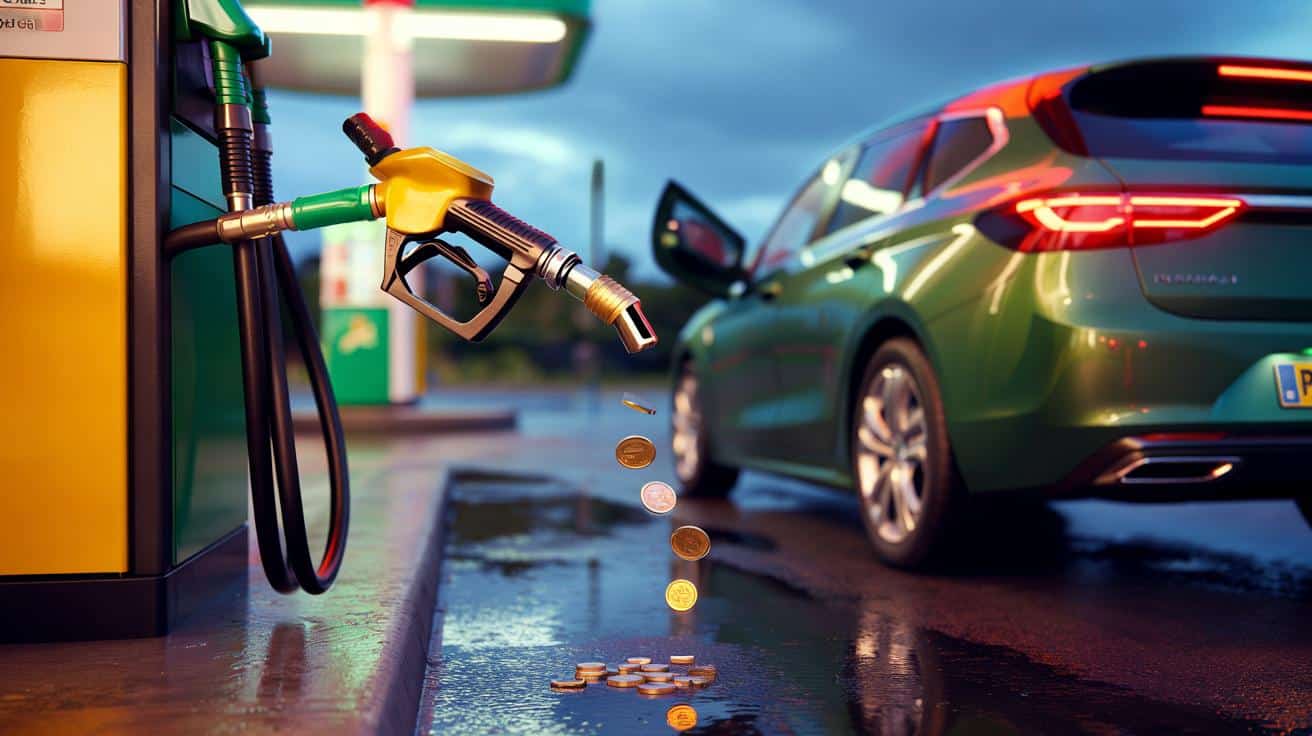
A few pence more per litre feels like a small kindness, a nod to mechanical sympathy. We’ve all had that moment where the fancy handle almost feels like good manners. You want to do right by the engine that gets you to work, the school run, the late-night motorway dash, so reaching for the premium pump feels safe and smart. Then you watch the price totem climb, and your stomach does a tiny flip. What if that little luxury is mostly marketing?
The premium petrol myth at the pump
At its heart, premium petrol is about octane, not magic. Higher octane resists knocking in high-compression engines, which matters if your engine needs it. **Most modern UK cars are tuned for 95 RON E10.** That single number on your fuel flap isn’t a suggestion, it’s the baseline your engine management was built around. Octane isn’t a vitamin, and it doesn’t “add” power on its own; it merely allows certain engines to use the power they already have without pinging.
Consider a typical commuter doing 10,000 miles a year in a family hatchback. They pay, say, 10–20p more per litre for super unleaded, which nudges a 50-litre fill-up up by £5–£10, then repeat that every couple of weeks. The quieter truth: the car feels the same, the 0–30 at the roundabout is unchanged, and the motorway cruise is just as dull and steady. There’s no new sparkle, just a slightly lighter wallet.
The physics is straightforward. Knock happens when fuel-air detonates too early under pressure, and octane rating helps stop that. If your engine doesn’t run close to that edge, it won’t exploit the extra headroom. **If your handbook says “98 RON required”, that’s the exception.** High-performance or heavily turbocharged engines may genuinely need super unleaded to hit their timing targets and protect components. For the rest, the ECU simply dials in the same safe, ordinary tune you had yesterday, while the premium nozzle gets all the glory.
What to do instead: fuel smart, spend less
Start with the two places that tell the truth: the owner’s manual and the sticker inside the fuel flap. Pick the lowest octane that meets the stated requirement, not the highest octane the forecourt can sell you. In the UK that usually means 95 RON E10 for modern cars; if your vehicle isn’t E10-compatible, you’ll need E5 super unleaded for compatibility, not performance. *Your car won’t say thank you.* It will simply run as designed.
There are some traps worth avoiding. Don’t confuse additives with octane; all UK petrols carry detergents by law, and the “extra-cleaning” claim is rarely a night-and-day event. Mixing a bit of premium into a mostly regular tank won’t hurt, nor will switching back to 95 if your car allows it. Let’s be honest: nobody really does that every day. If you drive a bike, a classic, or anything with E10 sensitivity, pick E5 because the material matters, not the marketing varnish.
Buying premium when your car doesn’t need it is like paying extra for a stronger umbrella on a sunny day — technically impressive, practically unnecessary.
Here’s a quick crib you can screenshot for later on the forecourt:
- Check the flap: if it says 95 RON or higher, 95 is fine; if it says 98 required, use super.
- If your car is not E10 compatible, choose E5 super unleaded for material compatibility, not power.
- Turbo car with “98 recommended” language? You may see a small performance gain, but it’s marginal in everyday driving.
- Premium diesel isn’t about octane; think detergents and cetane — subtle benefits at best.
- Hearing knock under load after dropping octane? Go one step up next fill and have it checked.
The bigger picture for your car and wallet
There’s a reason experts are blunt about this: paying for premium petrol in a car that doesn’t need it is dead money. The promised “smoothness” is mostly the placebo of a shinier pump and a polished brand name, while your engine management quietly does what it always does. Spend that extra at the tyre bay or on fresh plugs and a clean air filter, and you’ll feel more real-world difference in response and mpg than a lifetime of gold labels. And yes, if your engine truly asks for 98 RON, treat it to the good stuff — that’s need, not vanity.
| Key point | Detail | Interest for the reader |
|---|---|---|
| Octane is not power | It prevents knock in engines that demand it; it doesn’t add horsepower by itself | Stops you paying for something you won’t feel day to day |
| 95 RON works for most | Most modern UK cars are calibrated for 95 RON E10 fuel | Confidence to choose the cheaper pump without guilt |
| Exceptions exist | High-performance, some turbos, and E10-incompatible cars may need super unleaded | Clarity on when premium actually matters |
FAQ :
- Does premium petrol keep my engine cleaner?All UK petrol must include detergents, and the baseline is already pretty good. Some premium blends add more, which can help maintain cleanliness in specific conditions, yet it’s not a one-tank miracle or a substitute for servicing. Think slow-and-steady maintenance, not spring-clean magic.
- Will I get better mpg on premium?You might see a tiny lift in certain cars and journeys, largely because some super unleaded is E5 with slightly higher energy content than E10. Any gain is usually small and often wiped out by the higher price per litre. If you’re chasing economy, tyre pressures, gentle throttle, and steady speeds move the needle more.
- Is it safe to switch from premium back to regular?Yes, if your owner’s manual allows 95 RON. Modern ECUs adapt seamlessly. If you notice audible knock under load after switching — rare on cars specified for 95 — refuel with the higher grade next time and get it checked. Don’t go below the minimum required rating.
- What about turbo engines — don’t they need super?Some do, some don’t. Many modern turbos are designed to run happily on 95 RON and will only eke out a small extra edge with 98–99 RON when pushed hard. Daily commuting rarely explores that margin. If your manual says “98 required” or “recommended for maximum performance,” follow that guidance.
- My car isn’t E10 compatible — do I need premium forever?If your vehicle can’t run E10, choose E5 super unleaded because of ethanol content, not octane bravado. That’s about rubber seals, fuel lines, and long-term materials health. You’re not buying speed; you’re buying compatibility.
On a grey Tuesday under humming strip lights, the premium pump looks like the grown-up choice. Then you run the numbers, listen to what your manual actually says, and the shine comes off fast. This is the quiet calculus of modern motoring: invisible gains are often marketing promises, while boring maintenance is where the real wins hide. **Premium diesel isn’t about octane at all.** On the road, the difference you can feel lives in tyres, alignment, and a car that’s properly serviced, not in a label that flatters your instincts. So the next time your hand hovers over the gold nozzle, ask a simple question. What is my engine actually asking for?







So premium is basically knock insurance for engines that need it—got it. Wish forecourts put that on the gold nozzle instead of fairy dust.