
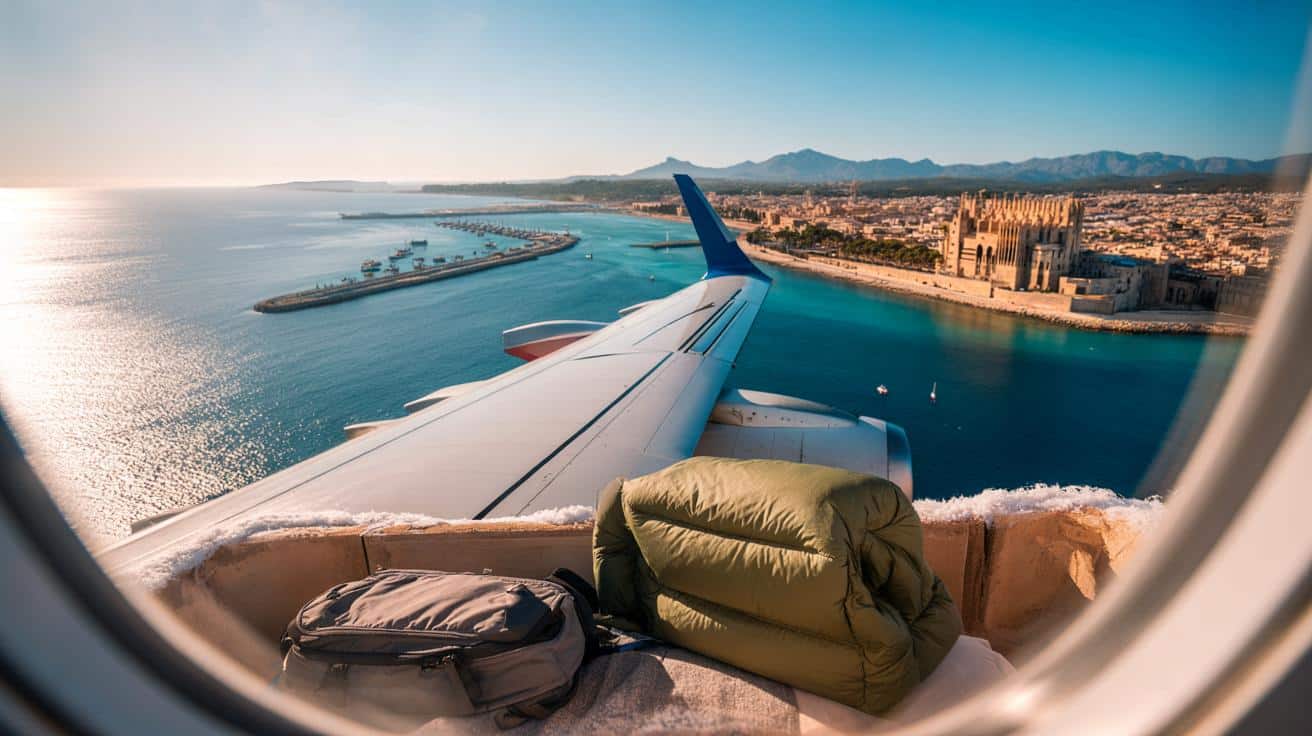
Grey days, wet sleeves, the same commute on autopilot. Then a message pings across a group chat: “Two hours from London, sun on your face, and a seat for £15.” It sounds like a dare, or a glitch. It’s neither. It’s the cheapest way to steal back a bit of summer.
A red-eye sort of morning where the terminal glows artificial and everyone moves in soft silence. Two hours and a bit later, I’m stepping onto warm concrete in Palma, the sky rinsed blue, that sweet whiff of jet fuel and sea salt mixing in the air like a promise.
January fingers thaw fast when the light hits you just right. The bus into town costs a few euros. The bakery on the corner sells ensaïmadas dusted like snow. I message back a photo of a sunlit square and a grin. Two hours. £15.
The £15 hop that flips a British winter
The idea is almost cheeky: swap drizzle for daylight on a fare that costs less than a takeaway. You leave in a puffa jacket, you land among orange trees. And yes, Palma de Mallorca really does sit about two hours from London in the air, give or take a tailwind. It’s the sort of small, radical joy that reorders your week, and maybe your mood. We’ve all been there, staring out at slate skies, wondering if there’s a door to a sunnier room.
Take one random Tuesday in late January. Stansted to Palma priced up at £14.99 one-way on a budget carrier, with a return for £19.99 if you’re not picky about time. Block time reads 2h20, the captain calls it closer to two when the air is kind. On the ground, it’s 17°C in the sun and locals eat lunch outdoors with their jackets on the chair backs. A friend called Jess went last year on a similar whim. She spent her £15 saving on a plate of grilled sardines and didn’t regret the maths.
Here’s why it works. Airlines use yield models that reward empty midweek seats with flash-low base fares, then make their margin on bags, seats, and snacks. Taxes are fixed, the rest floats. A small set of seats will show at headline prices during sales or quiet periods, and they vanish fast. The “two-hour” claim lives in that space too: schedule padding keeps arrivals punctual, while winds and routing can shave minutes in real life. The trick is catching the fare while it’s still blinking.
How to actually bag the £15 seat
Open Google Flights and set your origin to “London (All)”. In Destination, type “Palma de Mallorca” and tap the date grid. Choose “Flexible dates” and scan the price graph for dips under £20 outbound and under £25 inbound. Flip to the airline’s own site to book direct when you spot it. Subscribe to sale emails from the carriers, and set price alerts with a floor at £15–£20. Aim your search at late November, January, early March, or the shoulder edges of spring. Fares pop. Blink and you’ll miss them.
Most people trip on the extras. A £15 ticket is gold until you add a 10kg cabin bag for £18–£35 each way, seat selection from £4–£15, and an airport coffee that costs as much as the flight. Go with the under-seat bag and pack a 20L soft backpack. Wear your bulkier layers through the gate. Fly Tuesday or Wednesday, early or late. School holidays and Friday nights torch the deal. Let’s be honest: nobody pays £15 and expects Champagne.
Think like a local commuter, not a holidaymaker. Book the outbound first when the fare is lowest, then build the return around it. If Palma is out of range, check Menorca or Sardinia for similar dips from London. £15 fares do exist, but they rarely shout.
“I treat it like buying theatre tickets in the gods,” says Sam, a travel analyst who tracks fare cycles. “You’re trading a luxury seat for a seat in the sun. That’s the bargain.”
- go midweek and outside school dates
- hand luggage only to protect the headline fare
- use price alerts, not guesswork
- book direct once you spot the dip
What waits on the other side
Palma greets you with a sweep of bay and a city that feels lived-in, not staged. The EMT bus A1 rolls from the airport to the old town in twenty minutes, and the cathedral appears like a ship’s hull. You walk the honeyed lanes between shutters and laundry lines, then catch the vintage train to Sóller if the mountains call. There’s a winter beach ritual here: shoes off, trousers rolled, not to swim but to stand in the edge and remember you’ve got legs. Soyons honnêtes : personne ne fait vraiment ça tous les jours. That small, illicit weekday joy is the point. You fly home with citrus in your bag and a new date saved in your phone for the next dip.
| Key point | Detail | Interest for the reader |
|---|---|---|
| Cheapest window | Late Nov, Jan, early Mar, midweek | Higher chance of snagging sub-£20 fares |
| Keep it £15 | Under-seat bag, no seat pick, book direct | Protects the headline price from creeping fees |
| Time on the ground | 2h20 flight, 20 min bus to centre | Rapid swap from grey commutes to sunlit streets |
FAQ :
- Is the £15 fare real or just marketing?It’s real on select off-peak dates, usually as a limited batch during sales. Seats go quickly and may not include every flight time.
- Which London airports have the best odds?Stansted and Luton see the most sub-£20 dips to Palma, with occasional sales from Gatwick.
- How long is the flight, honestly?Scheduled around 2h10–2h35. On a good day with tailwinds, you’ll be closer to two hours in the air.
- When is it sunny enough to feel worth it?Winter afternoons often sit at 15–18°C in the sun. Spring climbs fast. It’s more “coat off at lunch” than “full beach day”.
- What’s the cheapest way from the airport?EMT A1 bus to Palma centre costs a few euros and runs frequently. Taxis are quick but jump the cost curve.







Booked it! Found £16 from Luton on a Wednesday, under-seat bag only, and I was eating ensaïmada by 11am. Honestly the light definately reset my brain.