
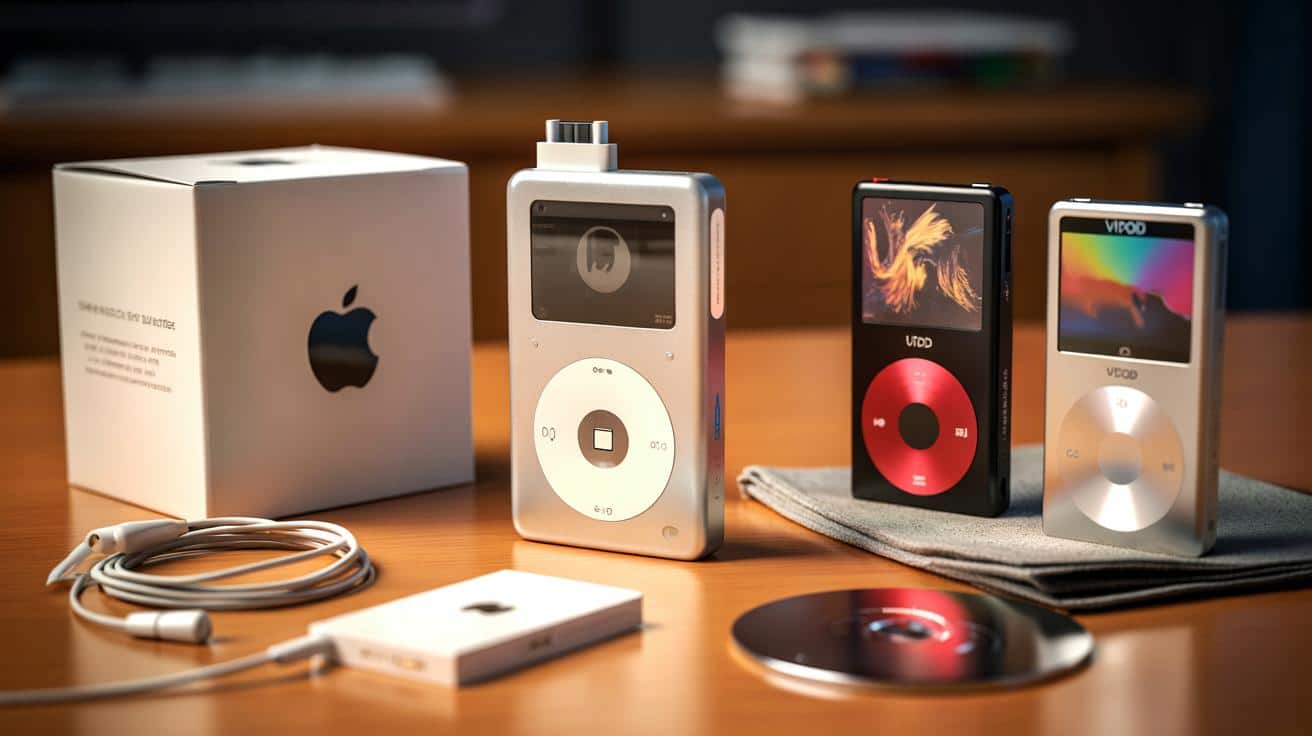
It’s a little white time capsule — and collectors on eBay are paying eye-watering money to crack them open, or keep them sealed forever. From first‑generation “scroll wheel” models to limited U2 editions, certain iPods are suddenly trading like art. The surprise is not that they’re loved. It’s how much they’re worth.
I saw one at a Saturday car boot in Kent, tucked in a shoebox with cables and a tangle of forgotten tech. The seller flicked the wheel, that soft-ticking sound that feels like a heartbeat from 2004, and smiled. Around us, the radio murmured, a flask hissed open, kids darted between tables. He’d been about to toss it, then checked eBay. Prices didn’t look real. We went quiet, then laughed at the absurdity — a scratched white brick suddenly worth more than a weekend away. *It still had an old playlist on it: The Strokes, Missy, a bad cover of Wonderwall.* Then he said the line that changes everything.
The quiet boom in white plastic
The iPod has crossed that line from gadget to cultural artefact. Nostalgia, scarcity and a neat square of Apple design have built a market where early models are coveted and complete sets are king. You can feel it in the way listings get bookmarked, how comments talk about “the sound”, how photos linger on the box corners. **Your dusty white brick might be worth more than your current iPhone.** That sounds mad until you see the sold prices.
On eBay, sealed first‑generation iPods — the 2001 “Original” with a mechanical scroll wheel and FireWire — have fetched five‑figure sums at auction houses and four figures on resales. Factory‑sealed U2 editions and the sought‑after 5.5‑generation “Video” models regularly land in the £1,000–£3,000 range when condition is top notch. Complete, mint-in-box fourth‑gen Classics have gone north of £800. I spoke to a north London seller who found a gift‑wrapped 2004 iPod in a drawer, still untouched. He almost gave it to his nephew for a bus playlist. He listed it instead — and watched a sleepy auction turn into a small drama.
Why this climb? Scarcity meets story. Early iPods were both used hard and upgraded quickly, so pristine survivors are rare. Sealed examples are rarer still, especially with original shrink-wrap, the right barcode and the Mac‑only sticker. There’s also the design factor: Dieter Rams minimalism filtered through Jony Ive, a user interface that felt musical, not mechanical. Add the “ownership” feeling in an age of streaming fatigue and you get demand. The iPod isn’t just tech, it’s a gateway to a certain memory — bus rides, mix CDs turned playlists, that first taste of a pocket library. Value follows emotion.
How to spot a jackpot — and list it right
Start with identification. Flip the iPod and note the model number (Axxxx) and the EMC code on the back; pair it with the capacity on the chrome. Cross‑reference on Apple’s model guide or a reputable iPod wiki to pin the generation. First‑gen units have a mechanical scroll wheel with four separate buttons around it. Second‑gen keeps the wheel but adds Windows support. The classic “click wheel” starts on the 4th gen and Minis. If you’ve got a sealed box, look for the right era design, the capacity sticker, and FireWire mentions. Then open eBay’s “Sold items” filter and compare exact matches, not wishful listings.
Photograph like you mean it. Natural light, clean background, and close‑ups of corners, ports, and any hairline scratches. Show the back’s engraving, the model number, and the display on the “About” screen if the device powers on. For boxed sets, lay out every accessory — charger block, FireWire or USB cable, earbuds (ideally still wrapped), manuals, and the software CD. If it’s not sealed, do a gentle reset and Restore via iTunes or Finder, wipe data, then play a test album for 30 minutes to show stable playback. We’ve all had that moment when a song skips and we hope it’s just a dirty file. Let the buyer see smooth behaviour. Let’s be honest: nobody actually does this every day.
There are pitfalls. Don’t “polish” the chrome with abrasive cleaners; micro‑swirls kill premiums. Don’t crack factory shrink-wrap — that seal is the value multiplier. Avoid stock photos; they scream risk. For batteries, mention how long it played in your test rather than claiming “new battery”. And on shipping, use a rigid box, bubble wrap, and note lithium rules if you’re sending abroad.
“Condition is the currency,” says Alex, a London reseller of retro Apple gear. “A first‑gen is great. A first‑gen still sealed, with clean corners and crisp barcode? That’s grail territory.”
- Check: scroll wheel vs click wheel, FireWire vs USB.
- Look for complete accessories and original plastics.
- Use eBay’s Sold filter for real prices, not dreams.
- Never break a factory seal to “prove it works”.
- Document serials and box corners with macro photos.
Why prices could keep climbing — and when to sell
Collectors move in cycles. Twenty‑five years after a product’s debut, nostalgia peaks, supply thins, and the best examples become benchmarks. The iPod hits that window now. Apple anniversaries, documentaries, and the slow disappearance of working units all feed the curve. Batteries swell, hard drives die, boxes get lost in house moves. The survivors get rarer by the month. This doesn’t guarantee a straight line, and markets breathe. A celebrity sale might spike demand; a flood of “found in storage” listings might cool it for a season. **The smartest sellers watch completed listings every week, then pick a launch moment when the fewest similar devices are live.** If your iPod is a family heirloom, the best return might be emotional, not financial. If it’s a sealed first‑gen, your decision is more stark: hold for the next anniversary, or cash in before the bubble bends.
| Key point | Detail | Interest for the reader |
|---|---|---|
| Rarity drives value | First‑gen sealed and limited editions (U2, 5.5‑gen Video) lead the pack | Know if yours is a lottery ticket or lunch money |
| Condition is everything | Factory seal, complete accessories, clean corners, no polishing | Simple choices can add £100s — or cost you them |
| List like a pro | Use Sold filter, shoot macro photos, mention battery runtime, pack safely | Faster sale, fewer returns, better price |
FAQ :
- Which iPods can be worth thousands?Sealed first‑generation (2001) models, pristine U2 editions, and 5.5‑gen “Video” units in mint, complete condition. Rare prototypes and limited retailer bundles can also fly.
- Do I open a sealed iPod to prove it works?No. The seal is the value. Describe storage conditions, show high‑res corners and barcodes, and reference similar “sealed” sold listings.
- What about my well‑used iPod Classic?Still valuable if it’s clean and complete. Working Classics with original accessories often fetch £150–£400. Perfect boxes push higher.
- Should I replace the battery before selling?Only on unsealed units and only if you know what you’re doing. Many buyers prefer original internals and will handle the swap themselves. State real‑world runtime instead.
- How do I tell the generation quickly?Check the model number on the back (Axxxx), the wheel type, and the ports. Cross‑reference on Apple’s site or a trusted iPod identification guide, then match exact sold listings.






Wild to think my dusty 4th‑gen click wheel might outprice my phone. Thanks for the clear photo tips—macro of the corners is definitley genius.