
This summer, some of the world’s most photogenic places are pulling the shutters down for part of the season. Not because they want fewer visitors. Because they want a future.
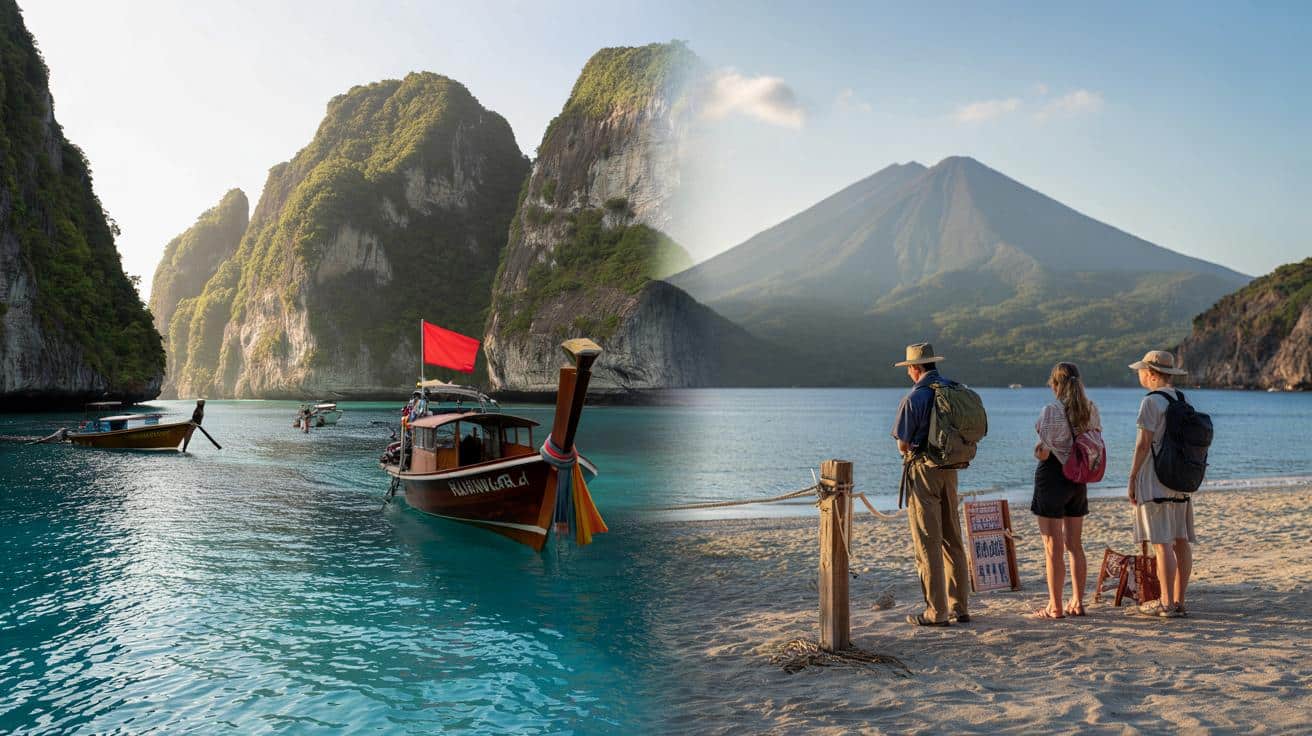
The longtail boats slowed as a ranger lifted a red flag over the bay. Engines coughed, then quieted. On the bow of one boat, a couple from Berlin peered past their sunglasses at the chalk-white curve of sand they’d flown 11 hours to see. Close, but not today.
On the radio: a brisk voice, clipped Thai, a date, a line about coral. The captain nodded once, swung the boat away, and the posters-on-walls beach shrank to a secret again. People didn’t shout. They just stared down at their phones, trying to find the clause they’d missed. The water stayed impossibly clear. The list is growing.
Three places, one problem: when love turns heavy
There’s a pattern to what’s closing, and it tells a story. **Maya Bay (Thailand)** is going into its annual “rest”, a hard stop that runs across late summer to let battered reefs breathe. **Mount Fuji’s Yoshida Trail (Japan)** will shut overnight and cap daytime footfall, a turnstile on a volcano. **Navagio “Shipwreck” Beach (Greece)** remains off-limits to swimmers and near-approach boats through peak months, cliffs watched like a patient in recovery.
None of this is anti-tourist. It’s anti-wear-and-tear. It’s the awkward boundary between a billion shared dreams and a few fragile places with finite rock, sand and oxygen. Get close, yes. Get too close, not anymore.
Take Maya Bay. Before Thailand called time in 2018, as many as 5,000 people stepped onto that strand each day, a footfall that scoured seagrass and kneecapped coral nurseries. The fix sounds stern because it needs to be: a two-month closure in late summer, strict hour-to-hour caps the rest of the year, and no swimming from the sand. Boats now drop anchor at Loh Samah and people walk in along a boardwalk, passing signs about blacktip reef sharks. The water looks wilder again. The silence does, too.
Fuji has its own arithmetic. The Yoshida Trail is the main artery from the Fifth Station, the one where bucket-list sunrise hikes turned into a snaking torchlight procession. This season, Yamanashi Prefecture is putting a hard daily limit on the trail and closing the gate from late afternoon to the early hours to stop midnight crowding. Rangers can halt entry once the counter tops out, and they will. The mountain keeps its dignity. The climbers keep their footing.
And Navagio? The postcard on Zakynthos went viral long before “viral” meant what it means now. Then bit by bit the cliff face above the famous wreck started to slough and crack. Greek authorities restricted landings, swimming and how close boats can drift in summer. The viewpoint stays open with barriers and warnings. It’s less Dangerous Instagram, more quietly beautiful geology lesson. People linger a little longer, and the sea goes back to being a mirror rather than a stage.
How to travel well when the gates aren’t always open
There’s a simple move that saves whole trips: build an A-list and a B-list before you book. Pin the headline spot, then pin two near-equals within an hour’s reach. Check the official park or prefecture websites the week you travel. Follow the local tourism board on social. A closure notice lives there first, not on a blog from 2021.
Another little habit pays off: go at the edges. Early morning entries, late afternoon light, shoulder days midweek. We’ve all had that moment when the queue curves into your day like a slow leak. Spreading your time widens your luck. Let’s be honest: nobody actually does that every day. But doing it once or twice moves the needle, for you and the place.
When a place says “not today”, treat it as a detour, not a dead end. Speak to a ranger or the harbour master. They often have real-time tips that the internet just doesn’t.
“We don’t want to turn people away,” a Maya Bay ranger told me, hat brim low against the glare. “We want them to come next year, and the year after that, and still see something alive.”
- Maya Bay alternatives: Bamboo Island’s outer reef; the jade-green bowl of Pileh Lagoon.
- Mount Fuji alternatives: sunrise from Mt. Takao; a quieter climb on Mt. Norikura in the Northern Alps.
- Navagio alternatives: Porto Limnionas’ limestone ledges; the sulphur-tinged coves of Xigia Beach.
The bigger picture: a season of boundaries, and why that’s okay
These closures aren’t a fad. They’re a boundary line drawn in full sun. Places hit a tipping point where management tools — tickets, signage, bins — can’t keep up with appetite. A pause, or a nightly shut, is the emergency brake that stops a scenic loop from becoming a slow-motion collapse.
It also changes us, a little. The phone stops leading, the map starts listening. You find a café that wasn’t in your carousel and a view that nobody tagged. The story you tell has more weather in it. You might still miss a beach or a summit this summer. You might come home with a favourite you didn’t expect.
Even the most photographed places need days when the lens looks away. The numbers will swing back. The reefs at Maya Bay are re-sprouting. The conga line on Fuji is thinning into hikers again. On Zakynthos, the clifftop feels less like a queue and more like a lookout. It isn’t the end of travel. It’s travel remembering how to breathe.
| Key point | Detail | Interest for the reader |
|---|---|---|
| Maya Bay seasonal “rest” | Annual closure across late summer; strict caps and no beach swimming when open | Plan dates and alternative lagoons to avoid wasted boat trips |
| Mount Fuji trail controls | Yoshida Trail capped daily; gate closed overnight during climbing season | Pick times, consider other peaks, avoid being turned away at the barrier |
| Navagio access limits | No swimming or close boat approaches in peak months; viewpoint open with barriers | Shift focus to lookouts and nearby coves for a safer, calmer experience |
FAQ :
- Are these places fully closed all summer?Not across the board. Maya Bay closes for a set late-summer window, Fuji’s Yoshida Trail closes overnight and when daily caps are reached, and Navagio restricts swimming and close approaches while leaving the viewpoint open.
- How do I know the exact dates?Check the official channels: Thailand’s Department of National Parks for Maya Bay, Yamanashi Prefecture for Fuji, and the Zakynthos Port Authority or Hellenic Coast Guard for Navagio. They post dates and any changes first.
- Can tour operators still take me there?Reputable operators follow the rules. If a site is closed or capped, they’ll reroute or refund. If someone promises “special access”, walk away. Rules exist to keep the place visitable next year.
- What if I already booked flights?Pivot to nearby alternatives. For Phi Phi, think Bamboo Island or Pileh. For Fuji, aim for Takao or Norikura, or hike Fuji by day within the cap. For Zakynthos, plan coastal lookouts and quieter coves.
- Is this overtourism or safety?It’s both. Heavy footfall stresses reefs, trails and cliffs, which then become risky for people. Closures and caps protect nature and the visitor standing in front of it.






Hard limits make sense. Maya Bay’s corals and Fuji’s switchbacks aren’t renewable on a tourist’s timeline. Build an A/B list, check official updates the week of travel, and be flexible—talk to rangers, not just blogs from 2021. I’d rather miss Navagio now than visit a fenced-off ruin later. It’s not anti-tourist; it’s anti-wear-and-tear. We need more traveler responsiblity and fewer FOMO stampedes, even if that means pre-booking or going at the edges. The payoff? Places that still feel alive.
Guess I’ll do a “sunrise hike” to my kettle instead of the Yoshida Trail — headlamp on, instant ramen, same vibes lol.