
Energy bills aren’t just about kilowatts and caps. They’re about timing, and there’s a short, sleepy window when your washing costs can tumble by half.
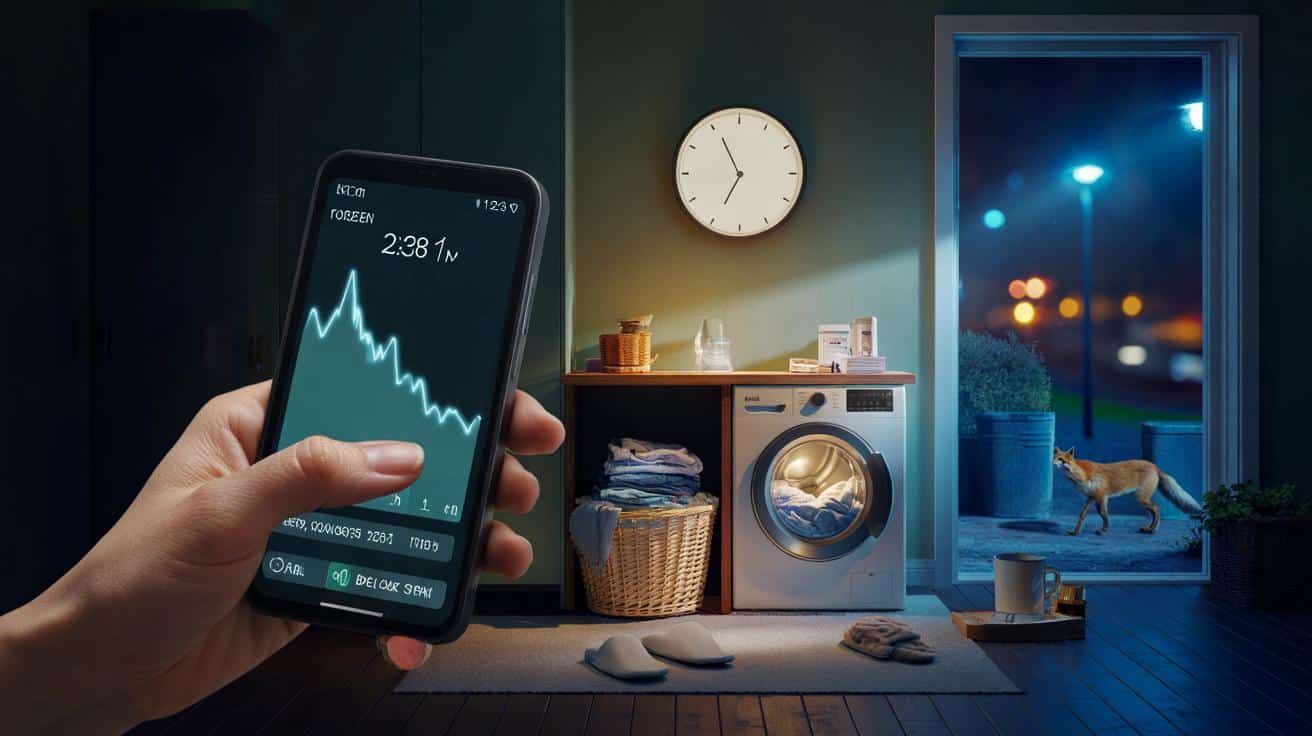
12am, slippers on, coffee in hand. The street was blue and quiet, a fox slinking behind the bins, and her phone brightness flicked up like a lighthouse in the dim hallway. On the screen: a tariff graph dipping low in the small hours, then climbing like a rollercoaster as the city woke. She tapped “Delay start”, kissed a school jumper, and smiled like she knew a secret most people miss. I stood there thinking about laundry as a kind of urban tide, a hush and a rush we forget to notice. Prices have rhythms. So do we.
The price of laundry has a bedtime
Electricity is cheapest when the grid is quiet. That’s late at night and very early morning, when kettles rest and cookers go dark. Suppliers reward that lull with off‑peak rates, especially on time‑of‑use or Economy 7‑style tariffs.
Daytime, power gets busy and pricey. The peak hump, roughly 4–7pm, is when we all pile in from work, cook, wash, heat, and stream. That’s also when laundry can cost nearly double compared with the dead of night.
On a typical night‑rate plan, the unit price after midnight can sit around 7–12p/kWh, while daytime sits closer to 25–35p/kWh depending on cap and supplier. Smart tariffs slice the day into half‑hour chunks, and those 2–4am slices are often the lowest of all. A washing cycle doesn’t look like much, but the heating phase of 40°C cottons is the energy hog. Move that heat to the cheap window, and the maths flips.
Think about a normal 40°C wash using 0.6–0.9 kWh. At 30p/kWh daytime, you’re paying 18–27p. Shift it to 10p/kWh at night, and it’s 6–9p. That’s a saving in the 50–67% range, before you’ve changed a single sock or turned the dial to Eco. *The quiet hours are worth more than you think.*
The exact window: when to press start
The sweet spot to hit on most British tariffs is the small hours. **The cheapest window for most Brits is between 2am and 4am on a time‑of‑use tariff.** On Economy 7, your off‑peak is usually a 7‑hour block starting around 11pm–1am, then ending around 6–8am. Aim to get your entire cycle inside that block, not straddling the edges.
On smart tariffs, open your supplier’s app and look at tomorrow’s half‑hour prices. Pick a 60–90 minute period where the graph dips hardest, often 1–5am, then use “Delay start” so the drum begins in the trough. Choose 30°C for everyday loads, which cuts the heating energy further. If you can, use a quick cycle when clothes aren’t heavily soiled, and spin at a higher rpm to slash tumble‑dryer time later.
We’ve all had that moment where the basket is overflowing and the evening looks like the only shot. Try resisting the 6pm impulse. Avoid 4–7pm entirely, both for price and carbon. **Let’s be honest: nobody actually does that every day.** The fix is small: one scheduled load at dawn, when someone’s awake or about to be. Fire services advise against running appliances while you sleep or when you’re out, so time it to finish as you get up.
Think of laundry like booking a cheaper train: same destination, kinder ticket. Speak to your tariff, not the clock on the oven, and you’ll keep the spin in the savings lane.
“Run heavy appliances when the grid is quiet, not when the kids’ tea is on.”
- Economy 7: off‑peak is often 11pm–6am or midnight–7am (check your meter label or bill).
- Smart/EV tariffs: deepest dips commonly land 1–5am, with a real low point around 2–4am.
- Avoid peak: 4–7pm is the costliest slice for most households.
- Safety rhythm: schedule finishes for early morning while someone’s around.
- Cycle choice: 30°C or Eco 40–60 uses less heat energy without wrecking your wash.
Getting the 50% saving, step by step
Open your energy app tonight and glance at the price curve for the next day. Pick a cheap 90‑minute slot, usually 2–3 consecutive dips in the small hours. Load the drum two‑thirds full, choose 30°C or Eco 40–60, then set “Delay start” so it begins as the trough opens.
If your machine lacks a timer, prep the load before bed and hit start when you wake up, not after work. A higher spin (1200–1400 rpm) shortens tumble‑dryer time by a chunk. Use liquid detergent in cooler cycles, and keep filters clean so the motor doesn’t work harder than it should.
Common missteps? Running half‑loads, washing at 60°C out of habit, or letting a two‑hour cycle overhang into the pricier window. Don’t plug high‑draw appliances into cheap mechanical timers; they’re not designed for that load. **Never run a washing machine while you’re out or asleep—stay nearby.** If you’re on a flat tariff, time‑shifting won’t change the price, but it still lowers strain on the grid and can reduce carbon when the wind is strong overnight.
Why moving a wash matters beyond the bill
There’s a small pride in beating the meter at its own game. It’s not extreme couponing or a life overhaul. It’s one little habit that, multiplied by three or four loads a week, quietly adds up across a spring and a summer.
The mindset travels, too. Once you see the 2–4am trough, you start noticing other troughs. Dishwasher cycles, EV charging, even when to top up a battery if you’ve got panels on the roof. These rhythms turn a flat, frustrating bill into a map you can actually read.
Your laundry won’t care if it spins at 2.15am or 6.30am. Your wallet will. Tell a friend the next time they moan about the price of clean socks. Somewhere on their tariff graph, a blue valley is waiting.
| Key point | Detail | Interest for the reader |
|---|---|---|
| Off‑peak is your ally | 2–4am is typically the cheapest slot on time‑of‑use tariffs | Hit that window and your wash can cost up to half as much |
| Cycle choice multiplies savings | 30°C or Eco 40–60 slashes the heating load of a wash | Lower energy per cycle, same clean clothes |
| Avoid the peak hump | 4–7pm carries the highest unit price and carbon intensity | Move the wash and dodge the most expensive power |
FAQ :
- What’s the exact best time to run my washing machine?On most UK time‑of‑use tariffs, target 2–4am. On Economy 7, keep the whole cycle inside your night‑rate block, often midnight–7am.
- Can I really save 50% just by shifting the time?Yes on many tariffs. Night rates can be roughly half the daytime unit price, and a 30°C cycle lowers the kWh draw further.
- Is it safe to run the machine overnight?Fire services advise against running appliances while you sleep or when you’re out. Schedule for early morning while someone’s around.
- I’m on a flat tariff. Does timing matter?Your unit price won’t change by time, but avoiding 4–7pm helps the grid and can cut carbon intensity. You can still use cooler cycles to save.
- How much does a wash actually use?A modern 40°C cotton cycle often uses 0.6–0.9 kWh. At 30p/kWh that’s ~18–27p; at a 10p night rate, ~6–9p.







Loved the breakdown of the 2–4am trough. I switched to 30°C and used delay start—my last bill was definitley lower. Thanks for the hand‑holding!