
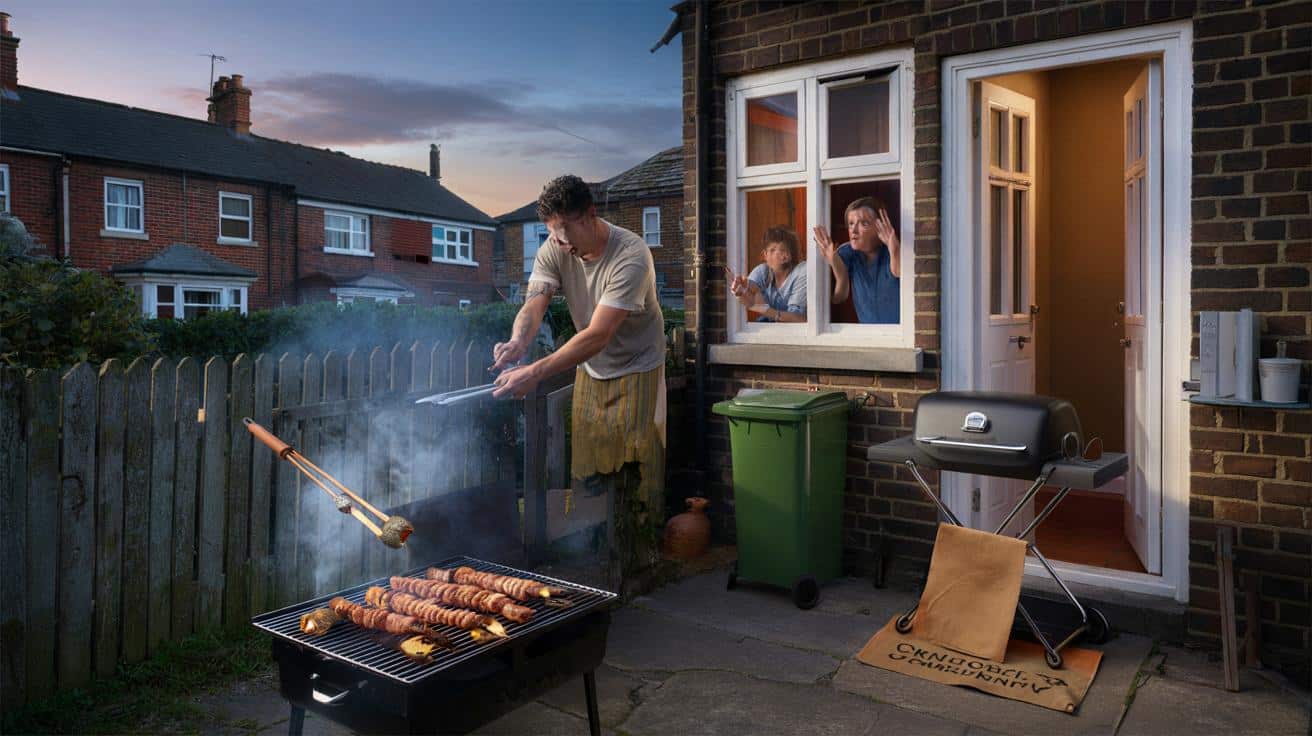
As warmer evenings arrive, households across the UK are being urged to check rules that could mean a costly penalty for the most ordinary summer ritual: lighting a BBQ, fire pit or small bonfire. The “fine” isn’t a scare story. It’s a real risk — and it’s catching people out.
Twilight in a quiet street. Windows cracked open for the first time in weeks. Somewhere nearby, a burst of laughter, then that unmistakable spark-and-thud of a lid being lifted on a barbecue. A neighbour on the top floor leans out from a balcony to sniff the air, then closes the window with a weary shrug as smoke curls past the sill.
I watched a man in sliders pace his patio, flipping kebabs like a TV chef, while the house next door shut every window in a hurry. Later, a council envelope slid under someone’s door. It wasn’t a party invitation. It was a warning about smoke. The fine is real.
Why your balcony or garden could trigger a costly “smoke” notice
The law doesn’t ban summer — it targets nuisance. When smoke or fumes from a garden or balcony seriously interfere with a neighbour’s use of their home, councils can treat it as a statutory nuisance. That includes BBQs, fire pits, chimineas and bonfires that pump out thick smoke or smoulder for hours.
Neighbours aren’t expected to live sealed behind glass. If your smoke invades their home repeatedly or intensely, environmental health teams can step in. **Fines for domestic smoke nuisance can reach £5,000, with extra daily penalties if you ignore a notice.**
Ask environmental health officers what fills their summer inbox, and smoke complaints sit right alongside late-night noise. One Manchester couple held regular Friday fire-pit nights. On the third week, the neighbour logged the haze, the smell, the coughing fit in a child’s bedroom. An abatement notice followed, the garden fell quiet, and the fines were avoided — but only just.
Across the country, councils each receive dozens — sometimes hundreds — of seasonal reports. The pattern is familiar: a first warm spell, an enthusiastic grill, then calls from residents who can’t sleep or breathe comfortably in their own homes. The power to act exists, and it’s often used after a warning has already been given.
There’s another layer people miss: smoke control areas. Many towns and cities still have them. In these zones, burning unauthorised fuels on open fires is not allowed, and certain appliances are restricted. **In smoke control areas, burning the wrong fuel can cost up to £1,000.** This sits alongside the broader nuisance rules, which apply anywhere in the UK.
Balconies are a separate minefield. Leases and building fire policies often ban open flames outright, including charcoal grills and fire pits. Breaking those terms can lead to penalties from building managers or landlords — and a formal breach on your record. **Most building managers treat balcony barbecues as a fire risk and a breach of your lease.**
What to check today — and how to stay on the right side of the rules
Start with your postcode. Type “smoke control area” and your council’s name, or use the GOV.UK checker to see which fuels and appliances are allowed. Then read your building’s fire policy if you live in a flat — it’s often buried in onboarding emails or the tenant portal. Scan your lease for clauses on open flames, BBQs and storing combustibles on balconies.
Next, look for local guidance on bonfires and outdoor burning. Many councils publish simple do’s and don’ts: no burning painted wood, no smouldering piles, no garden waste on windy evenings. Keep receipts for fuel marked “ready to burn,” and position any grill far from fences or washing lines. A few minutes of prep is cheaper than a fine.
Some mistakes are predictable. Wet wood and smoky fuels. Setting the grill below a neighbour’s bedroom vent. Burning offcuts that spit and stink. We’ve all had that moment when the first warm evening arrives and someone lights a BBQ nearby, and you wonder whether to complain or let it slide.
Quiet conversations work wonders. Tell neighbours your plan if smoke travels their way, and finish by a sensible hour. Swap the fire pit for a gas or electric grill in tight spaces. Let’s be honest: nobody actually does that every day. But when someone’s child is wheezing through haze, the goodwill evaporates fast.
One line sums up the mood from councils right now.
“Enjoy your outdoor space — but not at the expense of your neighbour’s health or home life. If smoke becomes persistent or unreasonable, we will act.”
- Check: Are you in a smoke control area? Use your council website or the GOV.UK tool.
- Read: Lease and building fire rules for balconies and shared terraces.
- Choose: Low-smoke fuel, dry wood, or switch to gas/electric in tight spots.
- Time: Keep burns short, not late, and avoid breezy nights.
- Talk: Give neighbours a heads-up; note any issues calmly if you’re on the receiving end.
Beyond the penalty: a calmer, cleaner summer outside
Fines get headlines. Peace gets you through the season. If you love the crackle of charcoal, you can keep it — just be strategic. Position the grill out of the wind, lift the lid gently, and keep a lid on smoulder. If you’re in a flat, switch to electric on the balcony and do your smoky sear in a courtyard or park barbecue zone where it’s permitted. This is not about spoiling summer; it’s about keeping the peace.
There’s a human rhythm to warm weather in Britain: windows open, laundry out, evening chats across fences. The smallest choices decide whether those moments feel easy. A better fuel. A quick text to next door. A weekend plan that doesn’t end with a council knock. If you’re wondering whether this “fine” applies to you, the honest answer is simple: possibly. The smarter answer is even simpler — check once, cook happy, breathe easy.
| Key point | Detail | Interest for the reader |
|---|---|---|
| Statutory nuisance risk | Smoke or fumes that disrupt neighbours can trigger abatement notices and fines up to £5,000 | Avoid a costly penalty by changing small habits |
| Smoke control areas | Rules on fuels and appliances; burning the wrong fuel can mean a £1,000 penalty | Know your local limits before lighting anything |
| Balcony rules | Leases and fire policies often ban open flames on balconies | Prevent lease breaches, disputes and scary letters |
FAQ :
- What exactly is the “fine” people are talking about?For domestic smoke deemed a statutory nuisance, councils can issue an abatement notice. Breaching it can lead to prosecution and a fine commonly quoted up to £5,000, plus daily penalties if the problem continues.
- Can I have a BBQ in my garden?Yes, if it doesn’t cause unreasonable smoke or fumes. Use dry fuel, position it thoughtfully, and keep burns short. In a smoke control area, stick to allowed appliances and authorised fuels.
- Are bonfires legal?They’re not banned UK‑wide, but smoky or frequent bonfires can be treated as a nuisance. Don’t burn household rubbish, plastics or painted/treated wood. Many councils offer garden-waste collections as a cleaner alternative.
- Are balcony barbecues allowed?Often not. Many leases and building fire policies prohibit open flames on balconies. Even where not explicitly banned, smoke drifting into homes can still trigger complaints and enforcement.
- How do I raise or resolve a smoke problem with a neighbour?Start kindly: explain what you experienced and suggest small fixes. If it persists, keep a simple log and contact your council’s environmental health team for guidance.







Does this apply UK‑wide or only in smoke control areas?