
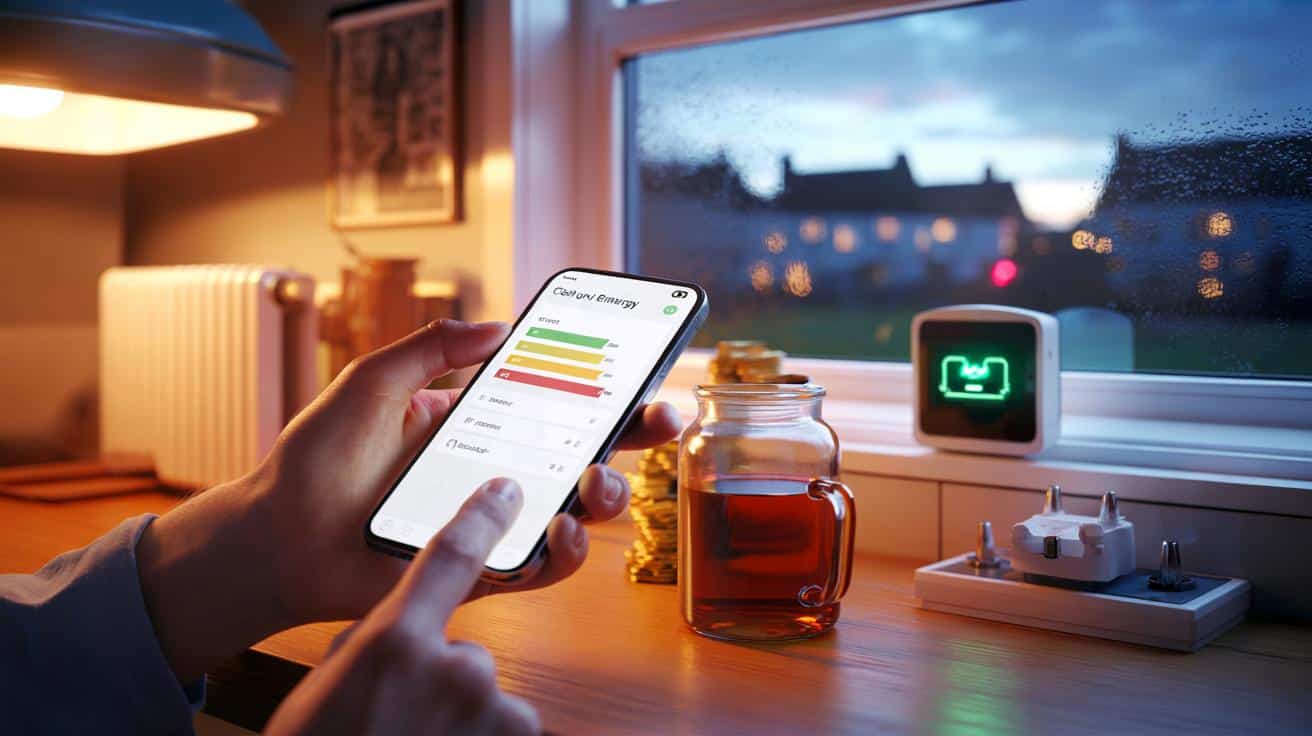
Martin Lewis is urging a simple move that flips that script: a quick “3‑minute check” that could shave around £400 a year off what you pay, depending on your home and deal.
I met a dad in Walthamstow staring at his phone outside a corner shop, thumb hovering over his energy app like it might bite. He’d promised himself he’d sort the bill “this week” since September. Then winter crept in, lights clicked on earlier, and that promise started to feel heavier than the coat on his shoulders. He wasn’t reckless, just overwhelmed by unit rates, standing charges, price caps, and jargon that never sounds like it’s on your side.
This isn’t about turning off your toaster at the wall. It’s about a three-minute habit that could change your monthly direct debit, and maybe your mood too. He opened the app. He took a breath. He tapped the one button we all ignore. What happened next surprised him.
And it might surprise you.
What the ‘3‑minute check’ actually is
Martin Lewis’s point is disarmingly simple: take three minutes to check if you’re on the right tariff and paying the right direct debit. No spreadsheets. No marathon. Open your energy account, find your current unit rates and standing charges, and compare them with today’s best deals. If a fixed rate beats what you’re paying now across your real usage, lock it in. If you’re already on the cheapest sensible option, keep calm and carry on.
The magic is in the speed. Three minutes cuts through the dread and makes it doable on a Tuesday night, not just “one day.” And if you can trim even £30 a month for the next year, that’s roughly £360 saved without touching the thermostat. For many households, the gap is bigger. That’s where the headline **£400 saving** comes from — not a promise, but a strong possibility.
Here’s a real-world picture. Sarah in Leeds lives in a mid-terrace with a toddler, a cat that thinks it pays rent, and a gas boiler edging toward its last good winter. She was on her supplier’s default variable tariff, set at the cap. A fixed deal popped up in her account, slightly under the price cap’s equivalent for her usage. She ran a quick comparison against her last 12 months’ kWh — about 10,800 gas and 2,900 electricity — and the maths said yes. Her new direct debit dropped by £34 a month. Over a year, that’s just over £400.
Not every story ends like that. But many do when people use their actual kWh, not guesswork. Three minutes, one decision, measurable results. It’s oddly satisfying, like finding a £10 note in last winter’s coat.
There’s a logic to why this works. The price cap is a ceiling on unit rates and standing charges for typical use, not a cap on your total bill. Some suppliers quietly launch fixed deals that sit under that ceiling for certain regions or usage patterns. If your consumption fits that sweet spot, moving can be cheaper. On the flip side, if your fix is priced higher than today’s cap equivalent, sticking or ditching depends on your tolerance for risk and the market forecast. This is why using your own kWh matters more than any headline rate.
Direct debits matter too. If your credit balance is bloated, you’re lending the supplier money for free. If it’s low and winter spikes are coming, a small tweak now prevents a shock later. The three-minute check nudges both levers — tariff and payment — in your favour.
How to do it, step by step, in three minutes
Minute 1: open your supplier app or online account. Note your current unit rates (pence per kWh) and standing charges (pence per day) for gas and electricity. If you can, grab your last 12 months’ actual kWh. If not, the last six months will do. Minute 2: check if your supplier is offering a new fixed deal in-account and compare its rates against what you pay now.
Minute 3: run a quick comparison using a trusted site that lets you plug in your own kWh, not estimates. Look for fixes below your current effective rates, factoring in any exit fee and contract length. If a deal beats your real numbers by a clear margin, consider switching or fixing. If nothing wins, stay put and adjust your direct debit to reflect your true use. A quick meter reading locks the numbers to reality.
People make the same mistakes every winter. They compare monthly prices, not unit rates. They forget exit fees. They ignore Economy 7 night rates and end up worse off. They look at “typical” use instead of their own. Then they assume the whole thing’s a con and give up. Don’t be harsh on yourself — this system isn’t built for clarity. We’ve all lived that sinking feeling when the bill email lands at 7:01am.
Keep it human: use your kWh, not guesswork. Check exit fees before you click. If you have a smart meter, pull an up-to-date reading. If you don’t, snap a meter photo and upload it. And breathe. Let’s be honest: nobody does this every day.
When I asked an energy adviser what she tells clients who look defeated before they begin, she shrugged and smiled.
“Three minutes now can save you three months of worry later. Start there. The rest can wait.”
- Use your last 12 months’ kWh to compare — not an estimated monthly cost.
- Check for exit fees on your current tariff before switching or fixing.
- If a fix is clearly cheaper than your current effective rates, take the win.
The bigger picture — small checks, calmer winters
The 3‑minute check isn’t a silver bullet, and Martin Lewis wouldn’t pretend it is. It’s a habit. A small, repeatable moment where you turn dread into a decision. Keep it on your calendar every quarter or when price changes hit. If a cheaper fix appears, you’re ready. If it doesn’t, you’re paying the right amount and not swimming in supplier credit.
There’s something else happening when you do this. You reclaim a bit of control from a market that never feels like it’s on your side. You turn anonymous unit rates into a choice. And you teach your household — kids included — that money isn’t just something that “happens” to you. It can be steered. It can be tidied. It can be respected. That’s worth more than a neat spreadsheet.
We’ve all had that moment where a bill lands and your stomach drops, even before you read the number. The three-minute check doesn’t erase that, but it softens the edge. It gives you a lever to pull when the lights go on earlier and the radiators click awake. And if your number doesn’t move this week, try again next month. Markets shift. Deals update. Your usage changes with the seasons.
Start with one quiet tap on your phone. Then another. Then the tiny relief of knowing your **3‑minute check** just bought you some breathing space.
| Key point | Detail | Interest for the reader |
|---|---|---|
| The 3‑minute check | Open your account, note unit rates and standing charges, compare to current fixes and cap-level deals | Fast way to spot a potential **£400 saving** without lifestyle changes |
| Use real kWh | Compare using your last 12 months’ kWh, not estimated monthly costs | Prevents overpaying and avoids misleading “typical use” traps |
| Tweak direct debit | Align payments with actual usage and credit; take a fresh meter reading | Smoother cashflow, fewer nasty surprises in spring |
FAQ :
- What exactly is Martin Lewis’s “3‑minute check”?It’s a quick review of your tariff and direct debit using your real kWh. You compare your current unit rates with live fixed offers and the price-cap level, then decide whether to stick, fix, or switch.
- Can it really save £400?For some households, yes — especially if a fix undercuts their current effective rates by a clear margin. Savings vary by region, usage, and timing, so treat £400 as a realistic “up to”, not a guarantee.
- Should I always fix if offered?No. If a fix costs more than your current effective rates, it buys certainty, not savings. If it’s the same or lower on your kWh, it can be a win. Consider exit fees and contract length.
- What if I’m on prepayment?You can still compare rates and switch supplier. Many prepay customers benefit from checking for cheaper tariffs or smart prepay options, though choices can be narrower.
- Do I need a smart meter to do this?No. A smart meter helps, but a fresh manual reading and your last 12 months’ bills work fine. Keep photos of your meters for your records.







Just tried the 3‑minute check after reading this. Found an in‑account fix that undercuts my current unit rates; DD dropping by £31/month. Not life‑changing, but it’s definitly less dread when the email lands. Thanks for the nudge.
Genuine question: how do you factor in the risk that wholesale prices fall? Locking now could mean overpaying for 12 months. Any rule‑of‑thumb beyond “if the fix is lower today, take it”? Data on how often fixes beat the cap over a year?