
Across the UK, a thin shimmer is appearing behind radiators. It’s not décor. It’s a quiet, practical revolt against stubborn energy bills and chilly walls.
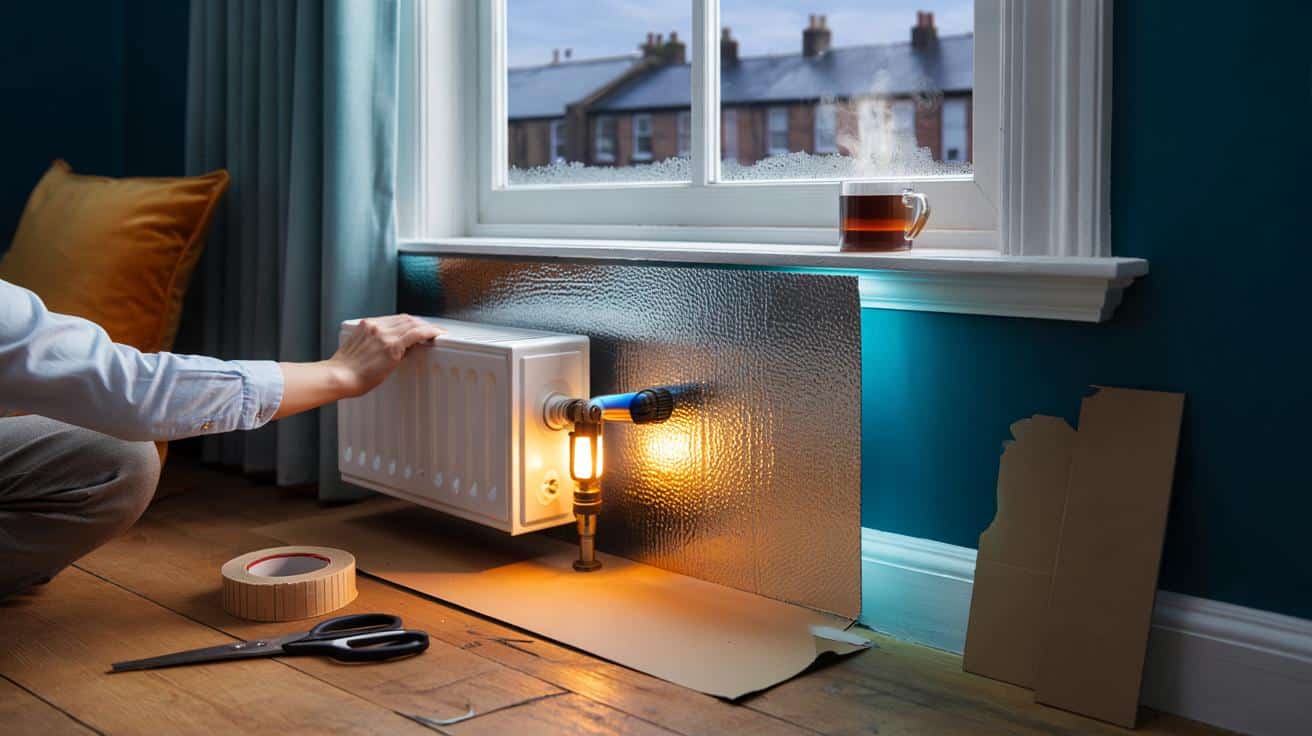
She snips a panel, peels a strip of tape, and slides the gleam into the slim gap between radiator and plaster. The metal ticks. The room holds its breath.
Five minutes later she’s nudging the thermostat down half a notch, just to see. The heat feels more… present. Not hotter, exactly. Closer.
We’ve all had that moment when the heating clicks off and a room seems to sulk, warmth seeping into the masonry like tea into a napkin. This little tweak claims to stop that silent leak. It’s a small hack with a big following.
The quiet boom of shiny backs
Walk past any DIY aisle this winter and you might spot it: rolls labelled “radiator reflector,” tucked between draft excluders and foam tape. What looked like a niche gadget has turned mainstream as households hunt for low-cost ways to stretch warmth. It’s humble, almost cheeky — turn the wall into a mirror and bounce heat back to you.
On local Facebook groups in Bristol, Hull and Dundee, neighbours swap photos of neatly tucked sheets and swear their living rooms warm faster. A Manchester lettings agent told me renters ask about “those foil panels” almost as often as they ask about broadband. Hardware staff say the rolls are the first to go when the forecast dips. Call it the shimmer effect.
Here’s the simple logic. Radiators heat air by convection, but they also radiate heat in every direction — including straight into the wall behind. External walls, especially in older properties with solid brick, drink that warmth. A reflective barrier sends a chunk of that radiative heat back into the room. **This isn’t a miracle upgrade; it’s a small nudge in the right direction.**
How it works, and why it helps
Picture a mug of tea pressed against a cold window: the glass steals heat. A radiator on an outside wall behaves the same way. Without a barrier, the backside of the radiator warms the wall up, not the room. A reflective surface interrupts that transaction. The physics is school‑simple — shiny surfaces reflect infrared, and a tiny air gap adds a smidge of insulation.
Independent tests have found that reflector panels can cut back-wall heat loss from that radiator by a modest slice, often in the 5–10% range for that unit. In practice, people notice rooms holding temperature a bit longer, and thermostats not working as hard. In a draughty semi or a solid-walled flat, that small gain feels bigger than it looks on paper.
Add up weeks of heating and the pennies turn into real pounds. Typical reports point to shaving a few per cent off gas use in living spaces with external-wall rads, translating to maybe £10–£30 a year for a modest home. Not a game-changer alone, but stack it with thick curtains, TRVs, and better timings, and the effect compounds.
How to do it without wrecking your walls
Use purpose-made reflector panels or foil-faced foam. Cut a sheet slightly smaller than the radiator’s outline so it hides cleanly. Fix it to the wall, not the radiator, with thin double‑sided tape or removable strips, keeping a 2–3 cm air gap behind the radiator. Keep clear of valves and pipes. Aim for the area directly behind the radiator, from just above the skirting to near the top of the panel.
Kitchen foil can work in a pinch, but it tears, crinkles and looks messy. Foil on a thin backing (bubble or foam) is sturdier and improves performance. Don’t block the convector fins or drape anything over the top grille; radiators need airflow. Watch for condensation on very cold walls; good ventilation matters. Let’s be honest: nobody does this every day. Do it once, do it neatly, and then forget about it.
*Done right, it’s safe and reversible.* If you rent, go with low‑tack strips so you can peel it off in spring. **On an external wall, a reflector can cut back-wall heat loss and help rooms feel warmer at a lower thermostat setting.**
Think of foil as a polite redirect: “Not into the brick, thanks — back to the room.”
- Best place: radiators on external walls, especially uninsulated ones
- Avoid: internal walls — benefits are tiny there
- Tools: scissors, tape, template cut from cardboard
- Time: 10–15 minutes per radiator
- Cost: from £8–£20 for enough to do a couple of rooms
What people get wrong (and how to get it right)
There’s a difference between shiny and smart. The aim isn’t to wrap the radiator, it’s to line the wall behind it. If you stick foil directly onto the radiator, you can kill airflow and make dust bake onto hot metal. Fix to the wall, keep that slim gap, and stop where the radiator stops.
Use the right scale. Massive rolls of cheap kitchen foil sag, rumple and find every breeze. Reflector panels are stiffer, last longer, and hide better. If you love a tidy finish, cut a cardboard template first. If your wall is flaking, deal with the paint before adding tape — nothing ruins a renter’s day like a strip of emulsion on the back of a sticky pad.
Foil won’t fix draughts or a failing boiler. Pair it with precision: set TRVs, bleed your rads, reduce flow temperature on condensing boilers, and close heavy curtains at dusk. **Small measures stack up when they’re easy to live with.**
Heat your space, not your brickwork — it’s the most British sentence I’ll write all week.
- Skip it if your walls are insulated and internal — the gains are minimal
- Do it where heat loss is obvious: cold external walls, bay windows, north-facing rooms
- Keep clear of sockets and cables; tidy beats risky
- Check for damp; if you see moisture, fix causes before adding barriers
- Revisit in spring; panels can come down as your habits change
Beyond the shiny sheet
This trend says something about the way we live now. When energy prices wobble, we reach for frictionless fixes — ten minutes, a cup of tea, a small change you can feel tonight. The foil is symbolic as much as practical. It’s the sense of agency on a grey evening, the quiet pact you make with a house that leaks warmth like gossip.
There’s also a communal rhythm to it. Friends text photos, colleagues swap tips, a cousin in Glasgow sends a link to a bulk deal. The trick spreads because it’s cheap, because it doesn’t need permission from a landlord, because it doesn’t ask you to learn plumbing. It’s the gateway to better habits — lower flow temps, timed boosts, heavier curtains — a bright edge that nudges everything else along.
And if you try it and don’t feel much? No harm done. Peel it off, roll it up, gift it to a neighbour with a north-facing lounge and Victorian brick. The point isn’t perfection. It’s the small, human warmth of trying.
| Key point | Detail | Interest for the reader |
|---|---|---|
| Reflect the heat you already pay for | Panels bounce infrared back into the room, trimming wall losses on external walls | Warmer feel at the same thermostat setting, faster comfort |
| Cheap, fast, renter-friendly | Under £20 and 10–15 minutes per radiator; removable strips avoid damage | Low risk, immediate experiment you can do tonight |
| Not a silver bullet | Modest savings alone; best when paired with TRVs, boiler tweaks, curtains | Realistic expectations, better combined results |
FAQ :
- Does kitchen foil work or do I need special panels?Kitchen foil reflects heat but it’s flimsy and hard to keep neat. Foil-faced panels are sturdier, hide better, and add a tiny bit of insulation.
- Is it safe to put foil behind a radiator?Yes, when it’s on the wall, not touching hot parts, and kept clear of valves and cables. Use fire-safe materials from reputable brands.
- Where does foil make the most difference?Behind radiators on external walls, especially in older or solid-walled homes. On internal walls the gains are usually negligible.
- How much money could I save?Expect modest savings — often in the £10–£30 a year range across a typical home, with a bigger feel-good boost in comfort.
- Will this stop condensation or draughts?No. It helps redirect heat; it doesn’t fix moisture or air leaks. Tackle ventilation, seals and curtains for those jobs.






Tried this last weekend on the two rads against my north-facing wall. It wasn’t magic, but the room held heat longer and I nudged the thermostate down a notch. For £12 and 15 mins, defintely worth it.
Isn’t the 5–10% figure only for that single radiator, not the whole house? If so, the savings sound tiny—am I missng a trick here or is this mostly comfort over cash?