
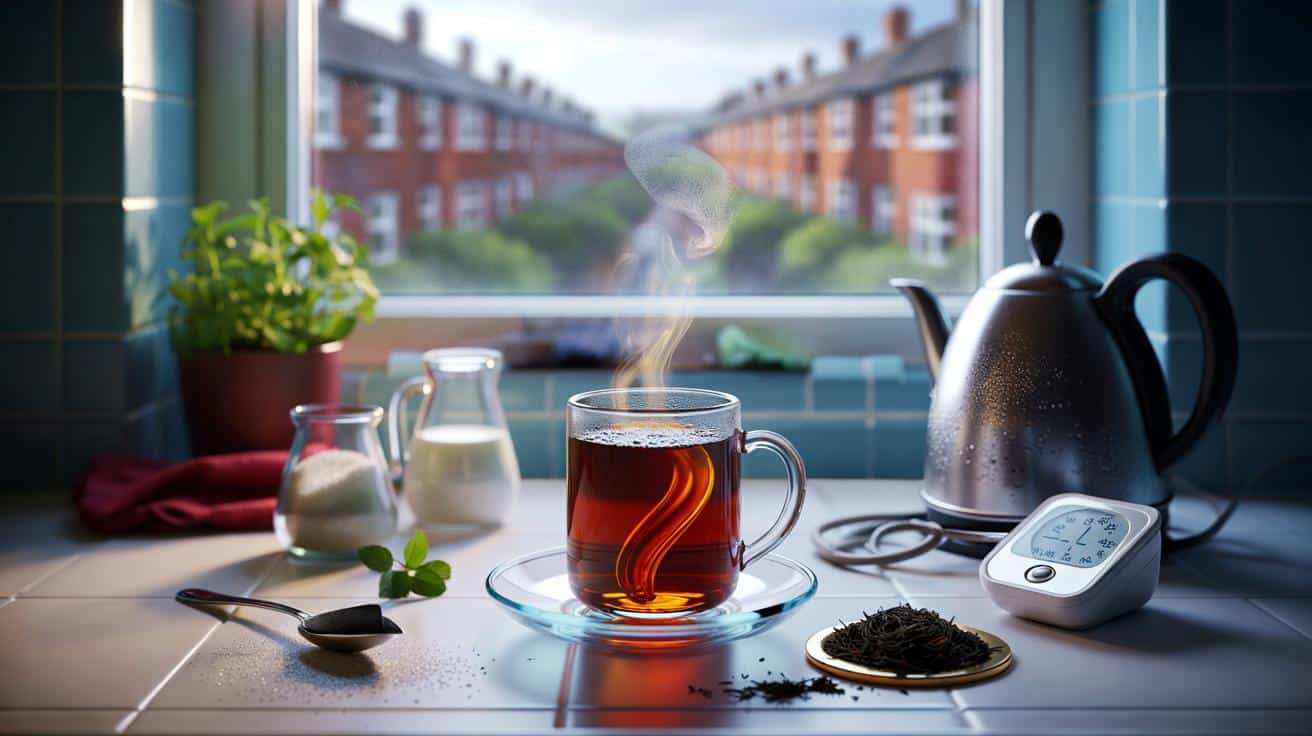
A simple brew, a familiar mug, and a quiet promise: could the answer to lowering blood pressure be sitting right behind the sugar jar?
The kettle rattles in a terrace kitchen in Leeds, misting the window while radio headlines count the country’s rising blood pressure numbers. A man in a fleece ties his bootlaces, lifts the teabag twice, and stares at the swirl turning amber. He wants energy. He’d like to live long enough to see his daughter graduate.
His Nan swore by a strong cuppa before any big day. A doctor on the TV says walk more, stress less, eat better. He nods, then takes another sip. The steam hits his face like a small kindness.
He doesn’t know it yet, but this everyday ritual is doing a little more work than he thinks. It’s doing something measurable.
The quiet power of the British brew
We reach for it when we’re knackered, cold, rattled, or just bored: tea. More specifically, black tea — the kind in almost every British cupboard. Call it comfort if you like. Nutrition scientists have another word for it.
They call it cardioprotective. Those coppery leaves carry a cargo of flavonoids that help blood vessels relax. It’s not hype from a wellness influencer; it’s lab-tested chemistry pouring into a mug.
The numbers aren’t flashy, which is exactly why they’re real. Across multiple randomised trials, daily tea has nudged down blood pressure by a small but consistent margin. We’re talking a few millimetres of mercury — roughly 1 to 4 off systolic, a point or so off diastolic — with black and green tea both showing benefits.
That might sound tiny. Yet at a population level, a couple of points lower means fewer strokes and heart attacks. It’s the kind of quiet win public health people dream about: nothing fancy, no shakes or supplements, just the national habit doing a bit of heavy lifting.
What’s going on under the hood is simple and rather elegant. Tea’s flavonoids, like epicatechins, boost nitric oxide — the molecule that helps arteries open up and keep blood flowing smoothly. Better endothelial function, less stiffness, gentler pressure on the pipes.
The way you brew affects the payload. Longer brew, more flavonoids. Milk doesn’t “kill” the effect like the myths say; the consensus is the impact is minimal. Decaf still carries plenty of compounds too. The big villain isn’t milk. It’s sugar.
How to make your tea work harder
There’s a sweet spot for making tea a steady ally. Two to four mugs spaced through the day, brewed for three to five minutes, is a practical lane for most people. That pull on tannins and flavonoids seems to matter. Short dunking is taste; proper brewing is therapy.
If caffeine keeps you up, shift a cup or two to decaf in the afternoon. The plant molecules that help your arteries are still there. Green tea also works, if you fancy going grassy. Keep your last cup early in the evening so sleep stays solid, since poor sleep pushes blood pressure up overnight.
The common pitfalls are small but sneaky. Sugar is the main one. Two spoons, three times a day, and you’ve built a habit that fights the very goal you’re chasing. Swapping to a half-spoon, then none, is a one-month project your future self will thank you for.
There’s also timing. Tea can blunt iron absorption from plant sources, so give it a buffer around meals if you’re low on iron. If you’re on certain medicines, match the habit to the prescription. Green tea can reduce how some beta-blockers — such as nadolol — are absorbed. A quick chat with your pharmacist clears the fog. Let’s be honest: nobody does that every day. But one phone call beats months of guesswork.
Small, repeatable choices beat heroic bursts. A well-brewed cup, less sugar, and a steady routine will push your numbers in the right direction — not dramatically, but reliably.
- Go long on brew: 3–5 minutes for more flavonoids.
- Trim sugar, not flavour: try cinnamon or a splash of milk.
- Keep it steady: 2–4 cups across the day.
- Mind the timing: leave space around iron-rich meals.
- If medicated for blood pressure, check for tea–drug quirks.
Beyond the kettle
We’ve all had that moment when the cuff squeezes and the number flashes higher than we’d like. A good brew helps, but it isn’t a magic wand. Think of tea as the keystone habit you can hook other wins onto — a five-minute pause that pairs well with a brisk walk at lunch, a pinch less salt at dinner, and ten quiet minutes off your phone before bed.
Tea is also a cue. Use your morning mug to take a reading on a home monitor, sitting calmly with your arm at heart height. Do two readings, a minute apart, and jot the average. Repeat in the evening. Across the week, patterns beat one-off scares.
There’s a social layer here too, which might be the most British part of all. Tea breaks build routine and community, and routines stabilise behaviour. Fewer crisps with the 3pm cuppa. A glass of water before the first mug. A short walk while the kettle boils. *It’s the gentlest form of self-respect.*
Synthesis
Tea feels ordinary. That’s its power. You don’t need to learn a new recipe or buy a pricey gadget; it’s already in the cupboard, ready to be shaped into something that quietly supports your heart. The science doesn’t claim miracles. It points to a steady drift downward — small numbers, real lives.
There’s space here to make it your own. Black, green, strong, milky. Decaf after lunch. Less sugar by Easter. Pair your brew with one new habit you can actually keep: a shorter salt shaker, a five-minute stroll, a half-hour earlier bedtime. Tell a friend and make it a pact. These tiny seams in the day are where health squeezes in and takes root.
One kettle, one mug, one better choice at a time. **The humble British brew** turns out to be a small, daily vote for the future you want — heart steady, numbers kinder, mornings calmer.
| Key point | Detail | Interest for the reader |
|---|---|---|
| Tea can lower blood pressure modestly | Regular black or green tea trims a few mmHg off systolic and diastolic readings in trials | Achievable benefit without overhauling your life |
| Brewing and routine matter | 3–5 minutes per cup, 2–4 cups per day, and less sugar amplify the effect | Clear, simple steps you can start today |
| Stack habits around the kettle | Use tea breaks to cue walks, track readings, and cut salt | Compounds small wins into meaningful change |
FAQ :
- Does milk cancel the benefits of tea for blood pressure?No. Most evidence suggests milk doesn’t meaningfully block tea’s helpful flavonoids. Choose the splash you enjoy and focus on brewing time.
- How many cups of tea per day are helpful?Two to four mugs suits most adults. If you’re caffeine-sensitive or pregnant, shift to decaf after midday and keep total caffeine within recommended limits.
- Is green tea better than black tea?Both show small, consistent benefits. Pick the one you’ll actually drink daily. Green tea may be slightly stronger per cup, but taste and habit win long term.
- Can I drink tea while on blood pressure medication?Often yes, but check specifics. Green tea can interfere with nadolol absorption. If you take beta-blockers or have concerns, speak to your pharmacist or GP.
- Will tea alone fix high blood pressure?Tea helps, yet it’s one piece. Best results come with lower salt, regular movement, decent sleep, less alcohol, and sticking to your prescribed treatment.






Kettle therapy it is.