
After 70, little daily choices start to matter like compound interest. Energy dips, appetite wobbles, sleep gets patchy. Gerontologists keep pointing to one humble fruit that quietly props up bones, bowels and balance.
Mugs clink, hearing aids whirr, a cardigan sleeve brushes mine. Eleanor, 81, leans over her saucer and says she’s ditched the afternoon custard cream for something her GP’s gerontology team suggested. She rolls her eyes, half-apologetic, as if she’s confessing to square dancing.
At the next table, George stirs sugar into his tea, tells me he hasn’t had a night cramp in weeks. He looks surprised by his own body. “I thought that was just age.”
There’s a small, crinkled clue on their plates, next to the napkins.
The fruit wasn’t what you’d expect.
The fruit gerontologists actually rate after 70
The quiet star is the prune, the dried plum your gran swore by and modern gerontologists keep recommending. Not glamorous. Not new. Yet it ticks three boxes that start to wobble with age: **bone density**, gut rhythm, and blood pressure steadiness.
Prunes offer soluble and insoluble fibre, a natural sugar alcohol called sorbitol, and a haul of potassium and vitamin K. There’s also boron and polyphenols, which support the bone remodelling dance that never stops, even at 80. They don’t promise miracles. They nudge systems that like gentle nudges.
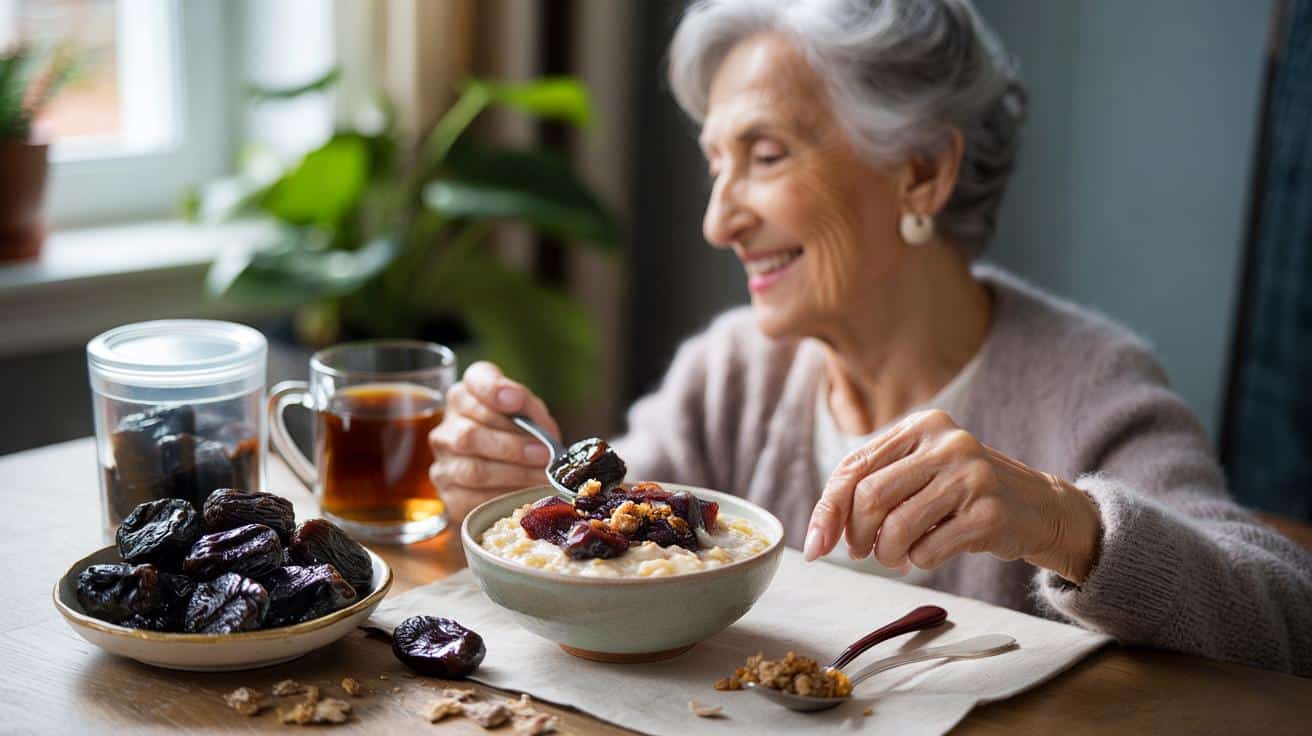
Take June in Leeds, 78, a retired school secretary who hates pills and loves Radio 4. She started with five prunes at breakfast, cut into her porridge. Two weeks in, her bowels were—her word—“civilised”. Three months later, her DEXA scan showed no further hip loss. One scan doesn’t define a life, yet it felt like a pause button pressed where decline felt inevitable.
Trials with older adults, especially postmenopausal women, have seen daily prunes help maintain hip and spine bone measurements, sometimes with gains at the forearm. The gut side is less glamorous, but real: a small, steady ease, fewer straining moments, less bloat from days of nothing then a rush. We’ve all had that moment when a simple meal feels like a hurdle. Prunes shrink the hurdle.
Why would a wrinkly fruit touch bones as well as bowels? The fibre and polyphenols feed gut bacteria that ferment those fibres into short-chain fatty acids. That in turn can dampen runaway inflammation that quietly erodes bone. Boron may help the body handle calcium and vitamin D more smoothly. Potassium helps buffer acid loads in a typical Western diet, which spares bone minerals from being used as a bank. It’s a modest web of effects rather than one big hammer. *Call it a small daily insurance policy.*
How to use prunes so they work for you
Think small and regular, not heroic. Most gerontologists I’ve interviewed land on 4–6 prunes a day to start, roughly 40–60 g. Eat them with water or tea. If your teeth complain, soak them overnight in the fridge to soften and wake up the flavour. Slice into yoghurt with a spoon of seeds. Stir through porridge. A mid-morning nibble works for people who forget breakfast. The key is a **simple habit** that happens without fuss.
Pair with protein or fat to steady blood sugar—prunes plus a handful of walnuts is a tidy duo. If nights are choppy, try an evening portion: the gentle carbs can feel soothing, and a regular gut rhythm helps sleep in roundabout ways. Travelling? Pack a small lidded tub. Label it. A clear container on the counter beats a promise buried in a drawer.
The biggest mistake is jumping to ten prunes on day one. Start low, let your gut learn. Too many can bloat, and that’s no one’s idea of wellness. People with diabetes can still include prunes, yet small portions and pairing with protein help. Those on warfarin need consistency with vitamin K—don’t yo-yo intake, keep a steady daily amount and talk to your GP if you’re adjusting. If you’ve got dentures or a tight jaw, stewed prunes are softer and cosy in a bowl with a dollop of Greek yoghurt. Let’s be honest: nobody does that every day. But a few days a week stacks up.
There’s a line from a geriatrician I can’t shake.
“Five a day is great. Five prunes a day may be the one five most older bodies actually feel.”
- Start with 4–6 prunes daily, then adjust by one prune each week until comfort meets results.
- Drink a glass of water with them to let fibre do its job kindly.
- Pair with yoghurt, nuts, or oats to flatten sugar spikes and add protein.
- If constipation is stubborn, split the portion: two in the morning, two after lunch, two in the evening.
- Choose plain, unsweetened prunes; keep them visible so the habit sticks.
What this tiny change can unlock
There’s an odd relief in finding something that doesn’t require an app, a lecture or a new identity. A bowl, a spoon, five prunes. Over weeks, bathroom trips feel unremarkable in the best way. Stairs don’t feel steeper because your gut is sulking. Quietly, it bleeds into more movement, better appetite, calmer nights. Small changes beget other small changes, which is how momentum is built at any age.
It’s not a halo fruit. It’s a practical one. Bones don’t ask for drama. Guts want routine. Hearts like potassium. The older body thrives on rhythms that stress less. You might already be doing half of this without noticing—stewed fruit on Sunday, porridge on Tuesday. Add a prune or two and you’ve made the kind of tweak that future-you respects. The kind a grandchild might one day copy without thinking about it.
| Key point | Detail | Interest for the reader |
|---|---|---|
| Prunes support bones | Contain vitamin K, boron and polyphenols linked with slower age-related bone loss | Lower risk of fractures means more independence and confidence |
| Gentle help for digestion | Fibre plus natural sorbitol improves stool consistency and frequency | Less straining, more comfort, calmer days |
| Easy daily habit | 4–6 prunes with water, paired with yoghurt or nuts, fits any routine | Real-world change you can start today without gadgets |
FAQ :
- Which is better: fresh plums or prunes?Both are healthy. Prunes concentrate fibre, sorbitol and key micronutrients, which is why gerontologists often prefer them for digestion and bones.
- How fast will I notice a difference?Gut changes can appear within a week. Bone effects are long game—think months to years of steady intake combined with movement and protein.
- Won’t the sugar in prunes spike my blood sugar?Prunes have a low-to-moderate glycaemic impact thanks to fibre and sorbitol. Pair with protein or fat, keep portions modest, and they fit most glucose goals.
- Can prunes replace laxatives?They can reduce the need for some people, but not everyone. If you’re on regular laxatives, add prunes and review with your GP before making changes.
- Any medications I should be mindful of?Warfarin users should keep vitamin K intake consistent. If you have kidney issues, discuss potassium with your clinician. When in doubt, a quick GP check-in helps.







Not glamorous, but I’m convinced. I’m 74 and will definately try 4–6 prunes with a glass of water, paired with walnuts in the afternoon. The idea of a “small daily insurance policy” resonates, and I like the tip to soak them if teeth complain. Will report back in a month on bowels and night cramps.
Solid write-up, but can you link to the trials? Were they randomized, and how long did the bone outcomes hold—DEXA at 6–12 months? Also, were the gains only in postmenopausal women, or mixed cohorts? Curious about effect sizes vs calcium/vitamin D.