
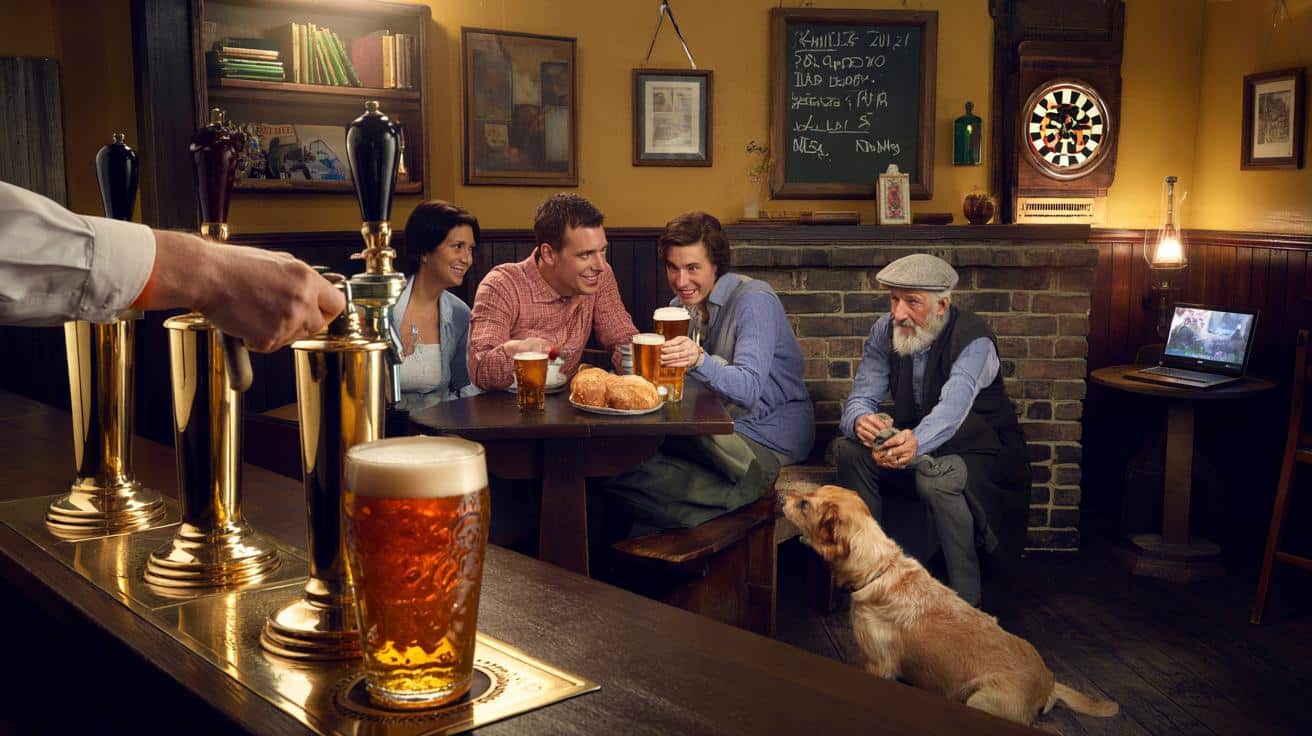
Across Britain, something familiar is flickering back to life: the low-lit snug, the proper hand-pulled pint, the gentle thrum of a quiz night. After years of chasing neon and novelty, the “traditional” pub is quietly winning the crowd again.
Not with a stag party or a bottomless brunch, but with a triangle of friends sharing pork pies, a pensioner coaxing the pub dog closer, and a young couple whispering over a cask ale that tasted like hedge and bread. The landlady wiped glasses like a rhythm, and the darts board clicked with soft applause every few minutes while a laptop glowed in the corner, quietly tolerated, not the main show. You catch someone you sort of know and nod, and that nod says more than a dozen DMs. Something has shifted.
Why the old pub feels new again
Ask ten people why they’re back in a “proper” pub and you’ll get ten different answers, all with the same heartbeat. People want somewhere that doesn’t shout, where the rituals are simple, and the prices don’t sting quite so hard. The ritual matters: a hand-pulled pint, a stool with a bit of history, a bar staffer who remembers your usual after two visits.
Take the Red Lion in a market town that was written off in 2019. It reopened last year with polished brass pumps, bowls of crisps you actually want, and a noticeboard that matters: Tuesday crib, Thursday quiz, Sunday roast you don’t have to book a month ahead. The manager calls regulars by name, the heating isn’t heroic, and the playlist stays just under conversation level; Google reviews mention the word “welcome” more than “food.” The comeback isn’t cosplay; it’s a recalibration.
There’s logic beneath the nostalgia. The cost-of-living squeeze nudged people from £14 cocktails toward £5.50 pints and rooms where you can stretch a night with conversation rather than rounds. Remote work left afternoons oddly elastic, so the midweek pub became a quiet third place. Localism grew teeth, pushing footfall to venues that feel rooted. This is where the story turns.
How publicans are quietly reinventing “traditional”
The smartest move is subtle: sort the cellar, keep the cask cool, and light the room like a welcome rather than a showroom. Swap a wall of screens for two well-placed matches and a chalkboard that changes daily. Build weekly rituals—meat raffle, cheese nights, tiny beer festivals—that give people a reason to return and a rhythm they can feel in their week.
Don’t turn tradition into a theme park. A fake snob screen and plastic horse brasses ring hollow fast. Better to let quirks breathe—local photos, a shelf of battered paperbacks, a community notice about a missing cat. Make space for prams at lunchtime and dogs under tables, and bring in low/no-alcohol options without preaching. Let’s be honest: nobody really does that every day.
One landlord put it simply, then put it into practice.
“We stopped trying to be everywhere and started being here,” she told me. “Once the beer tasted right and the lights felt kind, people did the rest.”
A few tiny moves go far:
- Lower the music at 8.30pm so conversation wins.
- Two casks, kept immaculate, rather than five limp ones.
- A menu you can read in ten seconds.
- Names learned, intro shyly offered when you spot a new face again.
Small acts, big welcome.
What it says about Britain now
Traditional pubs are thriving where they feel like a village in a room. Not frozen in sepia, just steady—more cardigan than catwalk, with the odd tattoo and laptop folded into the scene. They carry the hum of mixed ages and mixed reasons, the slow trust of neighbours who only know each other from the bar. Warmth beats wow. We’ve all had that moment when you walk in and feel your shoulders drop before you even order.
The pull isn’t just booze. It’s the promise of proximity: old stories, new gossip, a place to be slightly known without being seen too hard. Some of this is a reaction to the everywhere-ness of platforms and the everywhere-now of delivery. Part is thrift wrapped in comfort. And part just feels like Britain remembering it can be gentle when it wants to be. A pub is less a building than a promise.
| Key point | Detail | Interest for the reader |
|---|---|---|
| Rituals beat trends | Weekly quizzes, roasts, and cask rotations anchor habits | Easy reasons to go out without spending big |
| Quality over quantity | Fewer beers, kept perfectly; simple, hearty food | Better taste, fewer disappointments, real value |
| Community in practice | Names learned, dogs welcomed, low/no options offered | Everyone can belong, even on a Tuesday |
FAQ :
- What actually counts as a “traditional” pub?A room built for conversation, cask on the bar, simple food, soft light, and a sense of local memory—without the fancy dress.
- Are younger people really going back?Yes, especially for value, atmosphere, and the mix of ages. The quiet confidence of these rooms travels well on TikTok too.
- What if I don’t drink alcohol?Look for pubs with proper low/no options, good tea, and desserts. The best ones make space at the table, not just at the bar.
- Is this a blip or a long-term shift?It’s slow-burn. When places become routine again—quiz nights, darts, book swaps—that habit tends to stick.
- How do I find a good one near me?Search for “cask marque” or “real ale” plus your area, scan recent photos for light and layout, then go at a quiet time and listen to the room.



Loved this piece — “Warmth beats wow” nails it. Since WFH, my local’s become the third place I actually use: gentle lighting, two casks kept right, quiz on Thursdays, dogs under tables. Prices still sting, but you can stretch a night with conversation instead of cocktails. Please keep proper low/no options and a menu you can read in ten seconds. It definately beats the neon-and-noise era.
Is this a real comeback or just nostalgia with good PR? Three “proper” pubs near me shut since 2019 and the rates haven’t gone down. A chalkboard and soft lamps wont fix rent, staff shortages, or energy bills. Show me numbers, not vibes.