
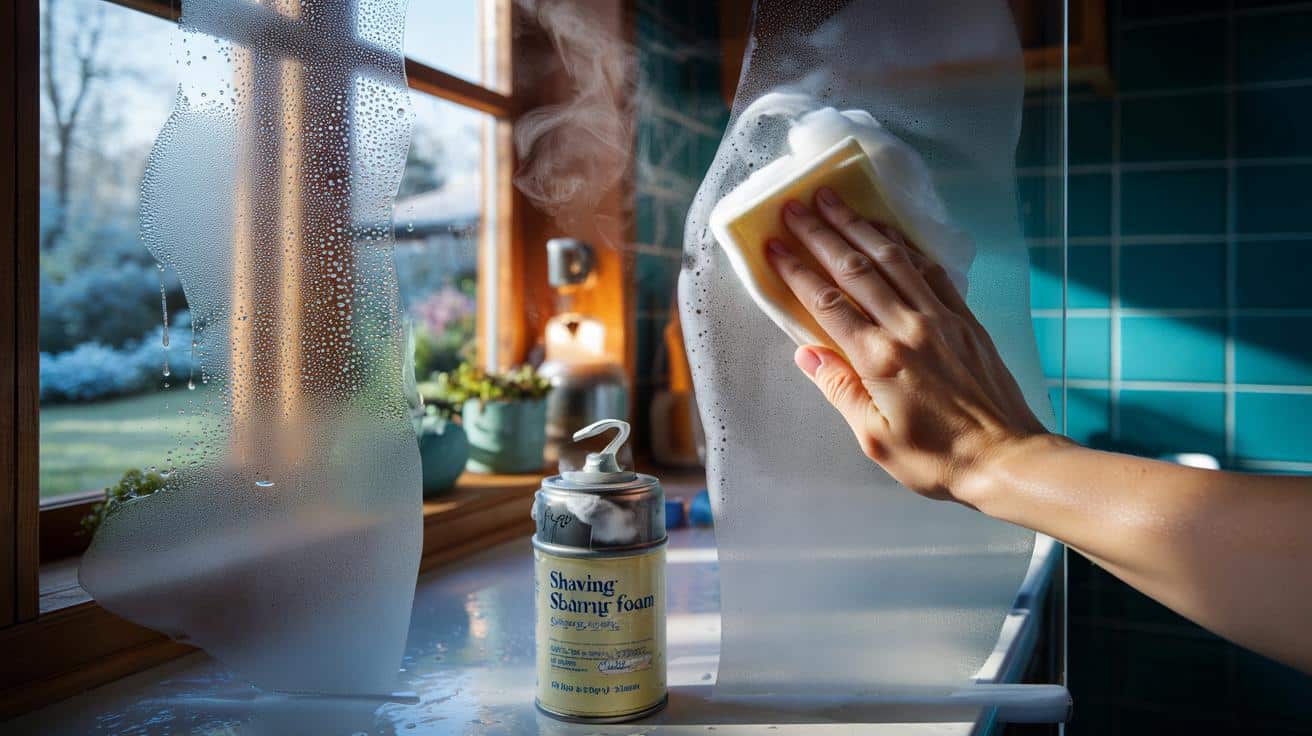
A bathroom mirror that fogs before you can find your toothbrush. It’s maddening, and costly too, with damp edging into the corners of frames. Here’s the oddball fix people swear by: shaving foam, wiped thin and buffed clear, to stop your windows steaming up when the world turns chilly.
The bathroom door was ajar and the room was doing that winter thing, turning to cloud. The mirror bloomed white in slow motion as the shower hissed, while the kitchen window gathered little pearls of water like it had something to prove. My neighbour, a pragmatic sort who swears by Yorkshire tea and duct tape, tapped the glass with a grin and handed me a can from his toiletry bag.
He said it was the oldest trick in the book. I rolled my eyes — then tried it.
Why your windows steam up — and why foam helps
Condensation is just physics doing its job. Warm, moist air hits a cold surface and the water vapour turns into droplets, clinging to glass as if by habit. On winter mornings, with radiators humming and breath hanging in the air, your windows become the perfect landing strip for every molecule looking for a place to rest.
That’s why they steam up no matter how many times you wipe them. The glass is colder than the room, and the air inside your home is wetter than you think. Tea, showers, pasta water, wet laundry on radiators — it all adds up. In small homes and well-sealed flats, it shows fastest. You wipe, it returns. You crank the heat, it returns faster. The cycle is relentless.
Enter shaving foam. Not the fancy gel, but the classic white stuff in a pressurised can. The foam contains surfactants that leave behind a microscopic film on smooth surfaces. That film changes how water behaves, pushing it to spread out into a near-invisible sheet rather than bead into misty droplets. Think of it like giving your glass a tiny raincoat that says “no thanks” to fog.
The shaving foam hack, step by step
Start with clean, dry glass. Put a tiny dab of plain shaving foam — a pea, not a plum — onto a dry microfibre cloth. Work it across the glass in gentle circles until you’ve covered the area you care about: bathroom mirrors, the inside of a front window, the car’s interior windscreen. Let it sit for 30 seconds, then polish with a fresh dry cloth until the glass looks completely clear. It takes less time than boiling the kettle. Use less than you think.
Now do the “breath test”. Exhale onto a corner of the glass. If it stays clear or fogs only faintly, you’ve nailed it. If it smears, you used too much. Wipe and rebuff. On a car, stick to the interior side and avoid sensors or the dotted frit band near the top. On house windows, keep to the glass and skip the rubber seals. Buff until the glass squeaks.
Common snags? Foam residue in window tracks, streaks from over-application, or using a fluffy towel that sheds lint. We’ve all had that moment when you’re running late and the windscreen looks like a steamed pudding. Be gentle, go thin, and work in daylight the first time so you can see what’s happening. Patch‑test tinted film first. It’s rare, but some films don’t love surfactants. If you’re nervous, try on a small corner of a bathroom mirror first to get the feel.
“I tried it on a soupy November morning and watched the fog vanish. Now I do it every Sunday night — it takes two minutes and buys me a week,” said a builder from Leeds who swears by the trick in his van and at home.
- Best places to use it: bathroom mirrors, inside car windscreens, patio doors near kettles and cookers.
- What to avoid: exterior side of windows, smart sensors, glossy painted frames.
- How often: every few days in steamy rooms, weekly on calmer windows.
Beyond the hack: airflow, habits, and what lasts
Shaving foam is a neat fix, but it doesn’t change the dew point. If your home traps moisture, you’ll still feed that invisible lake in the air. Crack a window during showers, use extractor fans that actually vent, and open trickle vents you’ve forgotten exist. Dry clothes in a room with the door shut and a window ajar, not over radiators. A humble squeegee on wet panes after cooking or bathing shifts litres over a week. Let’s be honest: no one really does this every day.
That’s why the foam hack charms people. It’s fast, cheap, and a little bit cheeky — and it works on the most annoying moments, like morning mirrors and pre-commute glass. Long term, think balance. A small dehumidifier in the worst room. A lid on boiling pans. Plants that don’t turn your snug into a tropical house. The goal isn’t perfection; it’s less fog, fewer drips, calmer mornings. And the quiet satisfaction of beating physics at its own game, at least for a while.
There’s a reason How to stop your windows steaming up with this simple shaving foam hack shoots up on Google Discover every cold snap. It feels like something your grandad might whisper over a toolbox, and it earns its keep in two minutes flat. Try it on the mirror first and you’ll see the film do its quiet work. Share it with the mate who’s forever wiping a sleeve across the windscreen. Then tuck the can back where it came from, next to the razor, waiting for the next foggy morning that tries its luck.
| Key point | Detail | Interest for the reader |
|---|---|---|
| Shaving foam creates an anti-fog film | Surfactants leave a micro‑layer that makes water spread instead of bead | Clearer glass in minutes without pricey sprays |
| Thin application beats thick | A pea-sized dab, spread wide, then polish till invisible | Less mess, no streaks, longer‑lasting result |
| Combine with simple airflow habits | Use extractors, crack windows, squeegee wet panes, consider a small dehumidifier | Reduces mould risk and keeps rooms fresher |
FAQ :
- Can I use shaving gel instead of foam?Gel can work, but it’s trickier to spread thinly and may smear. Classic white foam is easier to buff clear and leaves a more even film.
- Will it damage tinted or coated windows?Most factory glass is fine, yet aftermarket tints and specialty coatings vary. Test a tiny corner first and wait a day. If there’s no haze or lifting, you’re good.
- How long does the effect last?On bathroom mirrors, usually a week. On car windscreens, a few days in damp weather. Cooking-heavy kitchens may need a quick rebuff midweek.
- Is there a natural alternative?A drop of washing‑up liquid in water does a similar job, as do some mild glycerin mixes. They’re less durable but handy if you’re out of foam.
- Why not just buy anti‑fog spray?Those work too and often last longer. Shaving foam wins on convenience and cost, especially if there’s already a can by your sink.







Tried it this morning on a foggy bathroom mirror—pea-sized dab, buffed till it squeaked, and boom, no mist for my whole shower. Cheers for the hack! 🙂