
The numbers creep, like limescale around a tap, even though you swear you’re doing less. The silent culprit isn’t the kettle or the oven clock. It’s the thing you never switch off.
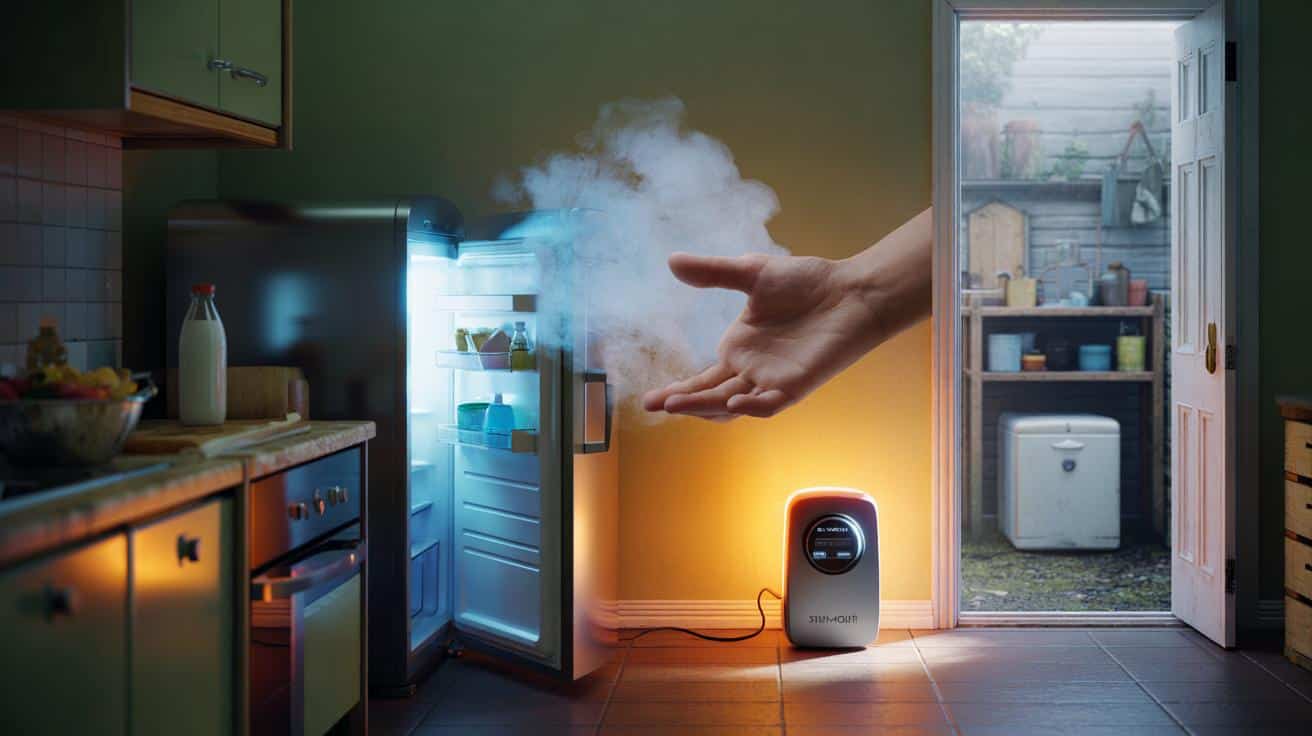
It’s 6.42am and the kitchen is half-light, half-yawn. The meter glows a quiet orange near the back door, a tiny lighthouse on a laminate sea. In the background, there’s that faint, low purr you barely register until the house is *this* still. You reach for milk, pause at the cool breath on your fingers, and shut the door on reflex. The hum continues, loyal and patient, like a dog that never leaves the porch.
Energy prices have turned us all into amateur auditors. We time the kettle; we lecture the teenagers about lights. The oven clock blinks, the dishwasher sulks on eco mode. Yet the biggest, quietest drain stands humming, always on, always reasonable, always adding up. It looks innocent in white or steel. It plays the long game.
It’s the only thing that never sleeps.
Meet the culprit you can’t live without
The quiet appliance stacking roughly £100 onto many UK bills is the **fridge-freezer**. It’s not evil, just relentless. It runs 24/7, makes almost no fuss, and quietly uses 200–400 kWh a year in a typical home. At around 28–30p per kWh, that’s £56–£120 annually before you’ve cooked a single meal. Not headline-grabbing in a day, but chunky over a year.
It’s the endurance that gets you. A fridge is the marathon runner of the kitchen, not the sprinter. It sips rather than gulps, then never puts the glass down. You don’t see the dial tick like it does for a tumble dryer. You don’t hear the whoosh of a power shower. It’s just there, doing its job, and quietly billing you for the privilege.
Here’s what that looks like in real life. A reader in Leeds sent us last autumn’s numbers: their 2012 A+ model used roughly 420 kWh over 12 months, which at 28p per kWh came to about £118. They swapped it for a modern E-rated unit (the new A–G label is tougher), tested with a plug-in meter, and logged about 190 kWh for the year — a bill near £53. Same food, same family. A near-£65 gap for one appliance, just by updating the workhorse in the corner.
Another common twist: the extra unit in the garage. That **old beer fridge** from uni days? It often burns through 300–500 kWh on its own because of poor insulation and frosty coils. People keep it for barbecues, then forget it through winter. One reader’s second fridge cost more than their main one.
Why the spread? Physics and habits. A fridge pumps heat out of a box and into your kitchen; every time you open the door, warm air rushes in and the system works harder. The compressor cycles more on hot days, or when the unit is jammed into a tight gap with little airflow. Frost builds on evaporator plates, acting like a thermal duvet for the wrong side of the walls. Even a few millimetres of ice can bump consumption noticeably, with manufacturer tests suggesting increases in the 10–30% range. Location, age, seals, and settings all nudge it up or down.
Add it together and the “silent” appliance becomes a steady tax on the plug socket. Not a scandal. Just a drip-drip that totals a weekend away.
What to do this weekend to chop that £100
Start with a 24-hour check. Plug your fridge-freezer into an energy meter (the cheap kind that shows kWh), and let it run normally for a day. Note the total and multiply by 365 — that’s your annual baseline. Then do a quick tune-up: pull the unit forward, vacuum the dust from the coils, and give it a 5–10 cm breathing gap at the back. Set the thermostat to 4°C in the fridge and -18°C in the freezer. If it’s frosting, defrost fully and dry the cavity. Add a couple of filled water bottles to spare space to stabilise temperature swings. Small moves, real savings.
Now for the habits. Don’t park the fridge next to the oven or in a sun-baked conservatory; it makes the compressor sweat. Keep the door openings calm and purposeful — a quick rummage eats kilowatts. Check the rubber door seals with a paper-slip test: close the door on a strip of paper and tug. If it slides out easily, the seal’s done and cold air is leaking. And yes, move that second fridge to the front of your mind. Run it only for parties, or retire it with a smile. Let’s be honest: nobody actually does this every day.
This is where the money meets the method. A small toolkit, an hour on a Saturday, and you’re shaving pounds off without living like a monk.
“People think big savings come from big sacrifices,” says Kiran Patel, a home energy advisor. “Fridges are the opposite. Quiet, boring tweaks — spacing, seals, temperature — pay back for years.”
- Target 4°C fridge, -18°C freezer. Each extra degree colder can nudge bills up.
- Clear 5–10 cm behind and above for airflow. Overheating equals longer cycles.
- Defrost when frost hits 3–5 mm. Ice is an insulator in the wrong place.
- Load smart: cool leftovers before storing; don’t block internal vents.
- Retire or timer-control the garage fridge. It’s often the hidden hog.
The bigger picture, and why it’s oddly reassuring
There’s a certain relief in knowing the culprit. You don’t need to live by candlelight or police every socket. You just tune a workhorse and decide whether to keep a second one. The fridge-freezer is essential, yes, but it’s also where small changes land quietly and keep landing.
We’ve all had that moment where you open the bill and your stomach dips. Kitchen life won’t change — kids still raid the shelves, you’ll still freeze leftover stew, someone will leave the door ajar mid-conversation. The point isn’t perfection. It’s nudging the machine that runs all day into a calmer, cheaper rhythm. The kind you can feel without ever hearing it.
Spend an hour with it this weekend. Check the numbers. Wipe the coils. Think about that rarely used unit in the garage. And if you’re buying new, look past the sticker and ask about kWh per year. A fridge that sips rather than slurps is boring, and that’s the charm. Your bill will notice before you do.
| Key point | Detail | Interest for the reader |
|---|---|---|
| Fridge-freezers are steady bill drivers | Typical 200–400 kWh/year equals roughly £56–£120 at 28–30p/kWh | Explains where ~£100 can vanish without drama |
| Setup and habits matter | Correct temps, airflow, and defrosting reduce compressor run time | Actionable tweaks that don’t hurt daily life |
| Second fridges are often the real leak | Old garage units burn 300–500 kWh/year | One switch-off can save the price of a weekend away |
FAQ :
- Is the fridge really worse than my kettle?The kettle spikes hard but briefly. A fridge sips all day, every day. Over a year, the fridge often costs more.
- What temperature should I use?Aim for 4°C in the fridge and -18°C in the freezer. Colder settings raise bills without keeping food meaningfully safer.
- Will a new A-rated fridge save me a fortune?Labels shifted: many “A+” old models look efficient but aren’t by today’s scale. Compare kWh/year across models. A cut from ~400 to ~180 kWh can halve running cost.
- Does frost really matter?Yes. Frost forces longer, harder cycles. Defrost when you see 3–5 mm building up to keep efficiency steady.
- What about standby on other appliances?It adds up, but the bigger always-on cost in the kitchen is often the **standby drain** you can’t switch off — the fridge-freezer doing its round-the-clock job.







Great explainer! I always blamed the kettle, but the fridge-freezer drip makes sense. Just vacuumed the coils and set 4°C/−18°C — curious to see next bill.