
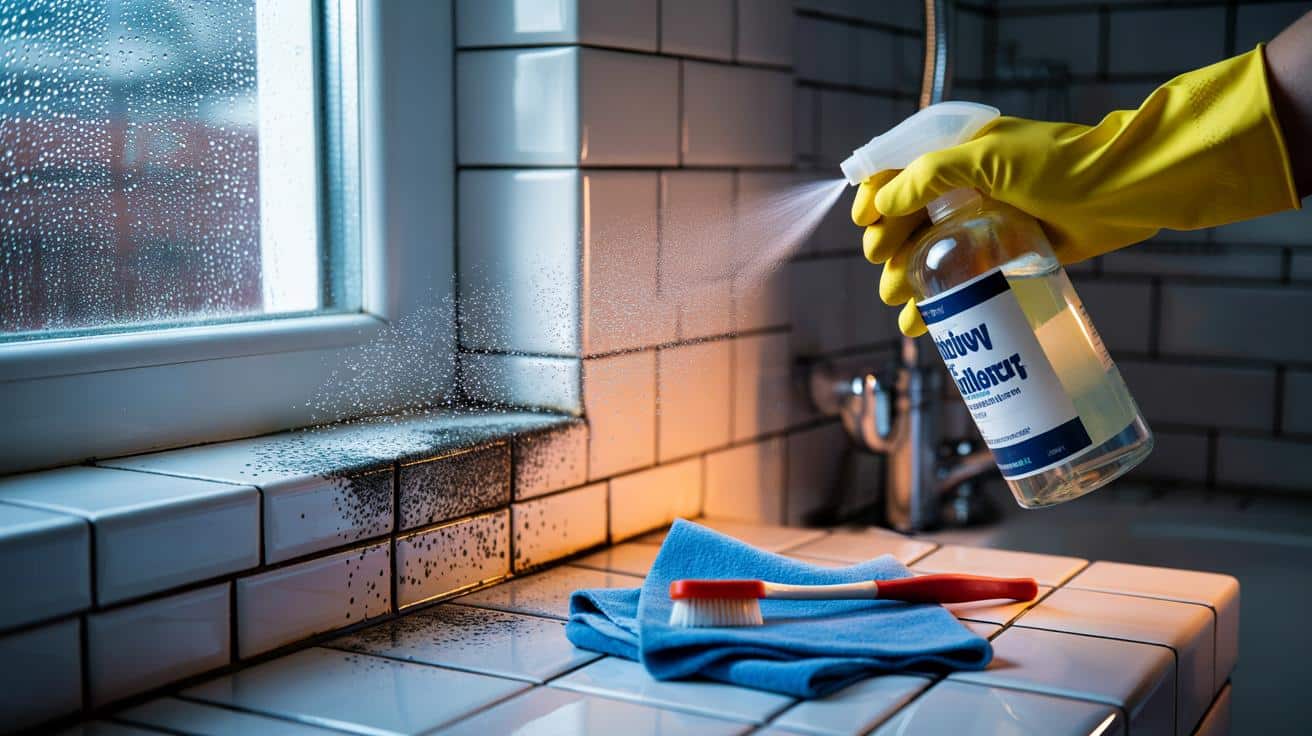
In the corner above the tiles, a constellation of tiny black dots had turned into a bold little arc, the kind that silently dares you to ignore it. I flicked on the fan that barely helps, nudged the window open with an elbow, and rummaged the under-sink chaos until a stubby bottle appeared: distilled white vinegar, supermarket basic, 89p on the label. Gloves on, timer set, spray bottle loaded, I drew a slow breath that tasted of winter and decision. We’ve all had that moment where the mould looks bigger than your patience. Ten minutes is a small bet worth making.
The quiet truth about mould in British homes
Stand in any rental hallway in midwinter and you can feel it: air that hangs heavy, corners that never quite dry, a draft that isn’t a draft at all but trapped damp. Double glazing keeps the heat in and the moisture too, so steam clings to cold surfaces and mould claims the coldest lines first. It creeps in politely, then pretends to be permanent.
Around 4% of homes in England report damp or mould in the latest English Housing Survey, and that figure swells in older buildings or tightly sealed flats. A friend in a South London house-share told me she learned the pattern by heart: showers at seven, windows fogged by eight, blotches by the weekend. Rent rises, energy bills nudge habits, and the mould doesn’t care about any of it.
Mould isn’t just an eyesore; it’s a signal. Warm, wet air hits a cold surface and condenses, and those micro-beads of water build little worlds for spores that are everywhere anyway. Cut the moisture, the mould loses its grip. Move quickly, the colony never sets its roots. That’s why a fast, repeatable, low-cost fix changes the game.
The ‘magic’ 89p hack: ten minutes, one bottle
Here’s the method that wins before the kettle boils: pour undiluted distilled white vinegar into a clean spray bottle, crack a window, and pull on gloves. Lightly mist the mouldy area on tiles, uPVC frames, grout lines, or painted gloss. Leave it to sit for ten minutes, no scrubbing, no fuss, then wipe with a damp microfibre cloth and dry the surface with a fresh towel. The fix costs less than a pound and needs only ten minutes.
An old toothbrush helps on grout; a second pass on bigger patches is fair. Rinse the cloth, then wash it hot or bin it if the bloom was heavy. Use kitchen roll to dab silicone seals so moisture doesn’t linger. Vinegar’s acidity shifts the mould’s grip and nudges the surface pH away from what spores like. The smell is a bit chip-shop for a moment; yes, the smell fades. A tea towel on a warm radiator finishes the dry-down.
Skip brown malt vinegar as it can stain, and don’t spray onto natural stone, marble, or unsealed plaster. Never mix vinegar with bleach or any product that mentions chlorine. Open a window, run the extractor, and keep pets away until surfaces are dry. Let’s be honest: nobody does that every day.
“Dwell time, then dry time. That’s the secret,” a veteran cleaner told me. “If it’s still damp, mould treats it like a welcome mat.”
- Use distilled white vinegar, undiluted, in a fine mist.
- Ten minutes on the surface, then wipe and dry thoroughly.
- Toothbrush for grout, microfibre for flat areas.
- No mixing with bleach. Do not mix vinegar with bleach.
- Avoid natural stone and raw plaster; patch-test paint.
Why it works, and where it doesn’t
Vinegar’s a weak acid, but it’s persistent. On non-porous surfaces, it disrupts mould structure and helps lift it clear, and the wipe carries spores away. Drying the area slams the door on re-growth. Tiny rituals beat heroic Saturday blitzes because the colony never gets the foothold it wants.
On porous walls, flaking plaster, or wood that’s already stained through, surface cleaning is triage, not a cure. You might wipe the bloom, yet deeper moisture keeps feeding it. That’s when you check for leaks, thermal bridges, and ventilation that looks fine but doesn’t move enough air. A dehumidifier on a low setting can quietly save your windowsills.
I tried the ten-minute fix on a sash-window reveal in an older flat. First pass, the dots vanished. Two weeks later, a faint return, so I repeated the routine and added a nightly window crack and towel-dry after showers. The pattern broke. The magic isn’t mystical; it’s momentum.
Distilled white vinegar turns out to be a practical ally: cheap, easy to store, and it doesn’t turn the bathroom into a hazmat zone. Used often, it keeps black mould from graduating from specks to sheets. Used fast, it keeps your lungs calmer and your deposit safer. Small, repeatable wins beat grand spring cleans. Share it with the neighbour who keeps wiping with a dry tissue and sighing. Ten minutes isn’t heroic. It’s just a nudge towards a home that breathes a bit better, even in midwinter.
| Key point | Detail | Interest for the reader |
|---|---|---|
| 89p vinegar hack | Use undiluted distilled white vinegar, 10-minute dwell, wipe and dry | Fast, low-cost way to clear visible mould on hard surfaces |
| Where it works | Tiles, uPVC, sealed paint, silicone (short contact), grout with a toothbrush | Confidence about safe targets and quick wins |
| Limits and safety | No mixing with bleach, avoid natural stone and raw plaster, ventilate | Keeps the fix effective without side effects |
FAQ :
- Does white vinegar really kill mould?On hard, non-porous surfaces it disrupts mould and helps remove spores when you wipe, especially with contact time. On porous materials the root problem often sits deeper, so you may only clear the surface.
- Can I use brown or apple cider vinegar instead?Stick to distilled white vinegar. Brown or cider vinegar can stain pale grout and sealants, and they’re not better at the job.
- Will vinegar damage grout or silicone?Short contact on grout and silicone is fine, then rinse or wipe and dry. Avoid long soaks and never use vinegar on natural stone or marble nearby.
- Is bleach better than vinegar for black mould?Bleach whitens fast but can leave roots in porous areas and creates harsh fumes. Use one approach at a time; never combine products that could release chlorine gas.
- How do I stop mould returning after the clean?Dry the area after showers, run the fan longer, crack a window, and keep indoor humidity roughly 45–55%. Fix leaks, lift furniture slightly off cold walls, and squeegee tiles so less moisture lingers.







Tried this with an 89p bottle on my UPVC window frame—ten minutes, wipe, gone. Smell faded in ~5 mins. Legit hack.