
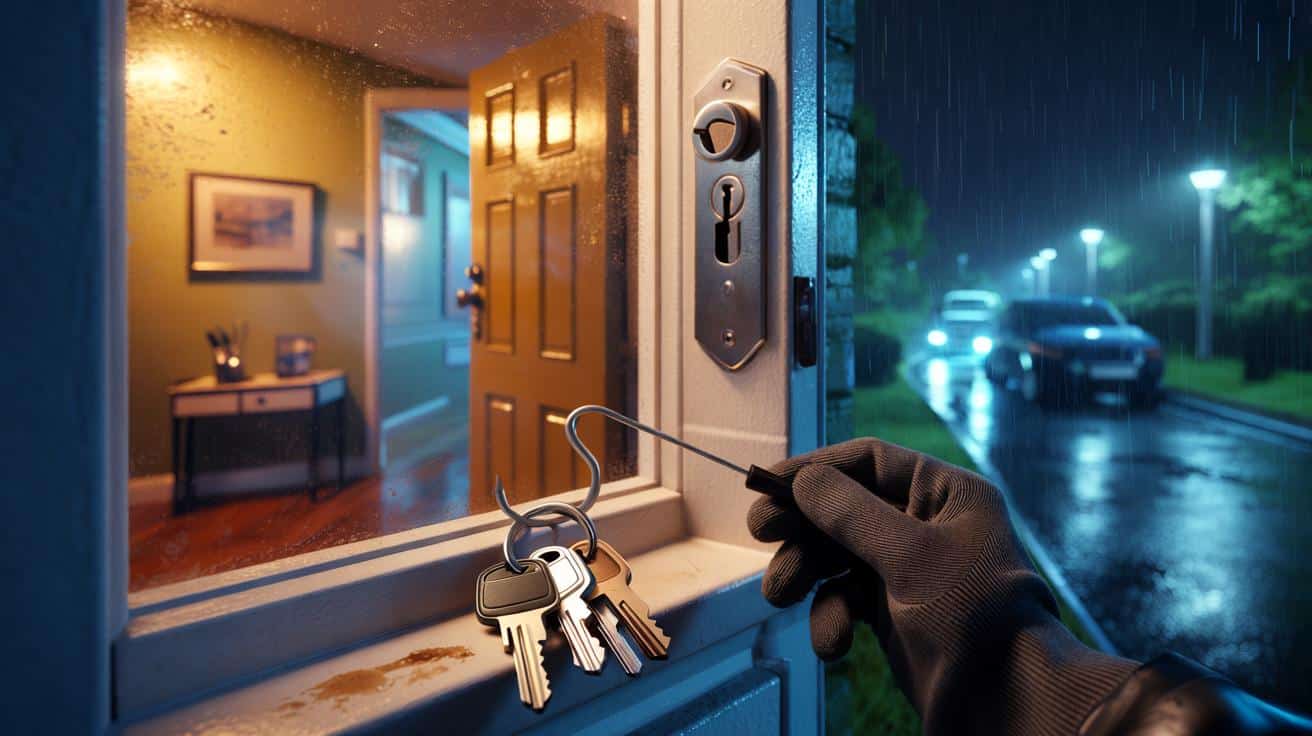
Yet that tiny habit creates a line of sight from the street to the heart of your home. And for the wrong person, it’s an open invitation with a neat metal bow.
It was raining the night I learned how quickly a quiet house can be read. The streetlamps pooled on wet tarmac, and the letterbox rattled once, like a hiccup in the dark. A neighbour later showed me the scuff marks on the inside of her flap, a thin semicircle where something had been slid and turned. We’ve all had that moment when a small detail suddenly looks different, like seeing your own hallway through someone else’s eyes. She hadn’t heard a thing. She had left the keys in the back of the door. And once you hear how they do it, you never forget. A simple hook.
Why that key in the door is a burglar’s invitation
The hallway is a stage, and a letterbox is a prop. A thief doesn’t need to cross your threshold to make mischief; reaching tools go in through the slot, shift the key or handle, and life gets messy in seconds. One hooked wire, and your hallway becomes a handrail. It takes less than a minute to fish a key through a letterbox.
I’ve heard the same story from different streets: the front door stays locked, yet the car on the drive vanishes before dawn. The only clue is a bare key dish by the door and a flap that sits slightly skewed. Your car on the drive is the real prize. House keys left in the back of the door or within arm’s reach are easy to lift, and the quietest theft isn’t the TV — it’s the quick turn of an ignition two houses down.
There’s a technical quirk here that most of us never consider. Many Euro cylinder locks now have an “emergency” function, which means a key can still turn on the outside even if another key is left in the inside. That’s handy if someone forgets and you’re locked out, yet it also means leaving a key in the back doesn’t block a determined twist from outside. If your door has a thumb-turn, a gloved hand or simple tool through the letterbox can spin it without drama.
What to do tonight instead
Start with one tiny ritual: move the keys. Create a “drop zone” two to three metres from the door — a small bowl inside a drawer, a hook behind a cupboard door, a tin on a shelf out of sight. Fit a letterbox cage or internal cover so nothing can dip in and grab, and add a door restrictor so the flap can’t open wide enough for a tool to roam.
Routines beat gadgets when you’re half asleep. Build a last-light check: keys away, letterbox shut, door fully locked on the multi-point turn. Let’s be honest: nobody actually does that every day. Pick a trigger you won’t forget, like the kettle’s final boil or the phone on charge, and tie the habit to that moment. Small changes beat expensive tech when you do them each night.
Hardware helps when it’s chosen with your life in mind. Upgrade to a TS 007 3-star or SS312 Diamond anti-snap cylinder, and if you prefer a thumb-turn for quick exits, pair it with a letterbox restrictor and a guard that blocks direct access.
“Keep keys out of sight and away from the letterbox. Fit a cage or restrictor, and use a good 3-star cylinder. Simple beats clever when it’s 2am.”
- The two-metre rule: keys stored beyond arm’s reach of any flap or pane.
- Letterbox cage or internal shield to stop fishing and prying.
- Door restrictor or security cowl to limit the flap’s opening angle.
- Nightly “lock, check, keys away” routine tied to a daily cue.
A small habit that keeps your home — and you — calmer
You don’t need to turn your hallway into a bunker. This is about nudging the odds back in your favour, and letting your home feel like it should — ordinary, quiet, yours. Move the keys, tame the letterbox, give your lock a fighting chance, and you reduce a thief’s window to a sliver. The calm that follows is strange at first; you’ll catch yourself checking for the clink you no longer hear. Then the habit settles, and the fear leaves the hallway. You’ve taken away the easy win. And small wins, stacked over time, are how ordinary people outsmart opportunists.
| Key point | Detail | Interest for the reader |
|---|---|---|
| Letterbox “fishing” is fast and quiet | Simple tools can hook or turn keys through the flap in under a minute | Understand the risk so you can block it without overhauling your door |
| Car keys are the real target | Keys near the door make driveway theft quick and low‑noise | Protect your car and your no-claims by moving one small object |
| Small fixes work | Two‑metre key rule, letterbox cage, 3‑star cylinder, nightly routine | Affordable, practical changes you can put in place tonight |
FAQ :
- Is it actually unsafe to leave a key in the back of the door?Yes. It creates two risks: tools through the letterbox can move or hook it, and many modern cylinders can still be turned from outside even when a key sits inside.
- How far from the door should I keep my keys?At least two metres away and out of line of sight from any letterbox or glazing. A closed drawer or cupboard near the kitchen often works well.
- Should I swap to a thumb‑turn lock for quick exits?Thumb‑turns are handy for escape and daily life. Balance that with a letterbox restrictor or shield, and position the turn so it can’t be reached from the flap.
- What hardware actually helps against letterbox fishing?A letterbox cage or internal cover, a restrictor that limits how far the flap opens, and a TS 007 3‑star or SS312 Diamond cylinder to harden the lock itself.
- Will my insurance refuse a claim if I left keys by the door?Policies vary. Many expect “reasonable care,” which includes keeping keys out of sight and doors locked. Check your wording and follow your insurer’s security guidance.







Yikes — moving my keys now.