
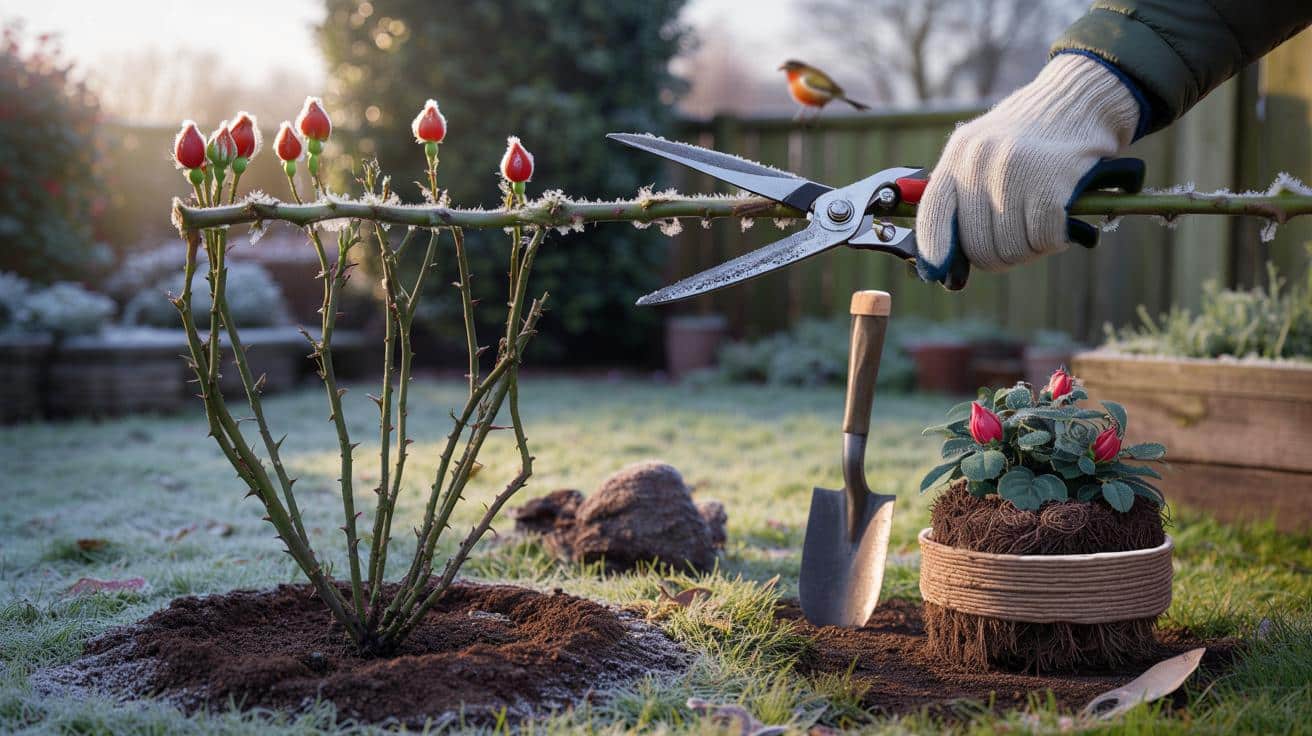
You step outside, see bare canes and spent hips, and feel the itch to neaten what looks like neglect. It’s the wrong itch to scratch. Pruning now can set roses back for months, not weeks. The trick is resisting that urge when the garden feels suspended between seasons.
The morning I nearly did it was glass-cold. Breath hung, the lawn crackled, and a robin hopped along the fence like it owned the street. A neighbour waved a pair of secateurs at me and bragged he’d “got ahead” on his roses. I stared at the thorny silhouettes and half-lifted my hand to my pocket. I could hear the secateurs humming in my head. We’ve all had that moment when the need to “do something” feels smarter than pausing. A skein of cloud slid over the sun. Somewhere a car alarm chirped and fell silent. Put the secateurs down.
Why January pruning backfires on your roses
Pruning rouses a plant. Cuts wake dormant buds, push sap towards **new shoots**, and tell the rose to use energy it saved for spring. In January, that wake-up call collides with **hard frosts**, wet winds, and long nights. Tender growth gets scorched, wounds take ages to seal, and diseases find easy entry points. It’s like asking a runner to sprint with laces frozen together.
Think of last winter’s see-saw weather: a mild spell, then a cold snap that bit through gloves. Across Britain, many gardens saw buds swell in late January, only for February ice to blacken them overnight. A friend in Leeds cut back his floribundas early, delighted by the clean shape. Two weeks later a frost burned the fresh tips, and he lost half the season’s first flush. The same bushes, left uncut in a neighbour’s plot, coped fine. Timing trumped tidiness.
There’s a logic beneath the heartbreak. Roses store carbohydrates in their canes and roots to survive winter and launch spring. A January prune triggers a shift in those reserves before there’s enough daylight and warmth to support new growth. Cuts also remain “open” longer in cold, wet weather, which slows callusing and invites canker. Leave the structure intact a little longer and the plant carries its own antifreeze—more cane, more resilience—through the darkest weeks.
What to do instead in January
Use the month as a maintenance window, not a makeover. Remove only what’s dead, diseased or snapped, snipping back to healthy wood with clean tools. Firm wobbly plants to stop wind rock, tie in climbers to reduce strain, and plant **bare‑root planting** while the soil is workable but not waterlogged. Think of it as healthcare, not haircare: hygiene, support, and steady strength-building.
Sharpen and disinfect your secateurs; a 20–25° edge is sweet for clean cuts, and a dash of rubbing alcohol helps break the disease chain. Clear old leaves from around the base to reduce black spot spores, then mulch with compost once the ground isn’t frozen. Don’t feed yet; wait for spring growth to kick off. Let’s be honest: nobody does that every day. Schedule one quiet hour, get it done, and go back inside for a brew.
Big reshapes can wait for late winter, when buds start to swell and the plant tells you where it wants to grow. For ramblers that flower on last year’s wood, the heavy prune comes right after summer bloom, not midwinter. Your January brief is simple: protect, prepare, and observe.
“Pruning is surgery, not shaving. The calendar date matters less than what the plant is telling you.”
- Plant bare-root roses while dormant, avoiding frozen or saturated soil.
- Tie in long canes on climbers and ramblers to a near-horizontal line for future flowering.
- Remove only dead, diseased, damaged or crossing wood.
- Clean tools and clear fallen leaves to cut disease pressure.
- Mulch around, not onto, the crown to buffer temperature swings.
So when should you prune—and how do you read the signs?
Watch your microclimate beat the calendar. In milder pockets of the South West, late February often brings a gentle bud swell; in colder, inland gardens, March is the safer bet. Look for fattening buds, a slight green glow along the cane, and a stretch of stable, frost-light nights. That’s your cue. Cut to outward-facing buds, take out the spindly stuff, and shape for airflow rather than symmetry. If a late cold snap is forecast, pause and let the weather pass. Roses forgive a week’s delay far more than a too-early chop, and the difference shows in June. The best gardeners aren’t in a hurry; they’re in tune.
| Key point | Detail | Interest for the reader |
|---|---|---|
| Skip January pruning | Cuts trigger growth that frost can scorch; wounds heal slowly in cold, wet weather | Protects spring flush and reduces disease risk |
| Do light care instead | Remove dead/diseased wood, tie in canes, plant bare-root, clean tools, mulch lightly | Gives a healthy head start without waking the plant |
| Prune by signals, not dates | Wait for bud swell and a settled spell in late winter to early spring | Better flowers, stronger plants, fewer regrets |
FAQ :
- Can I prune any roses in January?Only take out dead, diseased, or storm-damaged wood. Leave shaping and height reduction for late winter when buds begin to swell and the worst frosts have eased.
- What about climbing and rambling roses?Train and tie in long canes now to stop wind damage. Heavy pruning for climbers happens in late winter; ramblers that flower on old wood are pruned just after they bloom in summer.
- It’s been mild—does that make January pruning safe?Mild spells in Britain often end with a sting. Cut now and a sudden cold snap can burn soft regrowth. Wait for a stable window and visible bud swell.
- When exactly should I prune in the UK?Late February to March in most areas, earlier in mild coastal zones, later in colder inland or northern gardens. Follow the plant’s signals over the page of a diary.
- What should I do instead of pruning this month?Plant bare-root roses, clear fallen leaves, clean and sharpen tools, tie in canes, and mulch around the root zone. It’s quiet work that pays off in June—and beyond.






Definately needed this today—was about to snip.
Isn’t “don’t prune in January” just gardener’s lore? My grandad cuts his shrub roses on Boxing Day every year and they bloom. What’s the hard evidence beyond anecdotes—any studies on callus formation temps or frost damage rates?