
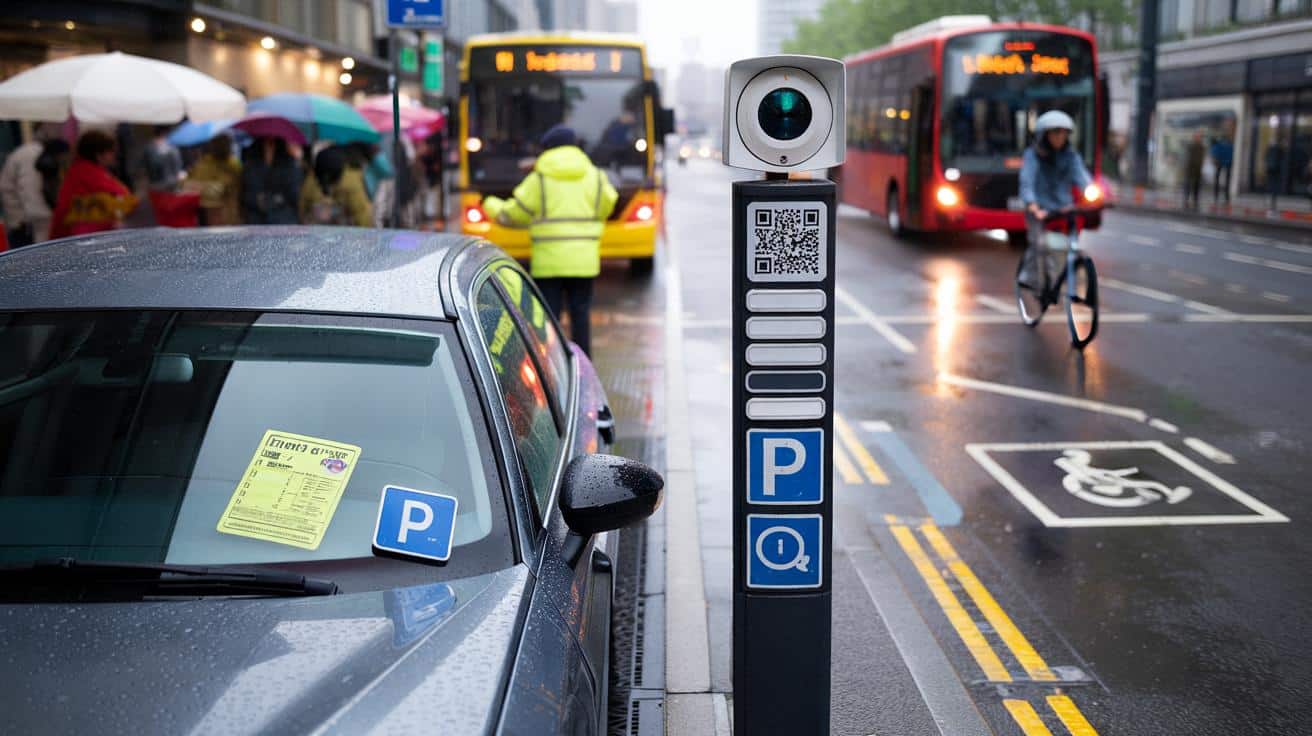
Councils are reshaping streets for buses, bikes and deliveries, while private operators tweak their small print. The Blue Badge still opens doors, yet the doorframes have moved. People who never used to worry now double-take at kerbside plates and QR codes. One misread line, one missing clock disc, and the day unravels. The message spreading through motability forums and local Facebook groups is simple: read the sign, then read it again.
The pavement was slick with drizzle when Christine pulled up on the edge of a shopping street, wipers ticking, her Blue Badge tucked in the sun visor. She had always parked here, dialed the clock, and strolled to the chemist. This time the pole carried new plates and a small black camera eye, the sort that blinks without blinking. A steward in a high-vis jacket waved at a minibus and shrugged in her direction. She hesitated, found the old habit rising in her hands, then stopped. Something felt different. She parked, displayed the badge, and left. The ticket was waiting under the wiper when she returned. A line on the bottom of the sign had changed everything. The tiniest line.
What’s changing on the ground
City centres are moving fast. Blue Badge bays are still there, yet many now come with max-stay limits, no-return windows, and fresh conditions tied to loading zones or bus gates. Some single and double yellow line concessions have been tightened during controlled hours, especially where new cycle lanes or pedestrian cut-throughs have arrived. More councils link exemptions to your number plate, too, meaning a paper badge on the dash won’t sway an automated camera if the vehicle isn’t on the whitelist. **Blue Badge does not mean free parking everywhere.** Old rules linger in memory, which is where the trouble starts.
Take a typical Saturday in a medium-sized city. The market spills onto the high street, a temporary loading ban kicks in, and a dozen bays go “suspended” on a yellow sleeve you only see when you’re beside it. A driver clocks the blue wheelchair symbol and thinks it’s fine, unaware that the new sign underneath caps stays at two hours with no return within one. Another parks near a bus gate that went live last month, the camera snapping plates even as a warden glances at badges. We’ve all had that moment when the world shifts one step to the left and the rules don’t follow you.
Why the shift? Streets are being rebalanced for footfall, clean air, and bus reliability, and that means sharper rules for kerbside space. ANPR makes enforcement light-touch and relentless, replacing chalk marks with algorithms that don’t overlook a thing. Private car parks layer their own terms on top: some allow Blue Badge concessions if you register at a kiosk or app; others charge full whack regardless of the badge. **ANPR cameras are unforgiving.** Councils argue clarity will follow as signage standardises, but the transition period is messy. People live in the transition.
How to navigate the new rules
Start before you start. Search your council’s parking page, and if there’s a “Blue Badge map” or “interactive bays” tool, bookmark it. Add the main parking apps used in your area (RingGo, PayByPhone, MiPermit), and create a note on your phone with your Blue Badge number, vehicle reg, and a photo of the badge and clock. On arrival, read the whole sign top-to-bottom, then set the clock with care. If there’s a registration step at a machine or via QR code, do it even if it feels redundant. Local signage trumps memory every time.
Common mistakes are stubborn and human. People forget the clock on yellow lines and get timed as if they arrived five minutes earlier. Others miss a “no loading” symbol on kerbs with yellow stripes and assume the badge overrides it. Private retail parks look public at a glance, but the rules aren’t the same, and appeals can be colder. Let’s be honest: nobody really keeps track of every tweak to parking bay rules. That’s why small rituals help: one minute to scan for a “suspension” sleeve; one photo of the sign; one check for bus gates or timed pedestrian zones on the next street.
Clarity grows when people talk. Keep a running log of places that work smoothly, and share it with friends, family and carers who drive you. If you get a Penalty Charge Notice and think you were within the rules, appeal with photos and the exact wording on the sign, not just the spirit of it.
“The Blue Badge is a lifeline, not a loophole,” says access campaigner Rita Jones. “Good design means people don’t need a law degree to nip to the dentist.”
- Local signage trumps old habits.
- Register your vehicle if a sign or machine says so.
- Badge and clock must be displayed clearly, facing up.
- Yellow kerb blips mean loading rules that a badge won’t cancel.
The bigger picture and what’s next
Beyond the signs and apps sits a question of dignity and pace. Blue Badge spaces exist so a trip to the bank doesn’t feel like a mountain, and city-centre life stays open to everyone. More cameras and rules can feel like a squeeze, yet they can also ringfence the very access spots that get misused when no one is looking. *This is not about catching people out; it’s about clarity.* The best streets make the right thing easy: bays visible, exemptions simple, digital steps optional, and wardens who guide before they penalise. Share what you see changing on your street. That’s how policy learns.
| Key point | Detail | Interest for the reader |
|---|---|---|
| Blue Badge rules vary by location | City centres now mix max-stay limits, no-return windows and ANPR-driven bus gates | Avoids surprise PCNs by expecting local differences |
| Cashless and “virtual” checks are rising | Some bays need app or machine registration even if the badge is displayed | Prevents fines from invisible rules and camera checks |
| Private land follows different terms | Retail parks and hospital car parks may charge or require kiosk registration | Saves money and stress when visiting non-council sites |
FAQ :
- Can I park on yellow lines with a Blue Badge in city centres?Often yes for a limited time with your clock set, unless there are yellow kerb blips or signs banning loading during certain hours.
- Do Blue Badge holders get exemptions in Clean Air or low-emission zones?Not automatically. Some schemes tie exemptions to the vehicle, not the badge, so check the specific zone rules.
- What if a bay sign says “register your vehicle” and I don’t have a smartphone?Look for a pay machine with keypad entry or a helpline number on the sign; many councils provide non-app options.
- Will a paper badge alone protect me from ANPR cameras?No. Cameras read number plates. If a rule requires pre-registration, your badge won’t override it.
- How can I reduce the risk of a Penalty Charge Notice?Read the full sign, set the clock, photograph the plate, and avoid suspended bays or kerbs with loading restrictions.







Isn’t this just revenue-raising with extra steps?