
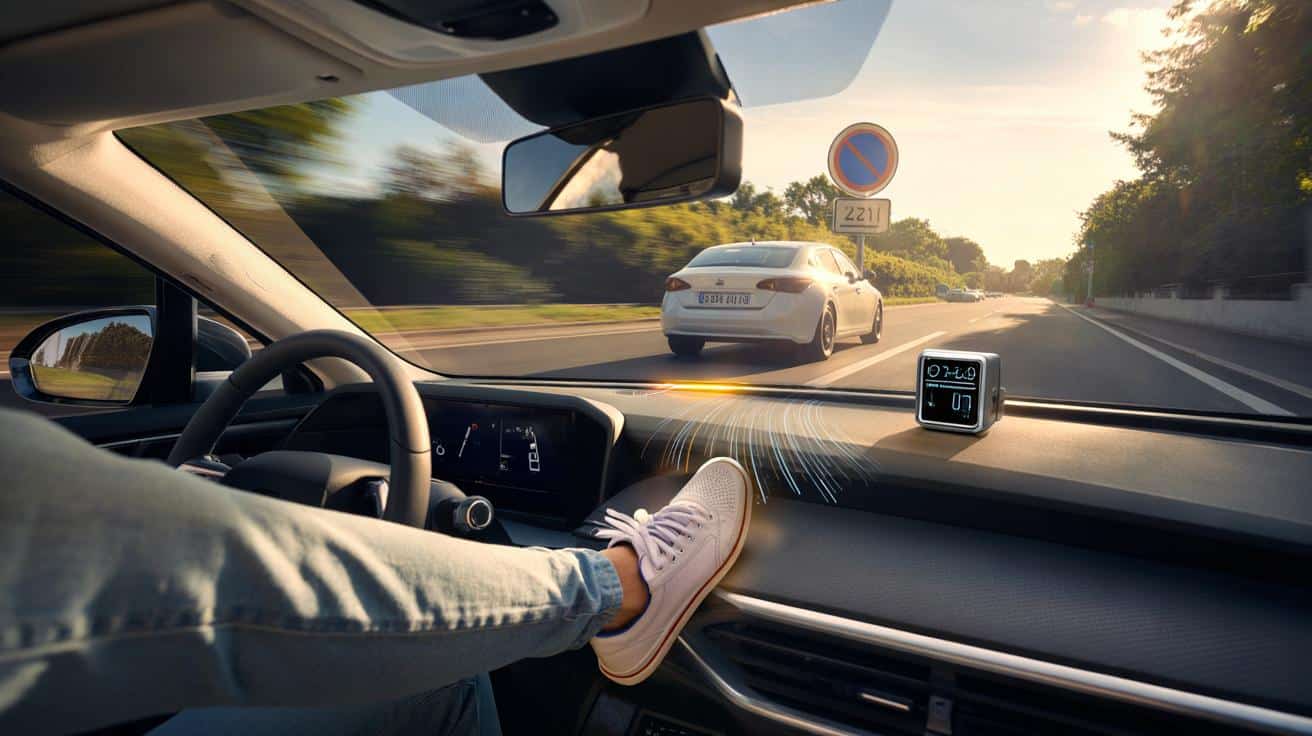
Speed is getting a quiet, digital chaperone. From 2026, new cars in Europe — and most models sold into the UK market — will ship with an always-on system that knows the limit where you’re driving and nudges you to match it. Not a hard cap, not a police trap, but a firm, tech-led reminder at your right foot.
A white hatch darts past, then yawns back into lane as a new 30 mph sign flashes by. Two cars behind, you can almost sense the collective sigh as dashboards ping and pedals stiffen a touch, like the car is saying, “Steady on.” The driver’s foot lifts a hair. The pace settles. Nobody complains. A small change, barely a moment. In 2026, the car taps you back.
The 2026 ‘speed limiter’: what it is, why it’s coming
The so-called “speed limiter” is really Intelligent Speed Assistance (ISA). It reads road signs with a camera, cross-checks them with GPS maps, and compares that to your speed. If you’re drifting over, it chimes, vibrates, or gently resists your throttle. You can still press through and overtake. You can still merge briskly. The mandate is for it to be fitted and active by default in new cars, not to physically make speeding impossible. That nuance matters to how it feels in daily life.
Why 2026? European rules already require ISA on new types of car, and from 2024, on all newly sold models. Carmakers share platforms, so the tech spreads quickly. The UK, post‑Brexit, is moving to align with many of these safety systems, especially as fleets demand them and insurance pricing follows. By the 2026 model year, ISA will be baked into the mainstream — superminis, crossovers, family EVs — because it’s more costly to leave it out. A bit like ABS in the 90s, the network effect wins.
Safety is the red thread. Studies pinned to European targets suggest ISA could cut fatal crashes materially — think in the ballpark of a fifth fewer deaths — by shaving off those accidental five or ten mph moments that turn “near miss” into “not today.” Maps update, cameras improve, and the system gets better at not nagging you where it shouldn’t. It’s a nudge, not a scold, and the numbers behind it are hard to ignore.
Living with the new speed limiter
Start simple: learn the one-touch override and the settings menu. Most cars let you temporarily push past the resistance with a firm squeeze, or toggle ISA to a softer “warning only” mode for a trip. Clean the windscreen around the camera’s eye. Update the maps when your car suggests it. A little housekeeping turns a potential nag into a useful co‑driver. On the school run and the motorway, it fades into the background — until you need it.
Misreads happen. Temporary signs under trees, roadworks with odd layouts, faded digits on a rural B‑road — you’ll still get the odd false alert. Breathe, roll your foot, and drive what you see. We’ve all had that moment when a 30 becomes a 20 with no warning and your stomach drops. ISA takes the edge off without stopping you doing the safe thing. Let’s be honest: nobody really does that every day. Treat it like lane keep: something you dance with, not obey blindly.
Think of it as an etiquette fix for modern roads. Your car defaults to “polite”, you decide when to speak up. This isn’t Big Brother hiding in your glovebox. Many systems let you choose: gentle chime, pedal pulse, soft power fade. The law wants default‑on at each ignition cycle, yet not a locked gate. That’s the compromise that made this real.
“Drivers respond best when the car feels like it’s helping, not telling off,” says a veteran instructor. “Pedal feedback beats beeps.”
- Find the ISA toggle: usually a steering‑wheel button with a speed sign icon.
- Set your preference: warning only, gentle intervention, or full assist.
- Keep maps and camera software current via over‑the‑air updates.
What changes next for drivers, roads, and carmakers
Expect car‑to‑car consistency to improve. 2026 cars will lean on richer mapping and refined sign recognition, so town‑to‑town speed shifts become smoother, not jumpy. Insurance may reward ISA‑equipped driving with quieter premiums. Delivery fleets will bake ISA into routes for fewer tickets and calmer shifts. Policymakers will watch the casualty figures and tweak the rules. The tech escalator runs one way.
There’s a culture shift too. Parents lend the keys with less worry. New drivers learn a softer right foot from day one. Road designers take the hint and fix muddled signposts because millions of cars are now “reading” them. Carmakers, freed from the arms race of top‑speed bragging rights, compete on how gracefully their ISA blends in. What changes is not freedom, but feedback.
There’s also edge‑case reality to respect. Track days? Manufacturers already offer “dynamic” modes for private circuits, and ISA can step back when GPS says you’re off the public network. Classic cars? Unaffected. Vans and pickups? Included, and arguably the biggest wins. What matters is the tone that drivers feel: less scold, more sidekick. That’s where adoption thrives — when the tech earns trust by staying quiet, accurate, and quick to forgive.
| Key point | Detail | Interest for the reader |
|---|---|---|
| It’s mandatory fit, not a hard cap | ISA must be installed and active at start‑up, yet you can override to complete a safe pass | You keep control when you really need it |
| Maps plus camera, updated over the air | Sign recognition fused with GPS data reduces false alerts across model years | Fewer nags and smoother commutes |
| Safety gains drive the rollout | Targeting fewer speed‑related injuries and deaths across Europe and UK‑bound models | Peace of mind for families and fleets |
FAQ :
- Can I turn the speed limiter off?You can switch ISA to a warning‑only mode for your current drive, and you can always press through the gentle pedal resistance. By law it resets to active at the next start.
- Will it report my speed to the authorities?No. ISA reads limits and gives feedback. It is not a live enforcement tool, and it does not automatically send your speed to anyone.
- What if the sign is wrong or covered by foliage?Drive to the conditions and what you can safely see. The system may ping, yet you remain the decision‑maker. Updating maps and keeping the camera area clean helps reduce errors.
- Does this apply to UK cars after Brexit?Most 2026 model‑year cars sold in the UK will include ISA because manufacturers harmonise hardware and fleets demand it. Formal UK rules are aligning with many EU safety features.
- How is this different from cruise control or a speed limiter I set myself?Cruise and traditional limiters hold a speed you choose. ISA adjusts guidance to the legal limit where you are, and nudges rather than locks.







This is the first driver-assist that sounds like etiquette instead of enforcement. The default-on plus easy override feels like ABS all over again: annoying to skeptics at first, then normal. If pedal feedback beats beeps, I’m in. Just please make maps OTA updates painless.
You say it won’t report my speed, but how do we guarantee that doesn’t creep later? Terms change, insurers love data. A ‘gentle nudge’ can become silent surveillance real fast. What legal guardrails exist, and can owners audit what’s collected on‑car vs. transmitted? Serioulsy asking.